Exposure to Air Pollution During Pregnancy Associated with Higher Risk for Autism-related Outcomes

Exposure to certain air pollutants during pregnancy was associated with autism-related traits and increased odds of autism spectrum disorder (ASD) diagnosis in children, according to a recent ECHO Cohort study led by Akhgar Ghassabian, MD, PhD of NYU Grossman School of Medicine and Heather Volk, PhD of Johns Hopkins Bloomberg School of Public Health.

Air pollution is a significant environmental health concern and contributes to many illnesses and early deaths worldwide. Ambient air pollution can have detectable effects on the brain. Recent studies show that being exposed to air pollution during pregnancy and early life can affect how a child’s brain develops. This can happen through several pathways, such as causing inflammation in the brain, disrupting hormones, or changing how genes work. Previous research has suggested potential links between air pollution and neurodevelopmental disorders, but the relationship between exposure to air pollution, even at low levels, during pregnancy and ASD has been unclear.

This study included 8,035 mother-child pairs from 44 ECHO Cohort study sites, including over 1,000 children who were potentially at higher risk for ASD based on being born preterm or having siblings with autism.

Key takeaways include:

  • Prenatal exposure to ozone was associated with autism-related traits and increased risk of ASD diagnosis.
  • Exposure to fine particulate matter (PM5) and nitrogen dioxide was also associated with a higher risk of autism, but associations varied by geographical regions.
  • There was little evidence for differences between boys and girls in the association between prenatal air pollution exposure and autism outcomes.

These findings suggest that even low levels of air pollution exposure during pregnancy can be associated with autism-related outcomes. This highlights the importance of understanding the risks associated with air pollution exposure during pregnancy and its effects on neurodevelopment.

This collaborative research, titled “Prenatal Air Pollution Exposure and Autism Spectrum Disorder in the ECHO Consortium,” is published in Environmental Health Perspectives.

Prenatal Exposure to Certain Flame Retardants Associated with Autism-Related Traits, ECHO Study Finds

High exposure to some organophosphate esters (OPEs) during pregnancy was associated with higher scores for increased autism-related traits and greater odds of an autism diagnosis in children, according to research from the Environmental influences on Child Health Outcomes (ECHO) Program led by Jennifer Ames, PhD, and Lisa Croen, PhD of Kaiser Permanente Northern California. Overall, the study found generally small associations between three OPEs and child autism-related outcomes.

OPEs, often called “regrettable replacements,” replaced polybrominated diphenyl ethers (PBDEs) in the mid-2000s as flame retardants and plastic softeners, and are now found in furniture, electronics, construction materials, textiles, and infant products. Despite their widespread use, little is known about their effects on child development.

In this study, ECHO researchers analyzed urine samples from 4,159 pregnant mothers for nine OPE biomarkers and assessed children’s autism-related traits using the Social Responsiveness Scale (SRS), along with autism diagnoses.

Key findings include:

  • High exposure to bis(butoxyethyl) phosphate (BBOEP) was associated with higher autism-related trait scores and greater odds of an autism diagnosis, particularly among boys.
  • Bis(1-chloro-2-propyl) phosphate (BCPP) exposure was linked to higher autism-related trait scores.
  • High exposure to bis(2-chloroethyl) phosphate (BCETP) was associated with lower odds of an autism diagnosis.

“Organophosphate esters are widely used, but their potential effects on neurodevelopment are understudied. Our findings highlight the need for further research to understand their long-term effects on child neurodevelopment,” said Dr. Ames.

The study included children born from 2006 to 2020 at 15 ECHO Cohort sites across the United States.

This collaborative research, titled “Exposure to organophosphate ester flame retardants and plasticizers during pregnancy and autism-related outcomes in the ECHO Cohort,” is published in Environmental Health Perspectives.

Prenatal Exposure to Air Pollution Associated with Higher Risk for Autism-related Outcomes, ECHO Study Finds

<< Back to Research Summaries

Prenatal Exposure to Air Pollution Associated with Higher Risk for Autism-related Outcomes, ECHO Study Finds

Author(s): Heather Volk, Akhgar Ghassabian, et al.


Who sponsored this study?

The Environmental influences on Child Health Outcomes (ECHO) Program, Office of the Director, National Institutes of Health supported this research.


Why was this study needed?

Air pollution is a significant environmental health concern and contributes to many illnesses and early deaths worldwide. Ambient air pollution can have detectable effects on the brain. Recent studies show that being exposed to air pollution during pregnancy and early life can affect how a child’s brain develops. This can happen through several pathways, such as causing inflammation in the brain, disrupting hormones, or changing how genes work.  Previous research has suggested potential links between air pollution and neurodevelopmental disorders, but the relationship between exposure to air pollution, even at low levels, during pregnancy and ASD has been unclear. This study examined the associations between prenatal air pollution exposure and autism spectrum disorder (ASD) in children.


What were the study results?

The study team observed that higher prenatal exposure to ozone was associated with autism-related traits and increased risk of ASD diagnosis. Exposure to fine particulate matter (PM2.5) and nitrogen dioxide was also associated with a higher risk of autism, but associations varied by geographical regions. There was little evidence for differences between boys and girls in the association between prenatal air pollution exposure and autism outcomes.

Footnote: Results reported here are for a single study. Other or future studies may provide new information or different results. You should not make changes to your health without first consulting your healthcare professional.


What was the study's impact?

The study's findings suggest that even low levels of air pollution exposure during pregnancy might be associated with autism-related outcomes. This highlights the importance of understanding the risks associated with air pollution exposure during pregnancy and its effects on child neurodevelopment.


Who was involved?

The study involved 8,035 mother-child pairs from 44 ECHO study sites across the United States. This sample included over 1,000 child participants who were potentially at higher risk for ASD due to being born preterm or having siblings with autism. The remaining participants were recruited from samples representative of the general population.


What happened during the study?

This study looked at scores from the Social Responsiveness Scale (SRS), a parent-report tool that measures autism-related traits in children, with higher scores indicating higher autism-related traits. During the study, researchers estimated daily exposure to particulate matter, nitrogen dioxide, and ozone at the residential addresses of pregnant women. They then analyzed the associations between these air pollutants and autism-related traits using the Social Responsiveness Scale (SRS) and physician-diagnosed ASD.

What happens next?

The study results suggest that even small changes in prenatal air pollution exposure could have a significant impact on child neurodevelopment. Future studies are needed to understand why these connections exist and to look at the impact of specific air pollution components.


Where can I learn more?

Access the full journal article, titled “Prenatal Air Pollution Exposure and Autism Spectrum Disorder in the ECHO Consortium,” in Environmental Health Perspectives.


The content is the responsibility of the authors and does not necessarily represent the official views of the National Institutes of Health.

Published June 11, 2025

Read the related research alert.

Prenatal Exposure to Organophosphate Esters Associated with Increased Autism-Related Outcomes, ECHO Study Finds

<< Back to Research Summaries

Prenatal Exposure to Organophosphate Esters Associated with Increased Autism-Related Outcomes, ECHO Study Finds

Author(s): Jennifer Ames, et al.


Who sponsored this study?

The Environmental influences on Child Health Outcomes (ECHO) Program, Office of the Director, National Institutes of Health supported this research.


Why was this study needed?

Organophosphate esters (OPE) replaced harmful polybrominated diphenyl ethers (PBDEs) as flame retardants and plastic softeners in the mid-2000s. They are now present in various household and industrial products, including polyurethane foam, furniture, electronics, construction materials, infant products, textiles, and fabrics. Health officials and researchers currently know little about how OPEs affect child development. Earlier studies have suggested a link between prenatal exposure to these chemicals and birth outcomes and cognitive and behavioral problems in children. This study investigated the potential effects of prenatal exposure to nine OPEs on child autism-related outcomes.


What were the study results?

The study found generally small associations between three OPEs and child autism-related outcomes. Specifically, high exposure to bis(butoxyethyl) phosphate (BBOEP) was associated with higher scores for autism-related traits and greater odds of autism diagnosis. Another OPE, bis(1-chloro-2-propyl) phosphate (BCPP) showed associations with higher autism-related trait scores. High exposure to bis(2-chloroethyl) phosphate (BCETP) was associated with lower odds of autism diagnosis. The study also found that the association between BBOEP and higher autism-related traits scores was stronger in boys than in girls.


What was the study's impact?

This study underscores the need to better understand and address the potential developmental toxicity of these widely used chemicals.


Who was involved?

The study included 4,159 mother-child pairs with children born from 2006 to 2020 from 15 study sites in the ECHO Cohort.


What happened during the study?

Researchers analyzed urine samples from pregnant mothers for nine OPE biomarkers. The researchers then assessed child autism-related traits via the Social Responsiveness Scale (SRS) and collected information on whether they received a clinical autism diagnosis to examine associations between prenatal OPE exposure and child neurodevelopment.

Footnote: Results reported here are for a single study. Other or future studies may provide new information or different results. You should not make changes to your health without first consulting your healthcare professional.

What happens next?

Future research could replicate these findings in different populations and use multiple measures of OPEs throughout pregnancy to better understand the critical exposure windows and long-term effects of OPEs on child neurodevelopment. Additionally, further studies could help researchers explore the potential sex-specific effects of prenatal OPE exposure.


Where can I learn more?

Access the full journal article, titled “Exposure to organophosphate ester flame retardants and plasticizers during pregnancy and autism-related outcomes in the ECHO Cohort,” in Environmental Health Perspectives.


The content is the responsibility of the authors and does not necessarily represent the official views of the National Institutes of Health.

Published June 11, 2025

Read the related research alert.

Autism

ECHO Autism Research

Autism

The ECHO Program’s nationwide research network follows more than 64,000 children and families from pregnancy and birth through adolescence. It allows investigators to study a wide range of children to understand better the factors that may influence the development of autism-related traits, including in those without a diagnosis.

Resources

Visit these government sites to learn more about chemical exposure initiatives.

NIMH: Autism Spectrum Disorder

CDC: ASD Signs and Symptoms

QUESTIONS

For more information, please email the NIH at NIHKidsandEnvironment@od.nih.gov.
For media inquiries or to request an interview, contact Rebekah Yeager at rebekah.yeager@nih.gov

Autism spectrum disorder (ASD) is a neurological and developmental condition affecting social interaction, communication, learning, and behavior. In 2020, an estimated 1 in 36 8-year-old children had ASD. It is nearly four times more common in boys than girls and occurs across all racial and ethnic groups. ECHO researchers examine various potential influences, including prenatal diet, chemical exposures, biological factors, and gestational and postpartum conditions.

What We're Learning

Since its launch, the ECHO Program has published more than 2,000 research articles on a wide range of child health topics. Within this body of work, many studies have examined autism spectrum disorder and autism-related traits.

Here are some research highlights:

Prenatal Exposure to Air Pollution Associated with Higher Risk for Autism-related Outcomes, ECHO Study Finds
June 2025
Higher prenatal exposure to ozone, fine particulate matter, and nitrogen dioxide was linked to increased autism-related traits and ASD risk.

Prenatal Exposure to Organophosphate Esters Associated with Increased Autism-Related Outcomes, ECHO Study Finds
June 2025
Prenatal exposure to certain flame-retardant chemicals was modestly linked to autism-related traits and diagnosis in children.

Black Children and Especially Black Girls May Be Less Likely to Receive an Autism Diagnosis
January 2025
Black children—especially girls—may be underdiagnosed with autism despite showing similar or higher levels of autism-related traits.

Children with Autism Are More Likely to Experience Emotional & Behavioral Challenges Like Anxiety, Depression, & ADHD
January 2025
Higher Child Behavior Checklist (CBCL) scores among children with ASD indicate a possible connection to greater emotional and behavior problems overall—including depression, anxiety, and ADHD—compared to children without ASD.

Fish But Not Supplements Consumed in Pregnancy Associated With Lower Rates of Autism Diagnosis And Related Traits, ECHO Cohort Study Finds
September 2024

Fish consumption during pregnancy was associated with a 20% lower likelihood of ASD diagnosis and fewer autism-related traits in offspring.


Read More ECHO Research Related to Neurodevelopment

NIH Study Finds No Association Between Prenatal Dietary Patterns and Autism Diagnoses, But Potential Links with Broader Traits

Three validated dietary patterns were not associated with diagnosis, but healthy eating during pregnancy showed a modest link with lower scores for traits related to autism

Expectant mothers with higher diet quality—measured by the Healthy Eating Index (HEI) and the Alternative Healthy Eating Index modified for Pregnancy (AHEI-P)—had children with modestly lower scores for traits related to autism spectrum disorder (ASD), according to ECHO Cohort research led by Kristen Lyall, ScD, and Rachel Vecchione, MPH, of Drexel University. However, the study did not find a significant association between these prenatal dietary patterns and a formal ASD diagnosis.

Previous research has suggested potential links between prenatal diet and neurodevelopmental conditions, but most studies focused on individual foods or nutrients rather than overall dietary patterns. In this study, ECHO researchers examined overall dietary patterns to better understand effects of usual dietary intake across foods.

“This study broadly supports the importance of a healthy diet during pregnancy. Autism is a complex condition with many contributing factors. Here, we found some evidence to suggest a healthy diet during pregnancy may be linked with reduced likelihood of broader traits related to autism, but effect sizes were small,” said Dr. Lyall.

The study included up to 6,084 mother-child pairs from 14 ECHO Cohort Study Sites, which included general population sites and sites with a higher chance of ASD occurring in families.

This collaborative research, titled “Maternal Dietary Patterns During Pregnancy and Child Autism-Related Traits in the Environmental influences on Child Health Outcomes Consortium,” is published in Nutrients.

Black Children and Especially Black Girls May Be Less Likely to Receive an Autism Diagnosis

<< Back to Research Summaries

Black Children and Especially Black Girls May Be Less Likely to Receive an Autism Diagnosis

Authors: Kristen Lyall, Bob Joseph, et al.


Who sponsored this study?

The Environmental influences on Child Health Outcomes (ECHO) Program, Office of the Director, National Institutes of Health supported this research.


Why was this study needed?

Research suggests that autism spectrum disorder is diagnosed less often in minority groups, possibly due to limited access to healthcare, potential biases, and delays in diagnosis. This study explored how sociodemographic factors like race, ethnicity, and education relate to autism diagnoses and parent-reported autism-related behaviors. Researchers wanted to learn whether these factors showed similar patterns in diagnosis and behavior scores and whether they might help explain why some children are less frequently diagnosed.


What were the study results?

The study found that non-Hispanic Black children had lower odds of receiving an autism diagnosis compared to non-Hispanic White children, despite similar levels of autism-related traits. Additionally, Black girls were less likely to be diagnosed with autism but more likely to have high SRS scores, indicating potential under-recognition of autism in this group. Separately, higher maternal education was also associated with reduced odds of both autism diagnosis and autism-related traits, as measured by the Social Responsiveness Scale (SRS).


What was the study's impact?

The study highlighted potential differences in how autism is recognized in children, particularly among non-Hispanic Black children. The results suggest a need to address clinical inequalities and consider ways to ensure accurate identification of autism across all sociodemographic groups.


Who was involved?

The study included 8,224 children from diverse backgrounds, with data gathered from 46 ECHO sites across the United States.


What happened during the study?

The study used data from the ECHO Cohort to examine relationships between demographic factors, autism diagnoses, and parent-reported autism-related traits. Researchers focused on two main outcomes—autism diagnoses and scores on the Social Responsiveness Scale (SRS), a parent-report questionnaire capturing autism-related traits. They used statistical methods to compare associations between sociodemographic characteristics and the likelihood of autism diagnosis and high SRS scores. The goal was to understand whether these factors influenced the two outcomes differently.

Footnote: Results reported here are for a single study. Other or future studies may provide new information or different results. You should not make changes to your health without first consulting your healthcare professional.

What happens next?

Additional research could address strategies to reduce barriers to diagnosis and consider increased screening for minority and low-education groups. Efforts to help doctors and healthcare providers better recognize autism in underserved communities and ensure equitable access to diagnostic resources may improve early diagnosis and reduce disparities in care.


Where can I learn more?

Access the full journal article, titled “Demographic Correlates of Autism: How Do Associations Compare Between Diagnosis and a Quantitative Trait Measure?,” in Autism Research.


The content is the responsibility of the authors and does not necessarily represent the official views of the National Institutes of Health.

Published January 8, 2025

ECHO Study Suggests Children with Autism Are More Likely to Experience Emotional & Behavioral Challenges Like Anxiety, Depression, & ADHD

<< Back to Research Summaries

ECHO Study Suggests Children with Autism Are More Likely to Experience Emotional & Behavioral Challenges Like Anxiety, Depression, & ADHD

Authors: Heather E. Volk, et al.


Who sponsored this study?

The Environmental influences on Child Health Outcomes (ECHO) Program, National Institutes of Health supported this research.


Why was this study needed?

The study aimed to understand how common behavioral and emotional problems are in children with autism spectrum disorder (ASD), using a large national group of participants and looking at differences between boys and girls. It also explored whether children with greater difficulties in social communication related to ASD tend to have more behavioral and emotional challenges.


What were the study results?

Children with ASD had higher scores on the Child Behavior Checklist (CBCL)—a questionnaire that helps identify emotional and behavioral problems in children and adolescents. Higher CBCL scores among children with ASD indicate a possible connection to greater emotional and behavior problems overall—including depression, anxiety, and ADHD—compared to children without ASD. Conversely, higher CBCL scores were strongly linked to the likelihood of receiving an ASD diagnosis, especially for children scoring in the top 30%. Among children with ASD, girls showed significantly higher levels of anxiety and depression compared to boys, with differences depending on their age. As autism-related traits measured by the Social Responsiveness Scale (SRS) increased, CBCL scores also rose, suggesting that children with more autism-related traits might also experience other emotional or behavioral challenges.


What was the study's impact?

This study suggests that increased monitoring of behavioral and emotional problems may be beneficial for children with ASD. The results of this study indicate that children with ASD may be more likely to experience these issues throughout their early life.


Who was involved?

The study included 7,998 children from 37 ECHO Cohort Study Sites across the United States. This included 553 children who had a clinician diagnosis of ASD, including 432 boys and 121 girls.


What happened during the study?

The study surveyed parents of children aged 2.5 years to 18 years to collect information about their child's demographics, ASD diagnoses from a doctor, and scores from two behavior assessments: the SRS and the CBCL. Researchers compared average CBCL scores, which measure emotional and behavioral problems, based on whether the child had ASD and whether they were male or female. They also used statistical methods to see if children with ASD were more likely to have higher CBCL scores and to understand how SRS scores related to CBCL scores.

Footnote: Results reported here are for a single study. Other or future studies may provide new information or different results. You should not make changes to your health without first consulting your healthcare professional.

What happens next?

Additional research could help researchers understand what kinds of support and interventions could be effective for children with ASD, who may be more likely to experience emotional and behavioral challenges.


Where can I learn more?

Access the full journal article, titled “Co-occurring Psychopathology in Children with and without Autism Spectrum Disorder (ASD): Differences by Sex in the ECHO Cohorts,” in Journal of Autism and Developmental Disorders.


The content is the responsibility of the authors and does not necessarily represent the official views of the National Institutes of Health.

Published January 6, 2025

Read the related research alert.

ECHO Cohort Study Finds No Significant Associations Between Prenatal Dietary Patterns and ASD Diagnosis

<< Back to Research Summaries

ECHO Cohort Study Finds No Significant Associations Between Prenatal Dietary Patterns and ASD Diagnosis

Authors: Rachel Vecchione, Kristen Lyall, et al.


Who sponsored this study?

The Environmental influences on Child Health Outcomes (ECHO) Program, Office of the Director, National Institutes of Health supported this research.


Why was this study needed?

Diet during pregnancy plays a major role in fetal development. Prior research has shown associations between several dietary factors and certain neurodevelopmental conditions in children, including autism spectrum disorder (ASD). ASD is a neurodevelopmental condition that affects social communication and behaviors, and presents in a wide variety of behaviors, abilities, and challenges.

This study helped to fill gaps in understanding the relationship between maternal dietary patterns during pregnancy and ASD-related outcomes in children. Most previous studies examining links between prenatal diet and ASD and other neurodevelopmental outcomes have focused on individual foods or nutrients, rather than overall dietary patterns. Dietary patterns may be useful to examine because they summarize the usual intake of a wide range of foods and may capture combined effects across many nutrients.  Dietary patterns that capture the intake of recommended foods may also help to provide clearer communication than summaries across individual nutrients. This study therefore aimed to provide a comprehensive assessment by examining several established dietary patterns and their associations with ASD-related traits and diagnoses.


What were the study results?

Dietary patterns examined in this study included the Healthy Eating Index (HEI) and the Alternative Healthy Eating Index modified for Pregnancy (AHEI-P), as well as the Empirical Dietary Inflammatory Index (EDIP). Both the HEI and AHEI-P are validated dietary patterns that are measures of overall diet quality. Higher scores on these patterns indicate better adherence to dietary guidelines. In contrast, higher scores on the EDIP indicate a more pro-inflammatory diet.

The study found that higher prenatal scores on the HEI the AHEI-P were associated with modest decreases in ASD-related traits. However, there were no significant associations between prenatal intake of these dietary patterns and ASD diagnosis. The findings suggest that while there may not be strong associations between prenatal dietary patterns and ASD diagnosis itself, there may be subtle associations with broader traits like social communication difficulties that warrant further investigation.

Footnote: Results reported here are for a single study. Other or future studies may provide new information or different results. You should not make changes to your health without first consulting your healthcare professional.


What was the study's impact?

This study contributes to the understanding of how prenatal diet may relate to ASD-related characteristics in children. It also highlights the need to further study the potential mechanisms linking prenatal diet to ASD-related traits and to consider broader dietary patterns in addition to individual nutrients and foods.


Who was involved?

The study included 6,084 mother-child pairs from 14 ECHO Cohort Study Sites. The participants were socioeconomically and demographically diverse, drawn from a large U.S.-wide sample, including general population sites and sites with a higher chance of ASD occurring in families.


What happened during the study?

Researchers collected data from individual sites that used Food Frequency Questionnaires to assess diet during pregnancy and enable the calculation of dietary patterns. The study examined associations between three dietary patterns and ASD-related outcomes while adjusting for potential confounding factors such as maternal age, pre-pregnancy BMI, sociodemographic factors, and child characteristics.

What happens next?

Future studies could help researchers confirm the results of this study and explore the subtle associations between prenatal diet and ASD-related traits. Further research could also examine multiple ASD-related outcomes, using larger and more diverse samples, and investigate potential mechanisms linking prenatal diet to ASD-related traits.


Where can I learn more?

Access the full journal article, titled “Maternal Dietary Patterns During Pregnancy and Child Autism-Related Traits in the Environmental influences on Child Health Outcomes Consortium,” in Nutrients.

The content is the responsibility of the authors and does not necessarily represent the official views of the National Institutes of Health.

Published November 6, 2024

Read the related research alert.

New ECHO Research Finds Children with Autism at Higher Risk for a Range of Health Outcomes

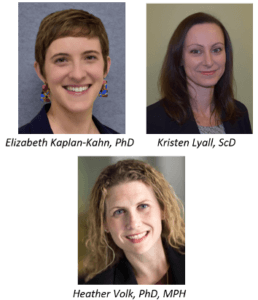
Collaborative ECHO research led by Elizabeth Kaplan-Kahn, PhD, Kristen Lyall, ScD of the A.J. Drexel Autism Institute at Drexel University and Heather Volk, PhD, MPH of the Bloomberg School of Public Health at Johns Hopkins University investigates the factors that influence the overall health and well-being of people on the autism spectrum. This research, titled “Describing Multidomain Health Outcomes in Autistic Children in the ECHO Program,” is published in the Journal of the American Academy of Child and Adolescent Psychiatry.

Approximately 3% of children in the United States have a diagnosis of autism spectrum disorder (or autism). A large proportion of autism research focuses on understanding the factors that influence the development of autistic traits. However, many people on the autism spectrum report that they would rather prioritize research into the factors that influence their overall health and well-being. This study addressed that priority by investigating the physical, emotional, and overall health outcomes of children on the autism spectrum.

The study included over 4,500 children and adolescents at 29 ECHO research sites across the United States, including 286 participants with autism, with participants varying in age from 5 to 20 years old. The research team conducted an initial analysis on the 4,511 participants by comparing data on their health outcomes and demographic characteristics. They then used a subsample of 1,809 participants, of which 116 were autistic, to group children with similar physical health, emotional health, and overall well-being outcomes into one of three categories, “positive health,” “poorer health,” and “mixed health.”

These profiles were categorized based on data from the research team’s primary outcome measures—multiple Patient-Reported Outcomes Measurement Information System (PROMIS) Global Health scores, the Child Behavior Checklist (CBCL) Dysregulation score, the Social Responsiveness Scale, Second Edition (SRS-2), and standardized Body Mass Index (BMI). These measures evaluated participants’ peer relations, life satisfaction, behavior dysregulation, sleep disturbances, physical activity, etc. The three profiles of participants were then further analyzed to study differences in health outcomes between children on the autism spectrum to non-autistic children.

The study results indicate that autistic children are at higher risk than non-autistic children for poorer health outcomes indicated by lowest scores in Global Health and highest dysregulation scores (e.g. attention problems, aggressive behavior, and anxious-depressive symptoms). However, there is variability in health outcomes within autistic youth as shown by a group of autistic participants who showed high scores on positive health outcomes across domains. Additionally, compared to non-autistic children, more autistic children were born prematurely, had diagnoses of intellectual disability and ADHD, and had a sibling with autism.

“The results of this study offer a glimpse into the range of emotional, physical, and overall health outcomes for children on the autism spectrum,” Dr. Kaplan-Kahn said. “A deeper understanding of the range of health outcomes children with autism experience, and the factors that can affect these outcomes, may help families and practitioners identify and target areas for support or intervention.”

Future work may focus on understanding the factors that influence poor or positive health for children with autism and how those factors change over time. This work might identify opportunities to support these children and promote positive health outcomes.

Read the research summary.