



NIH Program Study Links Smoking in Pregnant Moms to Autism Spectrum Disorder in Children

FOR IMMEDIATE RELEASE


Smoking before or during pregnancy may be associated with autism spectrum disorder (ASD) traits, such as symptoms of social impairments, according to a new study of approximately 11,000 children funded by the National Institutes of Health (NIH). The study also observed that full-term babies whose mothers smoked before and during pregnancy had a 44 percent increased risk of receiving an ASD diagnosis later in childhood. The research, titled “Maternal Tobacco Smoking and Offspring Autism Spectrum Disorder or Traits in ECHO Cohorts,” is published in Autism Research.

Rashelle J. Musci, Ph.D. of Johns Hopkins University and Irva Hertz-Picciotto, Ph.D. of the University of California, Davis, led this collaborative effort as investigators in the NIH-funded Environmental influences on Child Health Outcomes (ECHO) Program.

The research team gathered information from children in 13 ECHO cohorts across the U.S. Each cohort either collected diagnoses for ASD, administered the Social Responsiveness Scale to determine social impairments in the children, or both. All cohorts also collected data on the mothers’ prenatal smoking habits and potential confounding variables.

“Future studies can help determine the specific prenatal period at which infants are most susceptible to cigarette smoke exposure and other factors, such as lifestyle habits or paternal smoking, that may influence the child’s development,” Hertz-Picciotto said.

Hertz-Picciotto, I. et al. Maternal Tobacco Smoking and Offspring Autism Spectrum Disorder or Traits in ECHO Cohorts. Autism Research. DOI 10.1002/aur.2693 (2022)

###

About ECHO: ECHO is a nationwide research program supported by the National Institutes of Health (NIH). Launched in 2016, ECHO aims to enhance the health of children for generations to come. ECHO investigators study the effects of a broad range of early environmental influences on child health and development. The program consists of two major components, including 69 existing and ongoing observational study cohorts and a pediatric clinical trials network. For more information, visit echochildren.org.

About the NIH: NIH, the nation’s medical research agency, includes 27 Institutes and Centers and is a component of the U.S. Department of Health and Human Services. NIH is the primary federal agency conducting and supporting basic, clinical, and translational medical research, and is investigating the causes, treatments, and cures for both common and rare diseases. For more information about NIH and its programs, visit www.nih.gov.

Media Contacts

For information or to request an interview, contact Rebekah Yeager,  rebekah.yeager@nih.gov.

If you are not a member of the media, but have a general inquiry, please contact  NIHKidsandEnvironment@od.nih.gov.

Connect With Us

echo connectorCheck out the recent issues of our bi-monthly newsletter, the ECHO Connector, for program news and the latest research findings.

To receive the ECHO Connector through email, subscribe here.

Follow @ECHOChildHealth for the latest ECHO Program updates on Twitter.

ECHO Study Links Prenatal Tobacco Exposure to Autism Spectrum Disorder in Children

Through a collaborative research effort, Rashelle J. Musci, PhD of Johns Hopkins University and Irva Hertz-Picciotto, PhD of the University of California, Davis found that maternal tobacco use before or during pregnancy was associated with autism spectrum disorder (ASD) traits, such as symptoms of social impairment. Examples of social, communication, or other behaviors among individuals with ASD include little or no eye contact, difficulty with engaging in conversation, insistence on doing things the exact same way, repetitively, or having a narrow set of interests. Additionally, the researchers found that full-term babies whose mothers smoked before or during pregnancy had a 44% increased risk of receiving an ASD diagnosis later in childhood. Their research, titled “Maternal Tobacco Smoking and Offspring Autism Spectrum Disorder or Traits in ECHO Cohorts” is published in Autism Research.

“Previous studies provide varying results on how tobacco smoke exposure during pregnancy affects a child’s risk for autism,” said Dr. Hertz-Picciotto, highlighting the importance of this research.

To collect data, the research team gathered information from approximately 11,000 children in 13 cohorts across the United States. Each of the cohorts either collected diagnoses for ASD or administered the Social Responsiveness Scale to determine social impairments in the children, or both. The research team studied each cohort individually and combined these findings to come up with an overall result. It also collected data on the mothers’ prenatal smoking habits and other potential confounding variables.

“This study adds to existing evidence that suggests that by ceasing smoking before or during pregnancy, the mother benefits her child,” noted lead author Dr. Musci.

Future studies can help determine the specific prenatal period at which infants are most susceptible to cigarette smoke exposure and other factors, such as lifestyle habits or paternal smoking, that may influence the child’s development.

Read the research summary.

New ECHO Research Investigates Relationship between Chronic Health Conditions and Children’s Positive Health

Julia Schuchard, PhD

Collaborative ECHO research led by Julia Schuchard, PhD of the Children’s Hospital of Philadelphia studied the association between chronic physical or mental health conditions and children’s assessment of their own well-being, also referred to as positive health. The findings show that many children and adolescents with chronic health conditions have similar levels of positive health as their peers without chronic conditions. The team’s research, titled “Influences of chronic physical and mental health conditions on child and adolescent positive health,” is published in Academic Pediatrics.

For this study, researchers gathered 1,764 children aged 8 to 17 from 13 ECHO cohorts across the U.S. and asked them about their physical, mental, and social health and life satisfaction. The children’s parents also provided information on their child’s chronic health conditions, including physical (e.g., asthma, chronic pain, motor problems), developmental (e.g., autism spectrum disorder, developmental delay, learning disabilities), and mental (e.g., depression, anxiety) health conditions. Around 54% of children participating in the study had some form of chronic health condition.

The results of this study suggest that mental health conditions such as depression in childhood may be a primary driver of decreased well-being and life satisfaction among children with chronic health conditions. “The symptoms of physical health conditions and developmental disorders may last for years or even a lifetime,” said Dr. Schuchard, “but it is possible that negative effects on life satisfaction could be minimized by preventing and treating mental health problems.”

More research is needed to identify the best mental health interventions for improving positive health outcomes among children with chronic health conditions. Effective interventions may include increasing the availability of mental health assessments and screening children and adolescents with chronic health conditions for depression more frequently.

“Examining the effects of interventions like these on positive health outcomes has the potential to shift perspectives around health” said Dr. Schuchard, “highlighting the importance of promoting children’s mental health and well-being.”

Read the Research Summary.

ECHO Researchers Develop a Shorter Survey for Evaluating Sources of Stress in Adults

Phillip Sherlock, PhD

Through a collaborative effort led by Phillip Sherlock, PhD from Northwestern University, an ECHO research team developed a short-form version of the Crisis in Family Systems-Revised (CRISYS-R) questionnaire for evaluating the sources of stress that adults experience. The study found that the revised 24-question survey (CRISYS-SF) covered the same 11 areas of stress the 80-question CRISYS-R addressed and yielded very similar scores. The article, titled “A short form of the Crisis in Family Systems (CRISYS) in a racially diverse sample of pregnant women,” is published in Current Psychology.

The researchers interviewed 884 pregnant women in the PRogramming of Intergenerational Stress Mechanisms (PRISM) study from New York City and Boston. About 20% of these women spoke Spanish as their primary language, 20% had less than a high school education, and 60% reported having some degree of financial trouble. The participants answered all 80 of the CRISYS-R questions, and the researchers used statistical methods and expert input to identify which questions were the most useful for measuring stress.

Growing evidence suggests that exposure to stress can affect a patient’s overall health. The CRISYS-SF is a convenient method for doctors and researchers to more easily screen for participant stress, identify the sources of that stress, and plan effective interventions.

“Factors including questionnaire length contribute to participant burden,” said Dr. Sherlock, “and this burden can contribute to reduced response rate, incomplete data, and reduced data quality in clinical studies.” Future research into the effects of stress on specific health outcomes will benefit from the use of the CRISYS-SF questionnaire to gather reliable, high quality data on participant stress.

Read the Research Summary.

ECHO Research Explores the Relationship between Early Life and Puberty

Izzuddin M. Aris, PhD

Collaborative ECHO research led by Izzuddin M. Aris, PhD of Harvard University found that children who grew more quickly than their peers in the first five years of life were more likely to start puberty earlier. The study examined the importance of early life factors in puberty development and found that male children who gained weight or grew faster than their peers in the first five years of life were associated with entering puberty at a younger age. The researchers found similar results in female children but only among those with faster weight gains during early childhood (two to five years of age). The article, titled “Analysis of early life growth and age at pubertal onset in US children,” is published in JAMA Network Open.

To obtain these findings, the researchers gathered height and weight data from nearly 7,500 children in 36 ECHO cohorts and examined the following markers of puberty:

  • Age at which the child reached maximum growth due to puberty
  • Age at first period (in female children only)
  • Pubertal development score
  • Onset of pubic hair development

The team studied how weight gain, height, and body mass index at ages 0–0.5, 0.5–2, and 2–5 years were related to puberty later in childhood.

“Puberty is a key stage during child development,” explained Dr. Aris. “Having a better understanding of the early life factors related to puberty is important to develop intervention strategies to prevent earlier pubertal onset.” Previous studies in the US have linked earlier puberty onset to diseases later in life, such as type 2 diabetes.

Dr. Aris says follow-up studies will aim to identify puberty’s role in explaining the relationship between early life factors and longer-term chronic diseases.

Read the research summary.

A New Year, Deeper Understanding of Prenatal, Infant, and Maternal Health Outcomes

I would like to take time to wish all ECHO Connector readers a Happy New Year. Throughout 2021, the ECHO Program continued to make significant strides in child health. On behalf of the ECHO Program, and myself, we thank all participants and researchers involved with ECHO and look forward to continued success in 2022.

In late 2021, the ECHO Program relaunched its social media presence on Twitter. We are excited to leverage this platform to keep our followers up to date on the latest ECHO news, upcoming events, and information. I encourage you to follow us at @ECHOChildHealth.

January is National Birth Defects Awareness Month. The ECHO Program and its investigators continue to make research efforts in prenatal and maternal health, further developing our understanding of birth defects. January’s ECHO Connector includes information on two recent collaborative ECHO publications that explore how certain prenatal chemical exposures can influence infant health outcomes.

ECHO Researchers Explore How Maternal Stress During Pregnancy Relates to Infant Suck Patterns

Collaborative ECHO research led by Emily Zimmerman, PhD, CCC-SLP from Northeastern University and Andréa Aguiar, PhD from the University of Illinois at Urbana-Champaign found that a mother’ s level of stress during pregnancy was linked to changes in the way her infant sucked on a pacifier.
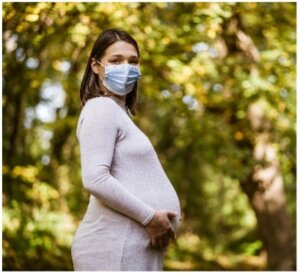
Infants’ sucking patterns can be used to measure brain function soon after birth, and this research investigated how maternal stress during pregnancy related to infant suck patterns. Zimmerman, Aguiar, and team found that mothers who felt more stressed late in their pregnancy had infants who sucked on their pacifiers less frequently, but when they did suck on their pacifier, they did so for a longer period of time compared with infants of mothers who felt less stressed in late pregnancy.  It is important to note that the mother and infants participating in this study were from two different groups who had different maternal stress levels and infants’ sucking behaviors.  These differences in stress and infants’ sucking behaviors could be due to other differences between the two groups in their culture, ethnicity, geographical location, and income, and education levels. 

This research, titled “Examining the Association Between Prenatal Maternal Stress and Infant Non-Nutritive Suck,” was published in Pediatric Research.

To collect data, the researchers surveyed mothers from two ECHO cohorts—one from Urbana-Champaign, Illinois and the other from Manati, Puerto Rico—regarding their stress during late pregnancy using the Perceived Stress Scale. The researchers followed up with each mother within 8 weeks after giving birth and tested their baby’s sucking pattern on a pacifier connected to a pressure detector.

This research demonstrates that maternal mood and stress during pregnancy can affect infant behavior and development starting prenatally and through the first months of life. “This finding is important as it may allow for earlier awareness of stress exposure during pregnancy,” said Dr. Zimmerman, “and as a result, earlier treatment for stress-exposed infants.”

The next steps for this research include further investigation of the link between early infant sucking patterns and visual memory, attention, and speed processing in infants.

Read the Research Summary.

ECHO Director, Researchers Featured in Article on the Effects of Perinatal Stress on Babies

ECHO researchers Catherine Monk, PhD and Johnnye Lewis, PhD, as well as Program Director Matt Gillman, MD, were recently featured in an article regarding perinatal stress during the pandemic and its effects on babies. Featured in Undark.org, a non-profit digital magazine that explores the intersection of society and science, the article references previous studies regarding in-utero stress, including Dr. Monk’s 2016 study on stress and the effect of excess cortisol being passed via the placenta to the fetus.

Monk and her team hypothesized that high levels of stress passed on to the fetus would cause changes to the expression of a fetal gene responsible for deactivating, or neutralizing, cortisol in the body. This was the first study to link pregnant women’s stress with changes in placental genes.

In addition to extreme stress during pregnancy, Monk notes that another factor that may affect the fetus is climate change, which “is affecting the air their mothers breathe while they’re pregnant, and it’s going to be affecting their development in so many ways, and the quality of their lives in the future,” Dr. Monk said.

Additionally, the article highlights Dr. Lewis’s efforts as founder and director of the Community Environmental Health Program at University of New Mexico’s College of Pharmacy, as well as her collaborative ECHO work comparing how stressors related to the COVID-19 pandemic may affect mental health and neurodevelopment among Indigenous, Black, and White communities.

“The beauty of ECHO is it lets us compare across several different populations,” Dr. Lewis said. Based on a preliminary review of Lewis’s data, Black and Indigenous communities surveyed reported more pandemic-related stressors in comparison to a rural white community. This may suggest poorer outcomes for these populations due to the complex relationship linking stress to disease, behavioral health, and neurodevelopmental problems.

Regarding the news that stress plays a large role in the development of fetuses and newborns, Gillman stresses the importance of early intervention. “If you can do interventions early when systems and organs are most plastic, then it’s easier,” he said.

How Does Maternal PFAS Exposure Affect Prenatal Development?

Per- and polyfluoroalkyl substances (PFAS) are long-lasting chemicals that can be found in many household materials, but not enough is known about pre- and perinatal negative health outcomes associated with PFAS exposure. Additionally, socioeconomically disadvantaged groups, such as African American women and children, may be at more risk for PFAS exposure, worsening health disparities. Previous studies have linked PFAS exposure with negative infant health outcomes, such as lower birth weight, but little is known about the specific biological mechanisms that PFAS exposures disrupt during prenatal development.

Che-Jung Chang, PhD (left) and Donghai Liang, PhD (right) served as first and corresponding authors for this publication.

To investigate these mechanisms, Che-Jung Chang, PhD, Donghai Liang, PhD, and their team of ECHO researchers at Emory University looked at pregnancy and exposure data from more than 300 African American women enrolled in the Atlanta ECHO cohort from 2014-2018. Their research, titled “Per- and polyfluoroalkyl substance (PFAS) exposure, maternal metabolomic perturbation, and fetal growth in African American women: A meet-in-the-middle approach,” is published in Environment International.

As part of this study, the researchers analyzed the levels of PFAS in the participants’ blood samples along with the levels of a variety of small molecules that are known to be essential to prenatal development. The researchers then used statistical methods to look at how these chemical differences affected birth weights. The analysis found that PFAS exposures were linked with lower birth weights in babies that African American women delivered. These lower birth weights may have been associated with changes in the levels of a variety of essential metabolites and molecules, including amino acids, lipid/fatty acid, bile acids, and sex hormones.

The results of this study reveal some of the key chemical mechanisms that may be responsible for the effects of PFAS exposure on prenatal development. “The molecular mechanisms and biomarkers presented in this study warrant future investigation in targeted studies,” said Dr. Liang. “These investigations may help develop early detection and intervention strategies in both public health and clinical settings.”

Going forward, the team will take a closer look at how PFAS exposures are reflected in the levels of key small molecules in newborn babies. Additionally, team members hope to expand their chemical analysis in order to get a more holistic view of how PFAS exposures affect prenatal development.

Access the brief flash talk from the authors in the following video:

Access the research summary.

Recent ECHO Publication Uses New Tools to Explore the Impact of Chemical Exposures on Pregnancy

Chemical exposures from the environment can have a profound effect on health outcomes, especially for pregnant mothers and their babies. Prenatal development is a carefully controlled biological process that is sensitive to environmental chemicals and maternal health.

Brett Doherty
Brett Doherty, PhD, MSPH

Megan Romano
Megan Romano, PhD, MPH

In order to better understand the impact of chemical exposures on prenatal development, ECHO researchers Brett Doherty, PhD, MSPH, and Megan Romano, PhD, MPH of Dartmouth College used emerging technologies to investigate the link between chemical exposures and prenatal chemical processes. Their research, titled “Chemical co-exposures assessed via silicone wristbands and endogenous plasma metabolomics during pregnancy” is published in the Journal of Exposure Science and Environmental Epidemiology.

During this investigation, 177 pregnant women enrolled in the New Hampshire Birth Cohort Study (NHBCS) were given silicone wristbands to wear for a week in the early stages of their pregnancy. These wristbands captured snapshots of the chemical exposures the mothers experienced during pregnancy. Three months later, the researchers collected blood samples from the mothers for further analysis.

This analysis utilized metabolomics, a relatively new technology that involves the quantification of all the small molecule building blocks in a sample as a way to determine what chemical processes are occurring in the system.

“We used new tools to investigate how chemicals can affect important small molecules during pregnancy,” said Doherty, “which provided clues to the impacts of those chemicals on the health of the mother and the baby.”

The researchers found that several of the chemical exposures experienced by women in the study were associated with changes in the relative amounts of different important chemical building blocks. Specifically, many of the exposures, including exposures to the insecticide DEET, were associated with changes in the amounts of various amino acids that make up many of the proteins vital to prenatal development.

These results may provide a useful framework for further investigations into the effects of prenatal chemical exposures. “Future investigations may find it helpful to link the impacts we observed to related health processes and outcomes,” Romano noted.

Access the research summary.