As of this month, all children ages 5 and older can get a COVID-19 vaccine in the United States. It’s a major turning point in the fight against the virus that causes COVID-19, and it’s the best way to protect our children, families, and communities.
I encourage you to visit WeCanDoThis.hhs.gov for information, sharable resources, and outreach tools from the HHS COVID-19 public education campaign, a national initiative to increase public confidence in and uptake of COVID-19 vaccines.
How to facilitate uptake of COVID-19 vaccines among children is an urgent research issue. In this issue of the Connector, we highlight a new study from ECHO’s Institutional Development Award States Pediatric Clinical Trials Network (ISPCTN), which is currently gathering information about parental attitudes around the COVID-19 vaccine. Our investigators will use the insights from this phase of the study to develop and test the effectiveness of a mobile app to aid in COVID-19 vaccine decision making.
This month’s Connector also provides summaries of recent collaborative ECHO research led by Drs. Nikos Stratakis and Erika Garcia of the University of Southern California on how children with asthma can lower their risk of developing obesity; on research led by Dr. Alison Paquette of Seattle Children’s Research Institute on plasticizer chemicals to which pregnant women are exposed; and by Dr. Katherine Sauder of the University of Colorado Anschutz on inadequate and excessive dietary intakes during pregnancy.
The National Institutes of Health (NIH) Environmental influences on Child Health Outcomes (ECHO) Program is pleased to celebrate Children’s Environmental Health Day on October 14, 2021.
Established by the Children’s Environmental Health Network, Children’s Environmental Health (CEH) Day is focused on action and equity. The goal of CEH Day is to collectively increase the visibility of children’s environmental health issues while empowering individuals and organizations to take action on behalf of children nationwide. Please visit the ECHO Coordinating Center Website to view a curated collection of lay summaries on ECHO research relevant to CEH Day.
Rates of childhood asthma and obesity have been on the rise in the past few decades. Doctors have observed that children diagnosed with asthma often have a higher body mass index (BMI) associated with obesity. These observations lead ECHO researchers Nikos Stratakis, PhD and Erika Garcia, PhD, MPH of the University of Southern California to investigate the co-occurrence of asthma and obesity in children and the role of asthma treatment in this relationship. The abstract for this research, titled “The Role of Childhood Asthma in Obesity Development: A Nationwide U.S. Multi-cohort Study,” is now available online. Full study results will be published in the January 2022 issue of Epidemiology.
The study tracked more than 8,000 children and teens from 18 different ECHO cohorts across the U.S. between the ages of 6 to 18.5 years, with an average follow up of five years. The researchers selected participants who were not affected by obesity at the beginning of the study and looked at whether they developed obesity—defined as having a BMI in the top 5% for their age and sex—over the course of the study. The researchers also collected information on whether the children had received a diagnosis of asthma and whether they were treated with asthma medication. During the study, around 26% of the children were diagnosed with asthma and 11% developed obesity.
The study found that children with asthma were 23% more likely to develop obesity compared to children without asthma. However, children with asthma who used asthma medication at a higher proportion had a 64% lower risk of developing obesity compared to children with asthma who used asthma medication at a lower proportion.
“This study showed us that children with asthma may be more likely to develop obesity as they get older,” said Stratakis, “and asthma medication may reduce this likelihood.”
In the future, researchers may want to look more closely at the factors mediating the link between asthma and obesity, like levels of physical activity and sleep quality. Also, more research needs to be done to investigate how asthma medication reduces obesity risk and whether it could be an effective obesity prevention strategy for children with asthma. “It’s possible that asthma medication use leads to higher physical activity in children with asthma,” said Garcia, “which then lowers the risk of obesity later in childhood.”
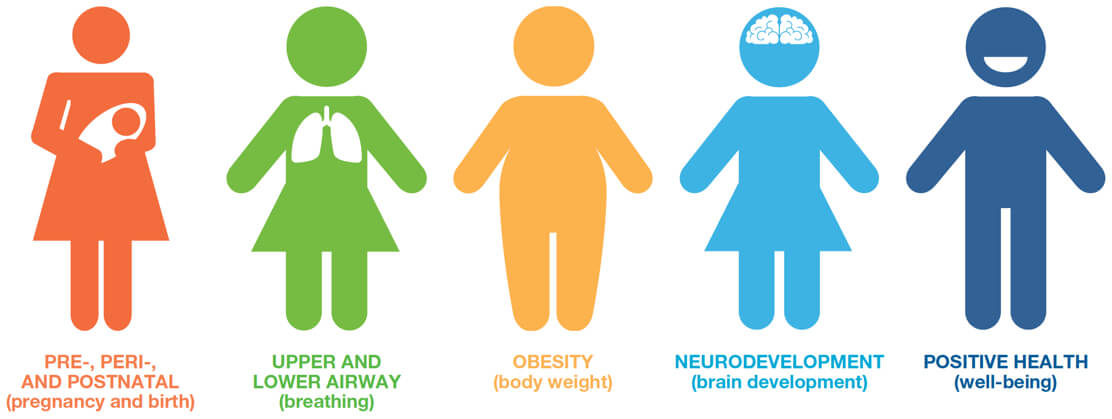
September is National Childhood Obesity Awareness Month. Childhood obesity or overweight affects around 35% of children in the U.S., increasing their risk for adverse mental and physical health outcomes that can follow them into adulthood. Obesity is one of ECHO’s five pediatric health outcomes, and advancing research in the early developmental causes of obesity and its consequences is an important part of our mission to enhance the health of children for generations to come.
In the September issue of the ECHO Connector, we highlight the work of ECHO investigators including Drs. Traci Bekelman and Dana Dabelea, who have led a team of ECHO researchers in studying the regional and socioeconomic differences in childhood obesity. This team is also leading ECHO collaborative research on how obesity-related behaviors have changed with the COVID-19 pandemic, during which the already high rates of childhood obesity have risen even more. See more detail on their research.
ECHO’s five pediatric health outcome areas
You can find more papers from ECHO researchers on obesity and other outcome areas on our publications page, which is searchable by topic.
I would also like to thank the ECHO Connector readers and ECHO participants for the feedback we have received thus far on the ECHO Connector and ECHOchildren.org website survey. We appreciate your participation and feedback and encourage you to complete the survey to help enhance ECHO’s communications and resources.
Good nutrition during pregnancy is important for a baby’s health. Too few vitamins and minerals, such as folic acid and vitamin A, can result in neural tube defects and alterations in heart structure. On the other hand, excessive intake of certain micronutrients may increase chronic disease risk. Although previously associated with lower income countries, meta-analyses and nationally representative samples have shown that at least one in every three pregnant women in the US aged 20-40 were at risk for inadequate intake of various vitamins while nearly one third of pregnant women exceeded the upper intake level of certain micronutrients by up to 5-10 times their required amount.
Katherine Sauder, PhD
To explore the disparities in nutrient intake among pregnant women, Katherine Sauder of CU Anschutz and her writing team collected data from nearly 10,000 women in 15 ECHO cohorts across 14 states. Participants in all of these cohorts reported sociodemographic data, weight, age, race/ethnicity, education status, and pre-pregnancy body mass index. Participants were women aged 14-50 who provided either 24-hour dietary recalls or food frequency questionnaires during their pregnancy between 1999-2019.
The team compared the intake of 19 micronutrients from food alone versus food plus dietary supplements to estimate the proportion of the micronutrients consumed above and below their recommended amounts among the different sociodemographic and physical subgroups.
The study found that more than one in five pregnant women did not eat enough of the vitamins D, E, K, and choline and the minerals magnesium and potassium, even when taking dietary supplements. The women most likely to not get enough of these vitamins and minerals were those aged 14-18 years, those who were Hispanic or Black, those who had less than a high school education, and those with obesity. Also, non-Hispanic women were most likely to eat too much folic acid, potentially putting their child at an increased risk for chronic illness.
“This study shows that the dietary supplements women use today do not help them get all the nutrients they need in the right amounts. Personalized approaches for dietary counseling and dietary supplement recommendations are needed. Reformulation of supplements would likely benefit pregnant women as well,” said Sauder. “Choosing a prenatal vitamin can be hard because there are so many products at the store. Ask your doctor to help you choose the best one for you.”
In the future, the team will study how much vitamins and minerals women are getting from foods and compare this value to the recommended amounts for pregnant women. This will help doctors identify which dietary supplements on the market will give women the vitamins and minerals they need.
Phthalates are man-made chemicals that are commonly found in plastics, solvents, and personal care products like perfumes, nail polishes, soaps, and hair sprays. Because they are found in so many household products, people can be exposed to them often. Unfortunately, there is little research on how exposure to phthalates can affect a pregnant woman’s health and the health of the developing baby. Investigating how exposures to phthalates affect the placenta, an organ that delivers oxygen and nutrients to the baby, can reveal more about the relationship between these chemical exposures and infant health.
Alison Paquette, PhD
To explore this research gap, Alison Paquette, PhD of Seattle Children’s Research Institute and the ECHO Pathways research team examined the association between phthalate exposure in the second and third trimester and gene expression in the placenta. This information provides insight into how phthalates may affect different placental functions.
The team measured the levels of 16 different phthalates in each urine sample provided during the mother’s second and third trimesters and analyzed the levels of expression for every gene in the placenta after giving birth. Gene expression is a measure of how DNA is converted into proteins, which perform a variety of important cellular functions and play critical roles in development. For each gene, the researchers investigated the link between that gene’s expression and phthalate levels during pregnancy. The researchers used this information to analyze which biological pathways in the placenta are potentially affected by phthalate exposure.
The study found that several phthalates were associated with higher or lower placental gene expression for 38 genes. The team also identified some changes in gene expression that were only significant in male or female infants, indicating that phthalates may alter placental function differently for the different sexes. The team also found 27 specific biological pathways that may have been affected by phthalate exposure, including pathways essential to infant development. For example, the team found phthalate exposure was linked with decreased expression of the genes involved in the generation of fatty acids, which are essential building blocks for organ development. Changes in generating these fatty acids may impact how the fetus grows, particularly the brain, which may have a long-term impact on the child’s health.
“Placental gene expression is an important marker that can tell us if the placenta is performing all its normal jobs correctly. If the placenta is not functioning correctly, it may lead to pregnancy complications that threaten the health of both the mother and baby, or cause changes in fetal growth and development,” said Paquette. “By identifying how chemicals like phthalates alter placental function, it may help us understand the associations between phthalate exposure and some pregnancy complications.”
Moving forward, the research team will study how changes in the placenta are associated with other pregnancy complications, such as preterm birth, within the same population of women. Additional research, paired with new tools and technology, will also help them map out how phthalates may cause these changes in gene expression.
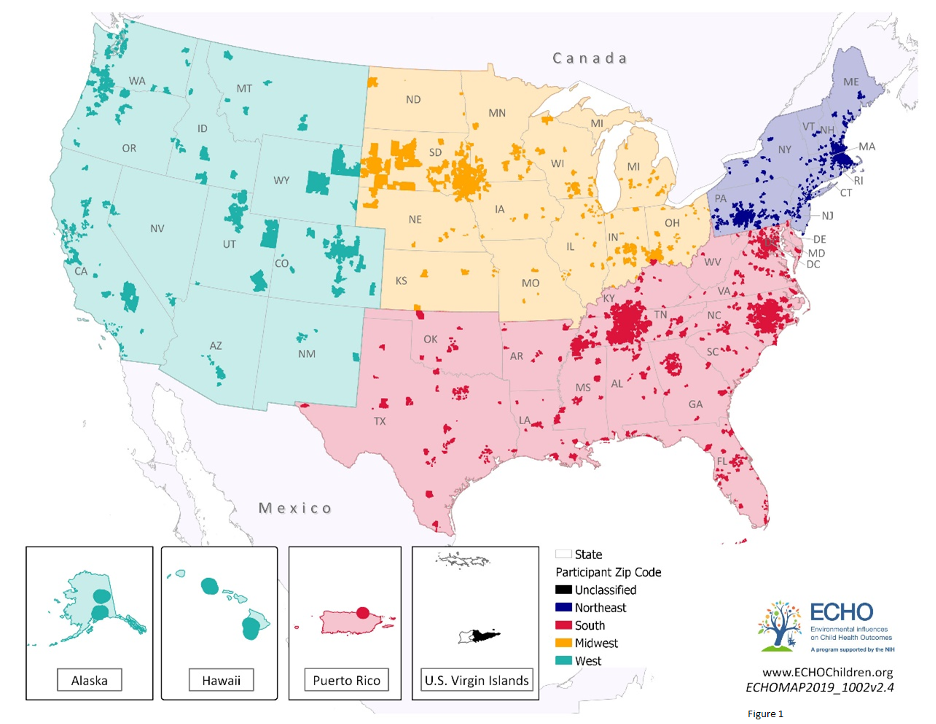
This image shows the different regions of the Unites States where study participants lived.
About 35% of US children are overweight or obese, increasing their lifetime risk for a variety of negative physical and mental health outcomes. Understanding which environmental, social, and cultural factors contribute to childhood obesity can help doctors and policymakers design strategies for early intervention. ECHO researchers Traci Bekelman, PhD, MPH and Dana Dabelea, MD, PhD of the University of Colorado Anschutz; Jody Ganiban, PhD of George Washington University; and their team explored how regional and demographic factors impact children’s weight. Their research, titled “Regional and Sociodemographic Differences in Average BMI Among U.S. Children in the ECHO Program,” is published in Obesity.
During the study, the team analyzed weight and height data doctors collected between 2000 and 2018 from more than 14,000 children and teens from birth to age 15 located across the US in the West, South, Northeast, and Midwest regions. The data incorporated information from children of various racial and ethnic backgrounds, and approximately half of the children were girls. The team used this data to calculate each child’s body mass index (BMI), an approximate measure of body fat based on height and weight. The team then compared these values based on each child’s birth weight, race, ethnicity, sex, home address, and mother’s level of education.
The study found correlations between the children’s BMI and their location. For example, BMI was lowest in the South and West compared to the Northeast. When demographic differences were accounted for, children in the Midwest had higher BMIs compared to children in the Northeast. More work is needed to understand how regional variations in the price and accessibility of food, the opportunities for physical activity, and the school policies and programs impact childhood obesity risk.
The team also found that children who weighed more at birth and children who had less educated mothers had higher BMIs on average. In the Northeast, South, and Midwest, non-Hispanic Black children had higher BMIs than non-Hispanic white children. And in the South and West, BMI was higher on average for Hispanic white children compared to non-Hispanic white children. This research highlights the need for more thorough investigations into how systemic inequalities contribute to obesity risk in children.
“We were surprised that we only found racial and ethnic differences in BMI in some regions,” said Bekelman. “This finding and future studies could help researchers understand the causes of health disparities.” She also noted that the next step for this research is to investigate which specific regional factors and demographic disparities contribute to higher BMIs.
John Pearce, PhD Medical University of South Carolina
Pregnant women often encounter numerous chemicals that may pose a risk to them and their baby. A subset of these chemicals are endocrine disrupting chemicals (EDC), which can affect health outcomes including growth and development, organ function, metabolism, and reproduction. Thousands of manufactured chemicals in use today are EDCs, and exposures to them are often studied individually. However, this approach is limited since mothers often encounter multiple chemicals in combination (a.k.a., mixtures) during the course of their pregnancy.
To further investigate exposure combinations to EDCs, ECHO researcher John Pearce, PhD of the Medical University of South Carolina and his research team developed a new methodology defined as exposure continuum mapping (ECM) that leverages spatially correlated learning for investigating complex exposure patterns (a.k.a. mixtures) in health studies involving numerous exposures. With this study, Dr. Pearce and his team apply ECM to data collected from a diverse mother-child cohort to identify exposure profiles of real world EDC mixtures and to assess how the discovered profiles associated with birth outcomes.
To begin, the team used data previously collected from over 600 women participating in ECHO that also enrolled in the Eunice Kennedy Shriver National Institute of Child Health and Human Development’s (NICHD) Fetal Growth Studies from 2009-2012. These data included concentrations of EDCs measured in blood samples collected from mothers 8-12 weeks into their pregnancy and their infant’s weight at birth. Then, the team analyzed these data with ECM in order to identify the range of EDC exposure profiles experienced by moms during their pregnancy and to examine the relationship to the birth weight of their children.
Findings from the study revealed that moms experienced a broad range of chemical exposure profiles with marked variability in exposure magnitudes across chemical classes and exposure frequencies. Evaluation of health effects found that maternal exposure profiles dominated by higher levels of flame-retardants (i.e., polybrominated diphenyl ethers, PBDEs) were associated to lower birth weights. Exposure profiles with higher levels of polychlorinated biphenyls (PCBs) and perfluoroakyl (PFAS) substances were associated with increased birth weights. PCBs are man-made chemicals that are often found in industrial and commercial products, such as electrical and hydraulic equipment and plasticizers in paints, plastics, and rubber products. PFAS substances can often be found in food packaging, commercial household products, drinking water, and living organisms.
“ECM provides a promising framework for supporting studies of other exposure mixtures as the resulting mapping benefits visualization and assessment of relationships in complex data,” said Pearce. “Moving forward, our team will apply ECM to assist investigations of exposure mixtures and other child health outcomes, with particular interest on obesity.”
Brian Hallmark, PhD Lead Author University of Arizona
Wheezing is often an early indicator of childhood asthma. While there are several studies looking at patterns of childhood wheezing as well as studies investigating the association between genetic variants and childhood asthma, research is lacking on the direct association between wheezing patterns and genetic variants. To fill this gap, members of ECHO Children’s Respiratory Research and Environment Workgroup (CREW) explored the effect of chromosome 17q12-21 variants, which have been previously linked to childhood asthma, on patterns of wheezing in African American and European American children across the US.
Data collection lasted several years as ECHO CREW sites used questionnaires and interviews to collect information from children and their parents. The researchers harmonized data from the different sites in order to group children based on when and how often they wheezed from birth to 11 years old. Sites also collected DNA samples from most of the children, and researchers analyzed those samples for the presence of nine different small gene changes, also known as single nucleotide polymorphisms (SNPs), at the 17q12-21 chromosome locus. Using statistical techniques, the team then identified different wheezing patterns and measured their association with each of the genetic variants.
Overall, four wheezing patterns were identified among participants:
Infrequent—few wheezing episodes only in the first three years
Transient—some wheezing in first three years, then less, and gone by around six years
Late-onset—little wheezing in the first few years and then gradually occurs more often
Persistent—many wheezing episodes over the first 11 years of life.
These patterns are similar to with the wheezing patterns identified in previous studies that used data collected from other birth cohorts.
Researchers also found that a little more than half of the children experienced wheezing before three years old, and 62% wheezed within the first 10 years of life. Early childhood wheezing often starts due to a viral infection, such as the common cold. Additionally, some children who are diagnosed with asthma may experience transient wheezing patterns that will not last beyond pre-school.
This study was also the first to investigate how genetic variation relates to wheezing patterns in African American children. African American children were statistically more likely than European American children to experience persistent wheezing. While most of the SNPs were associated with transient, late-onset, and persistent wheezing patterns in European American children, only two SNPs were associated with these wheezing patterns in both European American and African American children. One of these SNPs interrupts production of a protein that may be involved in protecting the body from viral infection in the upper airways.
“Asthma is complicated, and susceptible children exposed to hazards such as viruses, allergens, and pollution have more risk of having episodes of wheeze in the preschool years,” said lead author Brian Hallmark, PhD, from the University of Arizona. “Some genetic variations put children at higher risk. The more we understand how asthma develops, the better we can identify and help children at risk and find ways to prevent asthma.”
Not only is this study the first to examine genetic variation and wheezing patterns in African American children, it is also the first to find evidence that genetic variants associated with childhood asthma are also associated with all early life wheezing patterns. These results are found consistently in children from different cities and those born in different decades. In the future, the team will focus on possible associations between children’s insulin levels, genetic variations, and the development of asthma in childhood.
In May, the NIH ECHO Program Office released a Request for Information (RFI) to seek input from the scientific community and the general public about enhancing ECHO science. We are currently reviewing the valuable feedback you provided, and we will share a summary of the comments in the coming weeks.
Additionally, last month, ECHO hosted a two-day workshop on the preconceptional origins of child health. The workshop featured a welcome by NIH Director Dr. Francis Collins and presentations by experts who discussed the state of the science, research gaps, and opportunities related to how preconception exposures may influence child health outcomes.
Thank you to those who participated in these opportunities to enhance ECHO Program science and future pediatric research.
In July’s issue of the ECHO Connector, we are pleased to share our latest news and findings on topics including the role epigenetics may play in the inheritance of health risks, clinical trials recruitment, and the progress of the ECHO Program. In addition, this month’s Connector highlights insights about diversity, disparity, and resilience from the Principal Investigator of our Navajo Birth Cohort, which shares data with ECHO grantees as part of the first Tribal data-sharing agreement for a nationwide research consortium.
I would also like to thank ECHO Connector readers and ECHO participants for their continued support. July’s ECHO Connector includes information regarding a survey on the current state of the ECHO Connector, with opportunities to provide feedback on the ECHO Program’s website materials and resources. The survey should take no longer than 5 minutes to complete. With your participation and feedback, we hope to enhance ECHO’s communications and resources.





 As of this month, all children ages 5 and older can get a COVID-19 vaccine in the United States. It’s a major turning point in the fight against the virus that causes COVID-19, and it’s the best way to protect our children, families, and communities.