



NIH Study Reveals Potential Link Between Pregnancy Complications and Slower Infant Development

FOR IMMEDIATE RELEASE

 

Gestational diabetes and preeclampsia may be linked to slower biological development in infants, according to a new study funded by the Environmental influences on Child Health Outcomes Program (ECHO) at the National Institutes of Health.

The study found that newborns who were exposed to these two pregnancy complications were biologically younger than their chronologic gestational age—an effect that was most noticeable in female infants. The results provide an important clue about how these common pregnancy complications may affect infants and health outcomes later in childhood.

“In the future, we plan to continue our research with a larger sample of participants and investigate whether these biological changes detected at birth are linked to health outcomes later in childhood,” said Carrie Breton, ScD, MPH, an ECHO Program investigator at the University of Southern California. “If so, doctors and researchers could use that knowledge to develop targeted interventions that can reduce the adverse effects of preeclampsia and gestational diabetes on children’s health.”

During the study, ECHO researchers collected DNA samples from 1,801 newborns from 12 ECHO cohorts across the United States. They used these samples to evaluate each infant’s epigenetic age. Epigenetic age is a pattern of chemicals in the blood that reflects biological age rather than just chronological age. Researchers then compared the epigenetic age to the infant’s chronological age at birth (measured in pregnancy weeks).

Dr. Breton and Christine Ladd-Acosta, PhD, an ECHO Program investigator from Johns Hopkins Bloomberg School of Public Health, led this collaborative ECHO research published in JAMA Network Open.

Ladd-Acosta, C. et al. Analysis of Pregnancy Complications and Epigenetic Gestational Age of Newborns. JAMA Network Open. DOI: 10.1001/jamanetworkopen.2023.0672

###

About ECHO: ECHO is a nationwide research program supported by the NIH. Launched in 2016, ECHO aims to enhance the health of children for generations to come. ECHO investigators study the effects of a broad range of early environmental influences on child health and development. For more information, visit echochildren.org.

About the NIH: NIH, the nation’s medical research agency, includes 27 Institutes and Centers and is a component of the U.S. Department of Health and Human Services. NIH is the primary federal agency conducting and supporting basic, clinical, and translational medical research, and is investigating the causes, treatments, and cures for both common and rare diseases. For more information, visit www.nih.gov.

Media Contacts

For information or to request an interview, contact Rebekah Yeager,  rebekah.yeager@nih.gov.

If you are not a member of the media, but have a general inquiry, please contact  NIHKidsandEnvironment@od.nih.gov.

Connect With Us

echo connectorCheck out the recent issues of our bi-monthly newsletter, the ECHO Connector, for program news and the latest research findings.

To receive the ECHO Connector through email, subscribe here.

Follow @ECHOChildHealth for the latest ECHO Program updates on Twitter.
NIH Study Suggests Association Between Mothers’ Experiences of Maltreatment in Their Own Childhood to Their Children’s Health Outcomes

FOR IMMEDIATE RELEASE


Children of mothers who experienced childhood abuse or neglect may have a higher risk for developing asthma, ADHD, autism spectrum disorder, and certain mental health issues, according to a study funded by the Environmental influences on Child Health Outcomes Program (ECHO) at the National Institutes of Health.

This research suggests that a mother’s history of being abused or neglected as a child may increase their child’s risk for developing one or more of these health outcomes at once. Daughters of these mothers may also be more likely to develop obesity, the study found, as compared to sons.

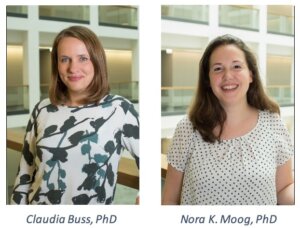
“Asking parents about their childhood experiences during prenatal and pediatric care, identifying parents with a history of childhood abuse or neglect, and offerin­­­­g counseling and support to those parents could help improve health outcomes for their children,” said Claudia Buss, PhD, an ECHO Program investigator at the University of California, Irvine and Charité - Universitätsmedizin Berlin.

The researchers surveyed 4,337 mothers from 21 ECHO cohorts across the U.S. on their childhood experiences. About 44 percent of these mothers reported childhood abuse or neglect. The researchers also collected data on the rates of diagnosis for a number of physical and mental conditions among the children of mothers participating in the study.

Dr. Buss and Nora K. Moog, PhD of Charité - Universitätsmedizin Berlin led this collaborative research published in The Lancet Public Health.

Buss, C. et al. Intergenerational transmission of the consequences of maternal exposure to childhood maltreatment – a United States nationwide observational study of multiple cohorts in the ECHO program. The Lancet Public Health. DOI: 10.1016/S2468-2667(23)00025-7

###

About ECHO: ECHO is a nationwide research program supported by the NIH. Launched in 2016, ECHO aims to enhance the health of children for generations to come. ECHO investigators study the effects of a broad range of early environmental influences on child health and development. For more information, visit echochildren.org.

About the NIH: NIH, the nation’s medical research agency, includes 27 Institutes and Centers and is a component of the U.S. Department of Health and Human Services. NIH is the primary federal agency conducting and supporting basic, clinical, and translational medical research, and is investigating the causes, treatments, and cures for both common and rare diseases. For more information, visit www.nih.gov.

Media Contacts

For information or to request an interview, contact Rebekah Yeager,  rebekah.yeager@nih.gov.

If you are not a member of the media, but have a general inquiry, please contact  NIHKidsandEnvironment@od.nih.gov.

Connect With Us

echo connectorCheck out the recent issues of our bi-monthly newsletter, the ECHO Connector, for program news and the latest research findings.

To receive the ECHO Connector through email, subscribe here.

Follow @ECHOChildHealth for the latest ECHO Program updates on Twitter.

NIH Study Finds Screen Time Increases in Children During the Pandemic Persisted After Restrictions Lifted

FOR IMMEDIATE RELEASE


Increases in screen time among children persisted more than one year into the pandemic, after many COVID restrictions had been lifted, according to a new study funded by the Environmental influences on Child Health Outcomes Program (ECHO) at the National Institutes of Health.

Excessive screen time may be associated with obesity-promoting health behaviors and adverse mental health. The COVID-19 pandemic initially led to widespread school closures, shelter-in-place laws, closures of recreational facilities and cancellation of youth sports, increases in the number of parents working from home, and social distancing recommendations, all of which may have impacted screen time among children.

“Our findings can help inform clinical guidelines that could aid parents and their children in re-establishing healthy media use habits,” said Monique Hedderson, PhD, of the Kaiser Permanente Northern California Division of Research. “Pediatricians can help parents reset family media use priorities and limits that may have relaxed during the early stages of the COVID-19 pandemic using tools like the American Academy of Pediatrics Family Media Plan.”

The study included 228 children between ages 4 to 12 and their parents from three ECHO cohorts across the United States. ECHO researchers surveyed parents about their children’s total, educational (not including remote school), and recreational screen time and examined trends in screen use before and at two points during the pandemic.

Dr. Hedderson and Assiamira Ferrara, MD, PhD, ECHO Program investigators at the Kaiser Permanente Northern California Division of Research, led this collaborative research published in JAMA Network Open.

Hedderson, M. et al. “Trends in screen time use among children during the COVID pandemic, July 2019 through August 2021.” JAMA Network Open. DOI:  10.1001/jamanetworkopen.2022.56157

###

About ECHO: ECHO is a nationwide research program supported by the NIH. Launched in 2016, ECHO aims to enhance the health of children for generations to come. ECHO investigators study the effects of a broad range of early environmental influences on child health and development. For more information, visit echochildren.org.

About the NIH: NIH, the nation’s medical research agency, includes 27 Institutes and Centers and is a component of the U.S. Department of Health and Human Services. NIH is the primary federal agency conducting and supporting basic, clinical, and translational medical research, and is investigating the causes, treatments, and cures for both common and rare diseases. For more information, visit www.nih.gov.

Media Contacts

For information or to request an interview, contact Rebekah Yeager,  rebekah.yeager@nih.gov.

If you are not a member of the media, but have a general inquiry, please contact  NIHKidsandEnvironment@od.nih.gov.

Connect With Us

echo connectorCheck out the recent issues of our bi-monthly newsletter, the ECHO Connector, for program news and the latest research findings.

To receive the ECHO Connector through email, subscribe here.

Follow @ECHOChildHealth for the latest ECHO Program updates on Twitter.

NIH Study Finds the Healthy, Hunger-Free Kids Act Reduced Children’s Body Mass Index

FOR IMMEDIATE RELEASE


There has been an overall decrease in the body mass index (BMI) of children and adolescents in America following the implementation of the Healthy, Hunger-Free Kids Act (HHFKA), according to a new study funded by the Environmental influences on Child Health Outcomes Program (ECHO) at the National Institutes of Health.


“The National School Lunch Program and School Breakfast Program (NSLP) provides free or low-cost meals to over 30 million children annually, providing an estimated 50% of students’ caloric intake each school day,” said Aruna Chandran, MD, MPH, an ECHO Program investigator at the Johns Hopkins Bloomberg School of Public Health.

The HHFKA was fully implemented in 2016 and is the first legislation passed in nearly 3 decades to improve the nutritional quality of school meals. To evaluate the effect of the HHFKA on children’s BMI, ECHO researchers analyzed data from over 14,000 children collected between January 2005 and March 2020 from 50 cohorts across the U.S.

“School meals and snacks represent a key opportunity for intervention to combat the childhood obesity epidemic,” said Emily Knapp, PhD, an ECHO Program investigator at the Johns Hopkins Bloomberg School of Public Health. “This is particularly important for children in lower-income families who are more likely to participate in the NSLP and are at higher risk of obesity.”

Dr. Chandran and Dr. Knapp led this collaborative research published in JAMA Pediatrics.

Chandran, A. et al. Changes in Body Mass Index Among School-Aged Children Following Implementation of the Healthy, Hunger-Free Kids Act. JAMA Pediatrics. DOI:10.1001/jamapediatrics.2022.5828

###

About ECHO: ECHO is a nationwide research program supported by the NIH. Launched in 2016, ECHO aims to enhance the health of children for generations to come. ECHO investigators study the effects of a broad range of early environmental influences on child health and development. For more information, visit echochildren.org.

About the NIH: NIH, the nation’s medical research agency, includes 27 Institutes and Centers and is a component of the U.S. Department of Health and Human Services. NIH is the primary federal agency conducting and supporting basic, clinical, and translational medical research, and is investigating the causes, treatments, and cures for both common and rare diseases. For more information, visit www.nih.gov.

Media Contacts

For information or to request an interview, contact Rebekah Yeager,  rebekah.yeager@nih.gov.

If you are not a member of the media, but have a general inquiry, please contact  NIHKidsandEnvironment@od.nih.gov.

Connect With Us

echo connectorCheck out the recent issues of our bi-monthly newsletter, the ECHO Connector, for program news and the latest research findings.

To receive the ECHO Connector through email, subscribe here.

Follow @ECHOChildHealth for the latest ECHO Program updates on Twitter.

NIH Program Study Suggests Pregnant Women with Higher Levels of Oxidative Stress May Be More Likely to Deliver Preterm Babies

FOR IMMEDIATE RELEASE

Elevated levels of oxidative stress during pregnancy might be linked to a higher risk of preterm birth, according to a new study funded by the Environmental influences on Child Health Outcomes Program at the National Institutes of Health.

Oxidative stress, a process that can trigger cell damage, may contribute to poor prenatal health outcomes. “Previous research on this topic has involved fairly small, primarily White populations, which is not reflective of diversity in the U.S.,” said Stephanie Eick, PhD, MPH, an ECHO Program investigator at Emory University’s School of Public Health.

This study examined data from 1,916 racially, ethnically, and demographically diverse pregnant women from four ECHO cohorts across the U.S. and Puerto Rico. Researchers used urine samples collected during the second and third trimesters of pregnancy to measure oxidative stress biomarkers and evaluate any links between those biomarkers and preterm birth.

The researchers found a strong association between higher levels of oxidative stress biomarkers and preterm birth, particularly for participants who experienced sudden, unexpected preterm birth or preterm birth that occurred prior to 34 weeks. Further research is needed to understand the chemical mechanisms behind this association and identify the risk factors that contribute to high oxidative stress during pregnancy.

Dr. Eick and Rachel Morello-Frosch, PhD, MPH an ECHO Program investigator at the University of California, Berkeley, led this collaborative research published in the American Journal of Obstetrics and Gynecology.

Eick, S. et al. A pooled analysis of four birth cohorts examining urinary oxidative stress biomarkers and preterm birth. American Journal of Obstetrics and Gynecology. DOI:10.1016/j.ajog.2022.11.1282.

###

About ECHO: ECHO is a nationwide research program supported by the NIH. Launched in 2016, ECHO aims to enhance the health of children for generations to come. ECHO investigators study the effects of a broad range of early environmental influences on child health and development. For more information, visit echochildren.org.

About the NIH: NIH, the nation’s medical research agency, includes 27 Institutes and Centers and is a component of the U.S. Department of Health and Human Services. NIH is the primary federal agency conducting and supporting basic, clinical, and translational medical research, and is investigating the causes, treatments, and cures for both common and rare diseases. For more information, visit www.nih.gov.

Media Contacts

For information or to request an interview, contact Rebekah Yeager,  rebekah.yeager@nih.gov.

If you are not a member of the media, but have a general inquiry, please contact  NIHKidsandEnvironment@od.nih.gov.

Connect With Us

echo connectorCheck out the recent issues of our bi-monthly newsletter, the ECHO Connector, for program news and the latest research findings.

To receive the ECHO Connector through email, subscribe here.

Follow @ECHOChildHealth for the latest ECHO Program updates on Twitter.

NIH Program Study Links Prenatal Exposure to Perfluorononanoic Acid with Childhood Autism-related Traits

FOR IMMEDIATE RELEASE


Prenatal exposure to perfluorononanoic acid (PFNA), a chemical sometimes found in food or drinking water, is associated with autism-related traits in children, according to a new study funded by the Environmental influences on Child Health Outcomes Program (ECHO) at the National Institutes of Health.


PFNA belongs to a group of chemicals known as per- and polyfluoroalkyl substances (PFAS), which are widely used, long-lasting chemicals known as “forever chemicals” because they do not break down easily and can build up in the body over time. To evaluate the relationship between prenatal exposure to PFAS and autism-related traits during childhood, this study looked at 1,224 mother-child pairs from 10 ECHO cohorts across the United States. The researchers measured the levels of eight different PFAS in blood samples collected from mothers during pregnancy. Later, caregivers reported on their child’s autism-related traits.

“By continuously measuring the development of autism-related traits, we were able to examine whether prenatal PFAS exposure may affect the development of autism-related traits, even when a child does not receive a clinical ASD diagnosis,” said Ghassan Hamra, PhD, an ECHO Program investigator at Johns Hopkins Bloomberg School of Public Health.

“In the U.S., exposures to some specific PFAS, such as PFOA and PFOS, have dropped substantially since the industry voluntarily phased these chemicals out in the early 2000s.  However, other PFAS exposures have increased over time,” said Jennifer Ames, PhD, an ECHO Program investigator at the Kaiser Permanente Northern California Division of Research.

Dr. Ames and Dr. Hamra led this collaborative research published in Epidemiology.

Ames, J. et al. Prenatal exposure to per- and polyfluoroalkyl substances and childhood autism-related outcomes. Epidemiology. DOI: 10.1097/EDE.0000000000001587. 

###

About ECHO: ECHO is a nationwide research program supported by the NIH. Launched in 2016, ECHO aims to enhance the health of children for generations to come. ECHO investigators study the effects of a broad range of early environmental influences on child health and development. For more information, visit echochildren.org.

About the NIH: NIH, the nation’s medical research agency, includes 27 Institutes and Centers and is a component of the U.S. Department of Health and Human Services. NIH is the primary federal agency conducting and supporting basic, clinical, and translational medical research, and is investigating the causes, treatments, and cures for both common and rare diseases. For more information, visit www.nih.gov.

Media Contacts

For information or to request an interview, contact Rebekah Yeager,  rebekah.yeager@nih.gov.

If you are not a member of the media, but have a general inquiry, please contact  NIHKidsandEnvironment@od.nih.gov.

Connect With Us

echo connectorCheck out the recent issues of our bi-monthly newsletter, the ECHO Connector, for program news and the latest research findings.

To receive the ECHO Connector through email, subscribe here.

Follow @ECHOChildHealth for the latest ECHO Program updates on Twitter.

NIH Program Study Links Neighborhood Opportunity and Social Vulnerability to Children’s Body Mass Index

Izzuddin M. Aris, PhD

FOR IMMEDIATE RELEASE


Children who lived in higher opportunity or less vulnerable neighborhoods early in life had lower average body mass index (BMI) and lower risk of obesity from childhood to adolescence, according to a new study funded by the Environmental influences on Child Health Outcomes Program at the National Institutes of Health.

“This study bolsters the need for a focus on investments that address the structures that consistently compromise the health of marginalized communities,” said Izzuddin M. Aris, PhD of Harvard Medical School.

Children’s BMI and childhood obesity are significant risk factors for heart disease later in life. To understand how neighborhood-level conditions can affect a child’s risk for these health outcomes, ECHO researchers collected address and weight information from over 20,000 children from birth through 10 years old, and linked the address data to the Child Opportunity Index and Social Vulnerability Index.

In the future, neighborhood indices, such as the ones used in this study, could help inform efforts to reduce neighborhood barriers and improve access to community resources so families can better support their children’s health and well-being.

Dr. Aris led this collaborative research published in JAMA Network Open.

Aris, I. M. et al. Associations of Neighborhood Opportunity and Vulnerability with Trajectories of Child Body Mass Index and Obesity Among U.S. Children” in JAMA Network Open. DOI: 10.1001/jamanetworkopen.2022.47957


###


About ECHO: ECHO is a nationwide research program supported by the NIH. Launched in 2016, ECHO aims to enhance the health of children for generations to come. ECHO investigators study the effects of a broad range of early environmental influences on child health and development. For more information, visit echochildren.org.

About the NIH: NIH, the nation’s medical research agency, includes 27 Institutes and Centers and is a component of the U.S. Department of Health and Human Services. NIH is the primary federal agency conducting and supporting basic, clinical, and translational medical research, and is investigating the causes, treatments, and cures for both common and rare diseases. For more information, visit www.nih.gov.

Media Contacts

For information or to request an interview, contact Rebekah Yeager,  rebekah.yeager@nih.gov.

If you are not a member of the media, but have a general inquiry, please contact  NIHKidsandEnvironment@od.nih.gov.

Connect With Us

echo connectorCheck out the recent issues of our bi-monthly newsletter, the ECHO Connector, for program news and the latest research findings.

To receive the ECHO Connector through email, subscribe here.

Follow @ECHOChildHealth for the latest ECHO Program updates on Twitter.

NIH Program Study Finds Life Changes During the COVID-19 Pandemic Contribute to Mothers’ Traumatic Stress

FOR IMMEDIATE RELEASE


Mothers who experienced more life changes during the pandemic reported more symptoms of traumatic stress, according to a new study funded by the Environmental influences on Child Health Outcomes Program (ECHO) at the National Institutes of Health.
Mothers with higher incomes and higher education tended to experience more changes and reported more symptoms of traumatic stress. Additionally, these mothers were more likely to report financial concerns as a cause of that stress.

“Our study found that mothers who had the most changes to their work, health, and social support systems also reported the highest amount of traumatic stress due to the pandemic,” said Tracy Bastain, PhD, MPH, an ECHO Program investigator from the University of Southern California.

This study included 11,473 mothers from 62 ECHO cohorts across the U.S. and Puerto Rico and investigated the potential impacts of the COVID-19 pandemic on maternal mental health from April 2020 through August 2021. ECHO researchers examined patterns of pandemic-associated changes in maternal health and health behaviors, healthcare visits, work and finances, and coping strategies. The researchers used cluster analysis to group the mothers based on their pandemic experiences and then examined whether these groups reported higher or lower symptoms of traumatic stress related to the pandemic.

Dr. Bastain and Amy Margolis, PhD, an ECHO Program investigator from Columbia University, led this collaborative research published in JAMA Network Open.

Bastain, T. et al. COVID-19 Pandemic Experiences and Symptoms of Pandemic-Associated Traumatic Stress Among Mothers in the US. JAMA Network Open. DOI:10.1001/jamanetworkopen.2022.47330

###

About ECHO: ECHO is a nationwide research program supported by the NIH. Launched in 2016, ECHO aims to enhance the health of children for generations to come. ECHO investigators study the effects of a broad range of early environmental influences on child health and development. For more information, visit echochildren.org.

About the NIH: NIH, the nation’s medical research agency, includes 27 Institutes and Centers and is a component of the U.S. Department of Health and Human Services. NIH is the primary federal agency conducting and supporting basic, clinical, and translational medical research, and is investigating the causes, treatments, and cures for both common and rare diseases. For more information, visit www.nih.gov.

Media Contacts

For information or to request an interview, contact Rebekah Yeager,  rebekah.yeager@nih.gov.

If you are not a member of the media, but have a general inquiry, please contact  NIHKidsandEnvironment@od.nih.gov.

Connect With Us

echo connectorCheck out the recent issues of our bi-monthly newsletter, the ECHO Connector, for program news and the latest research findings.

To receive the ECHO Connector through email, subscribe here.

Follow @ECHOChildHealth for the latest ECHO Program updates on Twitter.

NIH Program Study Evaluates Eye Tracking as a Tool for Assessing Attention Patterns in Children

FOR IMMEDIATE RELEASE


Eye-tracking technology can be used to reliably assess attention patterns linked to socially withdrawn behaviors in preschool children, according to a new study funded by the Environmental influences on Child Health Outcomes (ECHO) Program at the National Institutes of Health.

Humans tend to give more attention to emotional information, such as happy or angry facial expressions, than neutral information. However, past research indicates that socially withdrawn children are less likely to conform to this pattern. This study aims to extend the existing research, which is limited primarily to White children in urban areas, to include children of diverse populations.

Eye-tracking is a technology that allows researchers to determine precisely where and how long a person looks at a stimulus. The research team compared eye-tracking data from indigenous children in the Navajo Birth Cohort Study (NBCS) with primarily non-Hispanic White children in the Illinois Kids Development Study (IKIDS). Both groups paid more attention to emotional faces. Socially withdrawn indigenous children were more likely than non-Hispanic White children to avoid emotional faces.

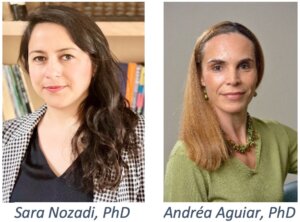
“Because eye-tracking technology doesn’t rely on limited clinical observations or parents’ reports, it can be used as a more objective measure across various settings and communities,” said Sara Nozadi, PhD, an ECHO Program investigator at the University of New Mexico. Eye-tracking technology can also be used in remote communities without requiring participants to travel to clinic.

Dr. Nozadi and Andréa Aguiar, PhD, an ECHO Program investigator at the University of Illinois Urbana-Champaign, led this collaborative research published in Emotion.

Nozadi, S. et al. Cross-Cultural Applicability of Eye-Tracking in Assessing Attention to Emotional Faces in Preschool-Aged Children. Emotion. DOI:10.1037/emo0001124

###

About ECHO: ECHO is a nationwide research program supported by the NIH. Launched in 2016, ECHO aims to enhance the health of children for generations to come. ECHO investigators study the effects of a broad range of early environmental influences on child health and development. For more information, visit echochildren.org.

About the NIH: NIH, the nation’s medical research agency, includes 27 Institutes and Centers and is a component of the U.S. Department of Health and Human Services. NIH is the primary federal agency conducting and supporting basic, clinical, and translational medical research, and is investigating the causes, treatments, and cures for both common and rare diseases. For more information, visit www.nih.gov.

Media Contacts

For information or to request an interview, contact Rebekah Yeager,  rebekah.yeager@nih.gov.

If you are not a member of the media, but have a general inquiry, please contact  NIHKidsandEnvironment@od.nih.gov.

Connect With Us

echo connectorCheck out the recent issues of our bi-monthly newsletter, the ECHO Connector, for program news and the latest research findings.

To receive the ECHO Connector through email, subscribe here.

Follow @ECHOChildHealth for the latest ECHO Program updates on Twitter.

NIH Program Study Finds Pregnant Women are Exposed to Dangerous Chemicals Found in a Variety of Household Products

FOR IMMEDIATE RELEASE


A new National Institutes of Health (NIH)-funded study found that pregnant women are exposed to a variety of dangerous chemicals commonly found in household products. People can be exposed to these chemicals through the air, contaminated food, household dust, water, plastics, products that contain dyes and pigments, and many other sources.

This study used new methods to measure the levels of 45 chemicals in urine samples from 171 pregnant women participating in the NIH Environmental influences on Child Health Outcomes (ECHO) Program. Two of these chemicals, melamine and cyanuric acid, were found in over 99% of study participants, and exposure to four different types of aromatic amines were also found in nearly all participants. Levels of these chemicals were higher among Hispanic and non-Hispanic Black participants and those exposed to tobacco smoke.

“This is the first national study to reveal that pregnant women in the U.S. are widely exposed to melamine, cyanuric acid, and aromatic amines—chemicals that may be harmful to maternal health and child development,” said Giehae Choi, PhD.

ECHO Program investigators Dr. Choi and Jessie Buckley, PhD, both of Johns Hopkins University, along with Tracey Woodruff, PhD, MPH of the University of California, San Francisco led this collaborative research effort published in Chemosphere.

Choi, G. et al. Exposure to melamine and its derivatives and aromatic amines among pregnant women in the United States: The ECHO Program. Chemosphere. DOI: 10.1016/j.chemosphere.2022.135599

###

About ECHO: ECHO is a nationwide research program supported by the NIH. Launched in 2016, ECHO aims to enhance the health of children for generations to come. ECHO investigators study the effects of a broad range of early environmental influences on child health and development. For more information, visit echochildren.org.

About the NIH: NIH, the nation’s medical research agency, includes 27 Institutes and Centers and is a component of the U.S. Department of Health and Human Services. NIH is the primary federal agency conducting and supporting basic, clinical, and translational medical research, and is investigating the causes, treatments, and cures for both common and rare diseases. For more information, visit www.nih.gov.

Media Contacts

For information or to request an interview, contact Rebekah Yeager,  rebekah.yeager@nih.gov.

If you are not a member of the media, but have a general inquiry, please contact  NIHKidsandEnvironment@od.nih.gov.

Connect With Us

echo connectorCheck out the recent issues of our bi-monthly newsletter, the ECHO Connector, for program news and the latest research findings.

To receive the ECHO Connector through email, subscribe here.

Follow @ECHOChildHealth for the latest ECHO Program updates on Twitter.