




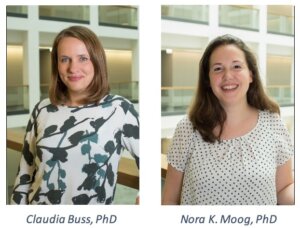
 Collaborative ECHO research led by Claudia Buss, PhD of the University of California, Irvine and Charité – Universitätsmedizin Berlin and Nora K. Moog, PhD of Charité – Universitätsmedizin Berlin, suggests that maternal history of childhood maltreatment may increase the risk for multiple child health outcomes, including asthma, depressive symptoms, attention-deficit/hyperactivity disorder (ADHD), and autism spectrum disorder (ASD). The results of this study also indicate that children of mothers who experienced neglect or abuse as children were more likely to develop several of these health outcomes simultaneously. This research, titled “Intergenerational transmission of the consequences of maternal exposure to childhood maltreatment – a United States nationwide observational study of multiple cohorts in the ECHO program,” is published in The Lancet Public Health.
Childhood maltreatment increases the risk for adverse health outcomes, and this risk can be transmitted from one generation to the next. Previous research has investigated single health outcomes in children of mothers exposed to childhood maltreatment. However, health problems are often interconnected and affected by the same factors, so this study investigated the association between maternal exposure to childhood abuse or neglect and children’s risk of experiencing more than one of six evaluated health outcomes simultaneously: ASD, ADHD, asthma, allergies, obesity, and internalizing behaviors (e.g., social withdrawal, trouble sleeping, symptoms of anxiety or depression).
The researchers evaluated data from 4,337 mothers and their children from 21 ECHO cohorts in the United States. Mothers self-reported on their childhood experiences, and researchers used this information to categorize them based on whether or not they were exposed to childhood neglect or abuse. About 44% of participating mothers reported experiencing some level of childhood maltreatment. The researchers then compared the rates of diagnosis for a number of physical and mental conditions between the children in the two groups.
Children of mothers exposed to childhood maltreatment had higher rates of asthma, ADHD, ASD, and internalizing problems compared with children of mothers without CM. Additionally, girls whose mothers experienced childhood neglect or abuse were more likely to develop obesity. Children of mothers who experienced childhood maltreatment were at higher risk of developing more than one of the evaluated health outcomes. Exposure to several different forms of maternal childhood maltreatment was associated with highest risk increases for most offspring health outcomes suggesting the more severe the maternal childhood experiences were, the higher the risk for adverse health outcomes in her child.
“Not all children of mothers with experiences of childhood maltreatment will develop health problems, but those who do are at risk of developing more than one condition,” said Dr. Buss. “Asking parents about their childhood experiences during prenatal and pediatric care, identifying parents with a history of childhood abuse or neglect, and offering counseling and support to those parents could help improve health outcomes for their children.”
Follow-up studies will further investigate the different pathways between maternal childhood maltreatment and child health outcomes. Future studies may also track the effects of other forms of negative childhood experiences in combination with childhood maltreatment on child health outcomes.
For more background, view this ECHO Discovery webinar about how a mother’s own adverse childhood experiences may affect her child’s health and well-being.