


ECHO Researchers Investigate the Effect of the Healthy, Hunger-Free Kids Act on the Body Mass Index of School-aged Children

Collaborative ECHO research led by Aruna Chandran, MD, MPH and Emily Knapp, PhD of the Johns Hopkins Bloomberg School of Public Health, examines how the body mass index (BMI) trends of school-aged children have changed following the implementation of the 2010 Healthy, Hunger-Free Kids Act (HHFKA). Researchers analyzed height and weight data from over 14,000 children in the ECHO Program and found an overall decrease in BMI following the implementation of the HHFKA. These results suggest a reversal of the pre-implementation trends, which indicated that BMI was increasing from year to year, particularly among adolescents and children from lower-income families. This research, titled “Changes in Body Mass Index Among School-Aged Children Following Implementation of the Healthy, Hunger-Free Kids Act,” is published in JAMA Pediatrics.

“The National School Lunch Program and School Breakfast Program (NSLP) provides free or low-cost meals to over 30 million children annually, providing an estimated 50% of students’ caloric intake each school day,” said Dr. Chandran. “The Healthy, Hunger-Free Kids Act was the first legislation in nearly 3 decades aimed at improving the nutritional quality of breakfast, lunch, and snacks sold at schools.”

Childhood obesity is a serious health concern, affecting nearly 1 in 5 children in America, that has long-term consequences for health and quality of life. While many studies have already shown the success of the HHFKA in improving the quality of school meals, there are still gaps in understanding the effect of this policy on childhood BMI.

For this study, researchers analyzed height and weight measurements collected between January 2005 and March 2020 from children ages 5 to 18 years across 50 ECHO cohorts in the United States. They used these measurements to calculate each child’s BMI, then adjusted those measurements based on the child’s age and sex. Using this data, the researchers compared yearly BMI trends from before and after the implementation of the HHFKA.

The researchers found that increasing BMI trends from the decade before the HHFKA was implemented were reversed after the law was implemented. This effect was also observed in adolescents, who tend to have more autonomy in purchasing their own meals and snacks during the school day but still benefited from HHFKA implementation.

“School meals and snacks represent a key opportunity for intervention to combat the childhood obesity epidemic, given the high rates of participation in school meal programs and the significant proportion of caloric intake that children receive at school,” said Dr. Knapp. “This is particularly important for children in lower-income families, who are more likely to participate in the NSLP and are at higher risk of obesity.”

In the future, researchers should continue to the examine the effects of improving the nutritional quality of school meals on childhood obesity. Results from this study can also help policymakers evaluate future policies related to improving school meals and snacks.

Read the research summary.­­

2023: Happy New Year

Happy New Year! Last year, the ECHO Program continued to make substantial progress in our mission to enhance the health of children for generations to come. I thank all participants and researchers involved with ECHO for their contributions in 2022 and look forward to continued success in 2023.

As a reminder, de-identified data from the ECHO Program are now available as a resource for the entire scientific community. This public-use version of ECHO-wide Cohort data fulfills both a key strategic goal of the ECHO Program and an obligation to U.S. taxpayers for their investment in our research. You can learn more about this data set and how researchers can request access to it in the January issue of the Connector.

Another announcement of potential interest: ECHO, assisted by other NIH partners, will host a workshop on Return of Individual Research Results to Participants on March 16-17, 2023. The purpose of the workshop is to identify best practices to ethically and feasibly return individual research results to participants in large-sample studies including pregnant women and children. I invite anyone interested to join the audience; click for registration details.

NIH Program Study Suggests Pregnant Women with Higher Levels of Oxidative Stress May Be More Likely to Deliver Preterm Babies

FOR IMMEDIATE RELEASE

Elevated levels of oxidative stress during pregnancy might be linked to a higher risk of preterm birth, according to a new study funded by the Environmental influences on Child Health Outcomes Program at the National Institutes of Health.

Oxidative stress, a process that can trigger cell damage, may contribute to poor prenatal health outcomes. “Previous research on this topic has involved fairly small, primarily White populations, which is not reflective of diversity in the U.S.,” said Stephanie Eick, PhD, MPH, an ECHO Program investigator at Emory University’s School of Public Health.

This study examined data from 1,916 racially, ethnically, and demographically diverse pregnant women from four ECHO cohorts across the U.S. and Puerto Rico. Researchers used urine samples collected during the second and third trimesters of pregnancy to measure oxidative stress biomarkers and evaluate any links between those biomarkers and preterm birth.

The researchers found a strong association between higher levels of oxidative stress biomarkers and preterm birth, particularly for participants who experienced sudden, unexpected preterm birth or preterm birth that occurred prior to 34 weeks. Further research is needed to understand the chemical mechanisms behind this association and identify the risk factors that contribute to high oxidative stress during pregnancy.

Dr. Eick and Rachel Morello-Frosch, PhD, MPH an ECHO Program investigator at the University of California, Berkeley, led this collaborative research published in the American Journal of Obstetrics and Gynecology.

Eick, S. et al. A pooled analysis of four birth cohorts examining urinary oxidative stress biomarkers and preterm birth. American Journal of Obstetrics and Gynecology. DOI:10.1016/j.ajog.2022.11.1282.

###

About ECHO: ECHO is a nationwide research program supported by the NIH. Launched in 2016, ECHO aims to enhance the health of children for generations to come. ECHO investigators study the effects of a broad range of early environmental influences on child health and development. For more information, visit echochildren.org.

About the NIH: NIH, the nation’s medical research agency, includes 27 Institutes and Centers and is a component of the U.S. Department of Health and Human Services. NIH is the primary federal agency conducting and supporting basic, clinical, and translational medical research, and is investigating the causes, treatments, and cures for both common and rare diseases. For more information, visit www.nih.gov.

Media Contacts

For information or to request an interview, contact Rebekah Yeager,  rebekah.yeager@nih.gov.

If you are not a member of the media, but have a general inquiry, please contact  NIHKidsandEnvironment@od.nih.gov.

Connect With Us

echo connectorCheck out the recent issues of our bi-monthly newsletter, the ECHO Connector, for program news and the latest research findings.

To receive the ECHO Connector through email, subscribe here.

Follow @ECHOChildHealth for the latest ECHO Program updates on Twitter.

NIH Program Study Links Prenatal Exposure to Perfluorononanoic Acid with Childhood Autism-related Traits

FOR IMMEDIATE RELEASE


Prenatal exposure to perfluorononanoic acid (PFNA), a chemical sometimes found in food or drinking water, is associated with autism-related traits in children, according to a new study funded by the Environmental influences on Child Health Outcomes Program (ECHO) at the National Institutes of Health.
PFNA belongs to a group of chemicals known as per- and polyfluoroalkyl substances (PFAS), which are widely used, long-lasting chemicals known as “forever chemicals” because they do not break down easily and can build up in the body over time. To evaluate the relationship between prenatal exposure to PFAS and autism-related traits during childhood, this study looked at 1,224 mother-child pairs from 10 ECHO cohorts across the United States. The researchers measured the levels of eight different PFAS in blood samples collected from mothers during pregnancy. Later, caregivers reported on their child’s autism-related traits.

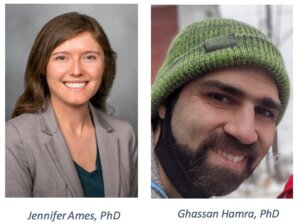
“By continuously measuring the development of autism-related traits, we were able to examine whether prenatal PFAS exposure may affect the development of autism-related traits, even when a child does not receive a clinical ASD diagnosis,” said Ghassan Hamra, PhD, an ECHO Program investigator at Johns Hopkins Bloomberg School of Public Health.

“In the U.S., exposures to some specific PFAS, such as PFOA and PFOS, have dropped substantially since the industry voluntarily phased these chemicals out in the early 2000s.  However, other PFAS exposures have increased over time,” said Jennifer Ames, PhD, an ECHO Program investigator at the Kaiser Permanente Northern California Division of Research.

Dr. Ames and Dr. Hamra led this collaborative research published in Epidemiology.

Ames, J. et al. Prenatal exposure to per- and polyfluoroalkyl substances and childhood autism-related outcomes. Epidemiology. DOI: 10.1097/EDE.0000000000001587. 

###

About ECHO: ECHO is a nationwide research program supported by the NIH. Launched in 2016, ECHO aims to enhance the health of children for generations to come. ECHO investigators study the effects of a broad range of early environmental influences on child health and development. For more information, visit echochildren.org.

About the NIH: NIH, the nation’s medical research agency, includes 27 Institutes and Centers and is a component of the U.S. Department of Health and Human Services. NIH is the primary federal agency conducting and supporting basic, clinical, and translational medical research, and is investigating the causes, treatments, and cures for both common and rare diseases. For more information, visit www.nih.gov.

Media Contacts

For information or to request an interview, contact Rebekah Yeager,  rebekah.yeager@nih.gov.

If you are not a member of the media, but have a general inquiry, please contact  NIHKidsandEnvironment@od.nih.gov.

Connect With Us

echo connectorCheck out the recent issues of our bi-monthly newsletter, the ECHO Connector, for program news and the latest research findings.

To receive the ECHO Connector through email, subscribe here.

Follow @ECHOChildHealth for the latest ECHO Program updates on Twitter.

ECHO Researchers Investigate Whether Prenatal Chemical Exposures Affect the Development of Autism-related Traits in Children

Collaborative ECHO research led by Jennifer Ames, PhD of the Kaiser Permanente Northern California Division of Research and Ghassan Hamra, PhD of Johns Hopkins Bloomberg School of Public Health, investigates whether exposures to per- and polyfluoroalkyl substances (PFAS) during pregnancy were associated with the development of autism-related traits in children. The researchers looked at data from 1,224 mother-child pairs and found that prenatal exposure to one specific PFAS chemical, perfluorononanoic acid (PFNA), may be associated with an increase in autism-related traits in children. Prenatal exposure to the mixture of all PFAS chemicals combined was not associated with increased autism-related traits in children. This research, titled “Prenatal exposure to per- and polyfluoroalkyl substances and childhood autism-related outcomes,” is published in Epidemiology.

PFAS are widely used, long lasting chemicals, the components of which break down very slowly over time. Previous studies that have investigated the association between prenatal PFAS exposure and childhood autism spectrum disorder (ASD) have been inconsistent and mostly involved small sample sizes. This study leveraged the large, diverse ECHO-wide cohort to evaluate how prenatal PFAS exposure affects the development autism-related traits, even when a child does not receive a clinical ASD diagnosis.

This study included children born between 2011 and 2018 from 10 racially and ethnically diverse ECHO cohorts across the United States, including one cohort that enrolls children from families with an increased likelihood of ASD. The researchers measured the levels of eight different PFAS in blood samples collected from mothers during pregnancy. Later, when their children were aged 2.5 years or older, researchers asked caregivers to report on their child’s autism-related traits using a questionnaire called the Social Responsiveness Scale (SRS). The research team tracked the associations between these data to examine child SRS scores in relation to each individual PFAS as well as the combination of the PFAS.

“In the U.S. population, exposures to perfluorooctanoic acid (PFOA) and perfluorooctane sulfonate (PFOS) have dropped substantially since the industry voluntarily phased out these chemicals in the early 2000s,” said Dr. Ames. “However, other PFAS exposures have increased over time, including thousands with unknown toxicity. These so-called ‘forever chemicals’ continue to pose risks to health even after they are phased out because they persist in the environment and inside people’s bodies and don’t break down easily.”

These results underscore the need for more research on whether PFAS chemicals might have more significant effects on child neurodevelopment, and whether factors such as genetics, underlying health conditions, or nutritional status may change the effect of PFAS exposure on brain development.

Read the research summary.­­

New ECHO Study Investigates the Relationship Between a Mother’s Oxidative Stress Levels and Preterm Birth

A collaborative research study led by Stephanie Eick, PhD, MPH of Emory University’s Rollins School of Public Health and Rachel Morello-Frosch PhD, MPH of the University of California, Berkeley found an association between elevated levels of oxidative stress and higher risk of preterm birth. This study examined data from 1,916 racially, ethnically, and demographically diverse pregnant participants from four ECHO cohorts across the United States and Puerto Rico. This research titled, “A pooled analysis of four birth cohorts examining urinary oxidative stress biomarkers and preterm birth,” is published in the American Journal of Obstetrics and Gynecology.

Oxidative stress is a process that can trigger cell damage and may contribute to poor prenatal health outcomes. “This is the largest study to date looking at the relationship between oxidative stress and preterm birth,” said Dr. Eick. “Previous research on this topic has involved fairly small, primarily White populations, which is not reflective of diversity in the US.”

The researchers measured oxidative stress biomarkers in urine samples from participants collected during the second and third trimesters of pregnancy. Then, they calculated the association between the oxidative stress biomarkers concentration for each participant and all preterm births (delivery prior to 37 weeks).

Results from this study showed a strong association between higher levels of oxidative stress biomarkers and preterm birth.  This association was particularly true for participants who experienced preterm birth that was sudden and unexpected or occurred prior to 34 weeks.

Future research will investigate how the chemicals involved in oxidative stress may lead to preterm birth and identify what risk factors lead to higher oxidative stress during pregnancy.

Read the research summary.

ECHO Researchers Investigate How Changes in Family Situations Due to the COVID-19 Pandemic are Linked to Children’s Behaviors

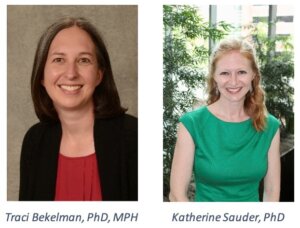
Collaborative ECHO research led by Traci Bekelman, PhD, MPH and Katherine Sauder, PhD of the University of Colorado, Anschutz Medical Campus, investigates whether parents’ coping strategies, stress, and financial strain affected their children’s health behaviors during the first seven months of the COVID-19 pandemic. The researchers found that children with parents who were able to change their work schedules to care for their children during the pandemic had less screen time and slept longer at night, while children with parents who were unable to adjust their work schedules due to stress about money and access to food drank more sugary drinks, were less active, and slept less at night. This research, titled “Sociodemographic Variation in Children’s Health Behaviors During the COVID-19 Pandemic,” is published in Childhood Obesity.

This study included 3,315 children between 3 and 17 years old from 50 ECHO cohorts across the United States. Parents answered questions about their child’s diet, physical activity, screen time, and sleep during the first seven months of the COVID-19 pandemic. Additionally, the parents reported how they personally coped with the pandemic and what their largest sources of stress was.

The COVID-19 pandemic significantly changed many families’ routines and financial situations, causing an increase in parents’ stress and affecting children’s diet, physical activity, and sleep behaviors. “Parents stressed about money may need additional resources to help their children to eat healthier, increase their physical activity and sleep, and decrease their screen time,” said Dr. Bekelman. “Going forward, we will continue to look at how financial stress and parents’ work schedules affect children’s health behaviors to help guide the design of future interventions that can encourage healthy behaviors among children, especially during stressful times like a pandemic.”

Read the research summary.

NIH Program Study Links Neighborhood Opportunity and Social Vulnerability to Children’s Body Mass Index

Izzuddin M. Aris, PhD

FOR IMMEDIATE RELEASE


Children who lived in higher opportunity or less vulnerable neighborhoods early in life had lower average body mass index (BMI) and lower risk of obesity from childhood to adolescence, according to a new study funded by the Environmental influences on Child Health Outcomes Program at the National Institutes of Health.

“This study bolsters the need for a focus on investments that address the structures that consistently compromise the health of marginalized communities,” said Izzuddin M. Aris, PhD of Harvard Medical School.

Children’s BMI and childhood obesity are significant risk factors for heart disease later in life. To understand how neighborhood-level conditions can affect a child’s risk for these health outcomes, ECHO researchers collected address and weight information from over 20,000 children from birth through 10 years old, and linked the address data to the Child Opportunity Index and Social Vulnerability Index.

In the future, neighborhood indices, such as the ones used in this study, could help inform efforts to reduce neighborhood barriers and improve access to community resources so families can better support their children’s health and well-being.

Dr. Aris led this collaborative research published in JAMA Network Open.

Aris, I. M. et al. Associations of Neighborhood Opportunity and Vulnerability with Trajectories of Child Body Mass Index and Obesity Among U.S. Children” in JAMA Network Open. DOI: 10.1001/jamanetworkopen.2022.47957


###


About ECHO: ECHO is a nationwide research program supported by the NIH. Launched in 2016, ECHO aims to enhance the health of children for generations to come. ECHO investigators study the effects of a broad range of early environmental influences on child health and development. For more information, visit echochildren.org.

About the NIH: NIH, the nation’s medical research agency, includes 27 Institutes and Centers and is a component of the U.S. Department of Health and Human Services. NIH is the primary federal agency conducting and supporting basic, clinical, and translational medical research, and is investigating the causes, treatments, and cures for both common and rare diseases. For more information, visit www.nih.gov.

Media Contacts

For information or to request an interview, contact Rebekah Yeager,  rebekah.yeager@nih.gov.

If you are not a member of the media, but have a general inquiry, please contact  NIHKidsandEnvironment@od.nih.gov.

Connect With Us

echo connectorCheck out the recent issues of our bi-monthly newsletter, the ECHO Connector, for program news and the latest research findings.

To receive the ECHO Connector through email, subscribe here.

Follow @ECHOChildHealth for the latest ECHO Program updates on Twitter.

New ECHO Research Links Neighborhood Opportunity and Social Vulnerability to Children’s Body Mass Index (BMI)

Izzuddin M. Aris, PhD

Collaborative ECHO research led by Izzuddin M. Aris, PhD of Harvard Medical School, investigates associations between neighborhood-level opportunity and social vulnerability and children’s body mass index (BMI) and obesity risk. The study evaluated over 20,000 children and found that children who lived in higher opportunity or less vulnerable neighborhoods early in life had lower average BMI and lower risk of obesity from childhood to adolescence. Children’s BMI and obesity risk was most strongly linked with the conditions of the neighborhoods they lived in at birth compared to those they lived in later in childhood. Additionally, these associations were not affected by individual and family sociodemographics or by prenatal characteristics that are considered risk factors for childhood obesity. This research, titled “Associations of Neighborhood Opportunity and Vulnerability with Trajectories of Child Body Mass Index and Obesity Among U.S. Children,” is published in JAMA Network Open.

Childhood BMI—an estimation of their overall body fat—and childhood obesity are significant risk factors for cardiovascular disease-related morbidity and mortality later in adulthood. To understand how neighborhood-level conditions can affect a child’s risk for these health outcomes, this study looked at children from 54 ECHO cohorts located across the United States. ECHO researchers collected each child’s home address and weight at birth, infancy (6 months‒1.5 years), early childhood (2‒5 years), and mid-childhood (5‒10 years). The researchers linked children’s addresses throughout childhood to data from the Child Opportunity Index and Social Vulnerability Index to examine links between neighborhood conditions and children’s BMI and obesity over time.

“Our findings suggest that living in a high opportunity or low vulnerability neighborhood is an important resilience factor that may promote favorable BMI patterns which, in turn, could reduce future chronic disease risk,” said Dr. Aris. “This study bolsters the need for a focus on investments that address the structures that consistently compromise the health of marginalized communities.”

Neighborhood indices, such as the ones used in this study, could be used to target the development of place-based programs or policies that directly address the disparate contexts of neighborhoods, reduce barriers and improve access to essential resources and provide families with the environments needed to support optimal child health and well-being.

Future research should explore whether programs or policies that change specific aspects of neighborhood environments would be effective in preventing excess weight and obesity in children.


Read the research summary.

NIH Program Study Finds Life Changes During the COVID-19 Pandemic Contribute to Mothers’ Traumatic Stress

FOR IMMEDIATE RELEASE


Mothers who experienced more life changes during the pandemic reported more symptoms of traumatic stress, according to a new study funded by the Environmental influences on Child Health Outcomes Program (ECHO) at the National Institutes of Health.

Mothers with higher incomes and higher education tended to experience more changes and reported more symptoms of traumatic stress. Additionally, these mothers were more likely to report financial concerns as a cause of that stress.

“Our study found that mothers who had the most changes to their work, health, and social support systems also reported the highest amount of traumatic stress due to the pandemic,” said Tracy Bastain, PhD, MPH, an ECHO Program investigator from the University of Southern California.

This study included 11,473 mothers from 62 ECHO cohorts across the U.S. and Puerto Rico and investigated the potential impacts of the COVID-19 pandemic on maternal mental health from April 2020 through August 2021. ECHO researchers examined patterns of pandemic-associated changes in maternal health and health behaviors, healthcare visits, work and finances, and coping strategies. The researchers used cluster analysis to group the mothers based on their pandemic experiences and then examined whether these groups reported higher or lower symptoms of traumatic stress related to the pandemic.

Dr. Bastain and Amy Margolis, PhD, an ECHO Program investigator from Columbia University, led this collaborative research published in JAMA Network Open.

Bastain, T. et al. COVID-19 Pandemic Experiences and Symptoms of Pandemic-Associated Traumatic Stress Among Mothers in the US. JAMA Network Open. DOI:10.1001/jamanetworkopen.2022.47330

###

About ECHO: ECHO is a nationwide research program supported by the NIH. Launched in 2016, ECHO aims to enhance the health of children for generations to come. ECHO investigators study the effects of a broad range of early environmental influences on child health and development. For more information, visit echochildren.org.

About the NIH: NIH, the nation’s medical research agency, includes 27 Institutes and Centers and is a component of the U.S. Department of Health and Human Services. NIH is the primary federal agency conducting and supporting basic, clinical, and translational medical research, and is investigating the causes, treatments, and cures for both common and rare diseases. For more information, visit www.nih.gov.

Media Contacts

For information or to request an interview, contact Rebekah Yeager,  rebekah.yeager@nih.gov.

If you are not a member of the media, but have a general inquiry, please contact  NIHKidsandEnvironment@od.nih.gov.

Connect With Us

echo connectorCheck out the recent issues of our bi-monthly newsletter, the ECHO Connector, for program news and the latest research findings.

To receive the ECHO Connector through email, subscribe here.

Follow @ECHOChildHealth for the latest ECHO Program updates on Twitter.