



ECHO Researchers Investigate Link Between Mental Health and Pregnancy During the COVID-19 Pandemic

Collaborative ECHO research led by Alison Hipwell, PhD, ClinPsyD, of the University of Pittsburg, and Irene Tung, PhD, of California State University Dominguez Hills, found that being pregnant during the COVID-19 pandemic was associated with higher levels of stress and depression symptoms. The researchers found that participants who reported more emotional support and engaged in physical activity before and during the pandemic had less stress and fewer symptoms of depression. The results also showed that pregnancies during the pandemic were slightly shorter on average but there was no impact on infant birth weight. This study highlights the importance of providing access to emotional support and mental health care during pregnancy and identifying ways to promote physical activity to help improve maternal health and well-being, regardless of external conditions like the pandemic. This research, titled “Impact of Sedentary Behavior and Emotional Support on Prenatal Psychological Distress and Birth Outcomes During the COVID-19 Pandemic,” is published in Psychological Medicine.

The study included 501 pregnant participants who gave birth during the COVID-19 pandemic (between March 12, 2020 and May 30, 2021) and 501 pregnant participants who gave birth before the pandemic (prior to March 11, 2020). Participants were 31 years old on average and enrolled in one of 16 ECHO research sites across the United States. Participants answered questions about their experiences with stress and depression, reported on their physical activity and described the emotional support they received during pregnancy. The researchers also collected information on participants’ birth outcomes from medical records and maternal reports.

“More research is needed to understand how social support and physical activity may protect pregnant women during difficult times,” said Alison Hipwell, PhD, ClinPsyD, of the University of Pittsburgh. “Future research may look at what types of experiences during the pandemic had the most influence on pregnancy health and well-being.”

Read the research summary.

NIH ECHO Program Hosted Return of Individual Research Results to Participants Virtual Workshop on March 16–17, 2023

On March 16–17, 2023, ECHO hosted a virtual workshop on the Return of Individual Research Results to Participants to identify principles and best practices to ethically and feasibly return individual research results to participants in large-sample studies that include pregnant women and children. Over 500 registrants heard 16 expert speakers and discussants present their work on the history and principles of returning individual results, the value of results to participants, the selection of which results to return, and how to return individual results.

Workshop themes included:

  • What are the principles and best practices for returning results to pregnant people and children that differ from those of other participants?
  • How can the workshop facilitate equity in return of individual results?
  • Most research on returning results focuses on genetics results; how can we broaden inclusion to additional data like other bioassays, physical measures, and self-reports?

Additional information about the speakers, presentations, and workshop agenda is available.

Recordings of the workshop sessions can be viewed using the following links:

ECHO Researchers Examine Associations Between Mothers’ Demographic Characteristics and Health During Pregnancy and Their Newborns’ Behavior

Collaborative ECHO research led by Marie Camerota, PhD of the Warren Alpert Medical School of Brown University, investigates the link between newborns’ behavior patterns with their mothers’ demographic characteristics and health during pregnancy. The study looked at over 1,000 newborns and their mothers from across the U.S., and found that male babies, babies from younger mothers, and babies whose mothers were depressed or used tobacco during pregnancy were the most likely to have poorly regulated behavior shortly after birth. Babies with poorly regulated behavior were identified as hyper-aroused (i.e., too excitable) or hypo-aroused (i.e., slow to respond). This research, titled “Prenatal and perinatal factors associated with neonatal neurobehavioral profiles in the ECHO Program,” is published in Pediatric Research.

Previous studies have looked at mothers’ and babies’ characteristics that are associated with babies’ behavior shortly after birth, but these studies were conducted with smaller groups of babies who were very similar to one another—for example, studies with babies who were all born full term. There is a need for studies with a large, variable sample of mothers and their newborns, including babies who were born preterm and full term.

This study included mothers and their babies, born at gestational ages from 22 to 42 weeks, from 5 ECHO cohorts. The babies received a behavioral exam shortly after birth to assess their responses to objects and people, their reflexes, and their movement. Either mothers reported information about their own and their babies’ demographics and health information or it was collected from their medical records. ECHO researchers looked at how these characteristics were related to babies’ patterns of behavior.

ECHO researchers identified six groups of babies with different behavior patterns. Four of these groups included normal patterns of behavior and only two groups were characterized as poorly regulated (hyper- or hypo-aroused). Babies born at all different gestational ages were included in all groups.

“If these patterns of behavior are found in other large studies, this might mean that the patterns apply to all babies,” said Dr. Camerota. “This information could be used to identify babies at risk for poorly regulated behavior and inform practices to promote positive developmental outcomes starting at the very beginning of life.”

More research is needed to determine which of the characteristics studied are stronger predictors of babies’ behavior patterns and development, and whether the impact of these factors changes among babies born at different gestational ages. Further research is also needed to learn more about how babies’ neurobehavior shortly after birth is related to their health and development later in childhood.

Read the research summary.

NIH Study Reveals Potential Link Between Pregnancy Complications and Slower Infant Development

FOR IMMEDIATE RELEASE


Gestational diabetes and preeclampsia may be linked to slower biological development in infants, according to a new study funded by the Environmental influences on Child Health Outcomes Program (ECHO) at the National Institutes of Health.

The study found that newborns who were exposed to these two pregnancy complications were biologically younger than their chronologic gestational age—an effect that was most noticeable in female infants. The results provide an important clue about how these common pregnancy complications may affect infants and health outcomes later in childhood.

“In the future, we plan to continue our research with a larger sample of participants and investigate whether these biological changes detected at birth are linked to health outcomes later in childhood,” said Carrie Breton, ScD, MPH, an ECHO Program investigator at the University of Southern California. “If so, doctors and researchers could use that knowledge to develop targeted interventions that can reduce the adverse effects of preeclampsia and gestational diabetes on children’s health.”

During the study, ECHO researchers collected DNA samples from 1,801 newborns from 12 ECHO cohorts across the United States. They used these samples to evaluate each infant’s epigenetic age. Epigenetic age is a pattern of chemicals in the blood that reflects biological age rather than just chronological age. Researchers then compared the epigenetic age to the infant’s chronological age at birth (measured in pregnancy weeks).

Dr. Breton and Christine Ladd-Acosta, PhD, an ECHO Program investigator from Johns Hopkins Bloomberg School of Public Health, led this collaborative ECHO research published in JAMA Network Open.

Ladd-Acosta, C. et al. Analysis of Pregnancy Complications and Epigenetic Gestational Age of Newborns. JAMA Network Open. DOI: 10.1001/jamanetworkopen.2023.0672

###

About ECHO: ECHO is a nationwide research program supported by the NIH. Launched in 2016, ECHO aims to enhance the health of children for generations to come. ECHO investigators study the effects of a broad range of early environmental influences on child health and development. For more information, visit echochildren.org.

About the NIH: NIH, the nation’s medical research agency, includes 27 Institutes and Centers and is a component of the U.S. Department of Health and Human Services. NIH is the primary federal agency conducting and supporting basic, clinical, and translational medical research, and is investigating the causes, treatments, and cures for both common and rare diseases. For more information, visit www.nih.gov.

Media Contacts

For information or to request an interview, contact Rebekah Yeager,  rebekah.yeager@nih.gov.

If you are not a member of the media, but have a general inquiry, please contact  NIHKidsandEnvironment@od.nih.gov.

Connect With Us

echo connectorCheck out the recent issues of our bi-monthly newsletter, the ECHO Connector, for program news and the latest research findings.

To receive the ECHO Connector through email, subscribe here.

Follow @ECHOChildHealth for the latest ECHO Program updates on Twitter.

ECHO Researchers Investigate Link Between Pregnancy Complications and Infant Development

Collaborative ECHO research led by Carrie Breton, ScD, MPH of the University of Southern California and Christine Ladd-Acosta, PhD of Johns Hopkins University found that preeclampsia and gestational diabetes may be linked to slower biological development in infants. The researchers found that newborns who were exposed to these pregnancy complications were biologically younger than those without exposure—an effect that was most noticeable in female infants. The results of this study provide an important clue about how biological mechanisms in offspring might be affected by common pregnancy complications and how these conditions could be linked to child health outcomes. This research, titled “Analysis of Pregnancy Complications and Epigenetic Gestational Age of Newborns,” is published in JAMA Network Open.

The study included 1,801 children born between 1998 and 2008 from 12 ECHO cohorts across the United States. ECHO researchers calculated each infant’s epigenetic age—a measurement of their “biological age” based on molecular markers in their cells—using DNA samples collected at birth and compared their biological age to their actual age at birth (measured in pregnancy weeks). Then, the researchers compared the biological ages of newborn babies exposed to pregnancy complications to the biological ages of babies who were not exposed.

“In the future, we plan to continue our research with a larger sample of participants and investigate whether these biological changes detected at birth are linked to health outcomes later in childhood,” said Dr. Breton. “If so, doctors and researchers could use that knowledge to develop targeted interventions that can reduce the adverse effects of preeclampsia and gestational diabetes on children’s health.”

Read the research summary.

NIH Study Suggests Association Between Mothers’ Experiences of Maltreatment in Their Own Childhood to Their Children’s Health Outcomes

FOR IMMEDIATE RELEASE


Children of mothers who experienced childhood abuse or neglect may have a higher risk for developing asthma, ADHD, autism spectrum disorder, and certain mental health issues, according to a study funded by the Environmental influences on Child Health Outcomes Program (ECHO) at the National Institutes of Health.

This research suggests that a mother’s history of being abused or neglected as a child may increase their child’s risk for developing one or more of these health outcomes at once. Daughters of these mothers may also be more likely to develop obesity, the study found, as compared to sons.

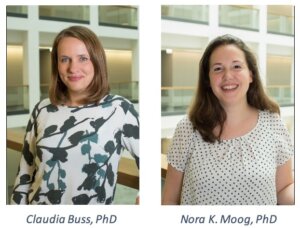
“Asking parents about their childhood experiences during prenatal and pediatric care, identifying parents with a history of childhood abuse or neglect, and offerin­­­­g counseling and support to those parents could help improve health outcomes for their children,” said Claudia Buss, PhD, an ECHO Program investigator at the University of California, Irvine and Charité - Universitätsmedizin Berlin.

The researchers surveyed 4,337 mothers from 21 ECHO cohorts across the U.S. on their childhood experiences. About 44 percent of these mothers reported childhood abuse or neglect. The researchers also collected data on the rates of diagnosis for a number of physical and mental conditions among the children of mothers participating in the study.

Dr. Buss and Nora K. Moog, PhD of Charité - Universitätsmedizin Berlin led this collaborative research published in The Lancet Public Health.

Buss, C. et al. Intergenerational transmission of the consequences of maternal exposure to childhood maltreatment – a United States nationwide observational study of multiple cohorts in the ECHO program. The Lancet Public Health. DOI: 10.1016/S2468-2667(23)00025-7

###

About ECHO: ECHO is a nationwide research program supported by the NIH. Launched in 2016, ECHO aims to enhance the health of children for generations to come. ECHO investigators study the effects of a broad range of early environmental influences on child health and development. For more information, visit echochildren.org.

About the NIH: NIH, the nation’s medical research agency, includes 27 Institutes and Centers and is a component of the U.S. Department of Health and Human Services. NIH is the primary federal agency conducting and supporting basic, clinical, and translational medical research, and is investigating the causes, treatments, and cures for both common and rare diseases. For more information, visit www.nih.gov.

Media Contacts

For information or to request an interview, contact Rebekah Yeager,  rebekah.yeager@nih.gov.

If you are not a member of the media, but have a general inquiry, please contact  NIHKidsandEnvironment@od.nih.gov.

Connect With Us

echo connectorCheck out the recent issues of our bi-monthly newsletter, the ECHO Connector, for program news and the latest research findings.

To receive the ECHO Connector through email, subscribe here.

Follow @ECHOChildHealth for the latest ECHO Program updates on Twitter.

New ECHO Research Investigates the Consequences of Maternal Exposure to Childhood Maltreatment on Their Children’s Health Outcomes

Collaborative ECHO research led by Claudia Buss, PhD of the University of California, Irvine and Charité – Universitätsmedizin Berlin and Nora K. Moog, PhD of Charité – Universitätsmedizin Berlin, suggests that maternal history of childhood maltreatment may increase the risk for multiple child health outcomes, including asthma, depressive symptoms, attention-deficit/hyperactivity disorder (ADHD), and autism spectrum disorder (ASD). The results of this study also indicate that children of mothers who experienced neglect or abuse as children were more likely to develop several of these health outcomes simultaneously. This research, titled “Intergenerational transmission of the consequences of maternal exposure to childhood maltreatment – a United States nationwide observational study of multiple cohorts in the ECHO program,” is published in The Lancet Public Health.

Childhood maltreatment increases the risk for adverse health outcomes, and this risk can be transmitted from one generation to the next. Previous research has investigated single health outcomes in children of mothers exposed to childhood maltreatment. However, health problems are often interconnected and affected by the same factors, so this study investigated the association between maternal exposure to childhood abuse or neglect and children’s risk of experiencing more than one of six evaluated health outcomes simultaneously: ASD, ADHD, asthma, allergies, obesity, and internalizing behaviors (e.g., social withdrawal, trouble sleeping, symptoms of anxiety or depression).

The researchers evaluated data from 4,337 mothers and their children from 21 ECHO cohorts in the United States. Mothers self-reported on their childhood experiences, and researchers used this information to categorize them based on whether or not they were exposed to childhood neglect or abuse. About 44% of participating mothers reported experiencing some level of childhood maltreatment. The researchers then compared the rates of diagnosis for a number of physical and mental conditions between the children in the two groups.

Children of mothers exposed to childhood maltreatment had higher rates of asthma, ADHD, ASD, and internalizing problems compared with children of mothers without CM. Additionally, girls whose mothers experienced childhood neglect or abuse were more likely to develop obesity. Children of mothers who experienced childhood maltreatment were at higher risk of developing more than one of the evaluated health outcomes. Exposure to several different forms of maternal childhood maltreatment was associated with highest risk increases for most offspring health outcomes suggesting the more severe the maternal childhood experiences were, the higher the risk for adverse health outcomes in her child.

“Not all children of mothers with experiences of childhood maltreatment will develop health problems, but those who do are at risk of developing more than one condition,” said Dr. Buss. “Asking parents about their childhood experiences during prenatal and pediatric care, identifying parents with a history of childhood abuse or neglect, and offerin­­­­g counseling and support to those parents could help improve health outcomes for their children.”

Follow-up studies will further investigate the different pathways between maternal childhood maltreatment and child health outcomes. Future studies may also track the effects of other forms of negative childhood experiences in combination with childhood maltreatment on child health outcomes.

Read the research summary.

For more background, view this ECHO Discovery webinar about how a mother’s own adverse childhood experiences may affect her child’s health and well-being.

NIH Study Finds Screen Time Increases in Children During the Pandemic Persisted After Restrictions Lifted

FOR IMMEDIATE RELEASE


Increases in screen time among children persisted more than one year into the pandemic, after many COVID restrictions had been lifted, according to a new study funded by the Environmental influences on Child Health Outcomes Program (ECHO) at the National Institutes of Health.

Excessive screen time may be associated with obesity-promoting health behaviors and adverse mental health. The COVID-19 pandemic initially led to widespread school closures, shelter-in-place laws, closures of recreational facilities and cancellation of youth sports, increases in the number of parents working from home, and social distancing recommendations, all of which may have impacted screen time among children.

“Our findings can help inform clinical guidelines that could aid parents and their children in re-establishing healthy media use habits,” said Monique Hedderson, PhD, of the Kaiser Permanente Northern California Division of Research. “Pediatricians can help parents reset family media use priorities and limits that may have relaxed during the early stages of the COVID-19 pandemic using tools like the American Academy of Pediatrics Family Media Plan.”

The study included 228 children between ages 4 to 12 and their parents from three ECHO cohorts across the United States. ECHO researchers surveyed parents about their children’s total, educational (not including remote school), and recreational screen time and examined trends in screen use before and at two points during the pandemic.

Dr. Hedderson and Assiamira Ferrara, MD, PhD, ECHO Program investigators at the Kaiser Permanente Northern California Division of Research, led this collaborative research published in JAMA Network Open.

Hedderson, M. et al. “Trends in screen time use among children during the COVID pandemic, July 2019 through August 2021.” JAMA Network Open. DOI:  10.1001/jamanetworkopen.2022.56157

###

About ECHO: ECHO is a nationwide research program supported by the NIH. Launched in 2016, ECHO aims to enhance the health of children for generations to come. ECHO investigators study the effects of a broad range of early environmental influences on child health and development. For more information, visit echochildren.org.

About the NIH: NIH, the nation’s medical research agency, includes 27 Institutes and Centers and is a component of the U.S. Department of Health and Human Services. NIH is the primary federal agency conducting and supporting basic, clinical, and translational medical research, and is investigating the causes, treatments, and cures for both common and rare diseases. For more information, visit www.nih.gov.

Media Contacts

For information or to request an interview, contact Rebekah Yeager,  rebekah.yeager@nih.gov.

If you are not a member of the media, but have a general inquiry, please contact  NIHKidsandEnvironment@od.nih.gov.

Connect With Us

echo connectorCheck out the recent issues of our bi-monthly newsletter, the ECHO Connector, for program news and the latest research findings.

To receive the ECHO Connector through email, subscribe here.

Follow @ECHOChildHealth for the latest ECHO Program updates on Twitter.

New ECHO Research Investigates Increase in Screen Time for Children During the Pandemic

Collaborative ECHO research led by Monique Hedderson, PhD and Assiamira Ferrara, MD, PhD, of the Division of Research at Kaiser Permanente Northern California, investigates the changes in screen time habits of children during the COVID-19 pandemic. The study found that total screen time among children ages 4 to 12 increased between December 2020 and April 2021 when school closures and lockdowns were widespread and remained even after several restrictions were lifted. The research, titled “Trends in screen time use among children during the COVID pandemic, July 2019 through August 2021,” is published in JAMA Network Open.

The study included 228 parent-child pairs from three ECHO cohorts across the United States (Colorado, California, and South Dakota). Parents reported their children’s screen time. The geographically, racially, and ethnically diverse participants ranged in age from 4 to 12 at the start of the study. ECHO researchers surveyed parents about their children’s media use before, during the early, and later periods of the pandemic. The study assessed total, educational (not including remote school), and recreational screen time and examined trends in screen use before and at two points during the pandemic.

Excessive screen time is associated with obesity-promoting health behaviors and adverse mental health. The COVID-19 pandemic initially led to widespread school closures, shelter-in-place laws, closures of recreational facilities and cancellation of youth sports, increases in parents working from home, and social distancing recommendations, all of which may have impacted screen time among children.

“Our findings can help inform clinical guidelines that could aid parents and their children in re-establishing healthy media use habits,” said Dr. Hedderson. “Pediatricians can help parents reset family media use priorities and limits that may have relaxed during the early stages of the COVID-19 pandemic using tools like the American Academy of Pediatrics Family Media Plan.”

Prior studies have reported screen time levels during the pandemic but were unable to document changes in screen time because most lacked pre-pandemic assessments. This study is among a handful of ECHO COVID-19 studies to include pre-pandemic assessments of screen use in order to document changes during the pandemic.

More studies are needed to determine whether the increases in screen time among children during the pandemic impacted longer term obesity and mental health outcomes in children. Future studies can also clarify whether there were specific types of screen time that adversely impacted children’s health during the pandemic.

Read the research summary.

NIH Study Finds the Healthy, Hunger-Free Kids Act Reduced Children’s Body Mass Index

FOR IMMEDIATE RELEASE


There has been an overall decrease in the body mass index (BMI) of children and adolescents in America following the implementation of the Healthy, Hunger-Free Kids Act (HHFKA), according to a new study funded by the Environmental influences on Child Health Outcomes Program (ECHO) at the National Institutes of Health.

“The National School Lunch Program and School Breakfast Program (NSLP) provides free or low-cost meals to over 30 million children annually, providing an estimated 50% of students’ caloric intake each school day,” said Aruna Chandran, MD, MPH, an ECHO Program investigator at the Johns Hopkins Bloomberg School of Public Health.

The HHFKA was fully implemented in 2016 and is the first legislation passed in nearly 3 decades to improve the nutritional quality of school meals. To evaluate the effect of the HHFKA on children’s BMI, ECHO researchers analyzed data from over 14,000 children collected between January 2005 and March 2020 from 50 cohorts across the U.S.

“School meals and snacks represent a key opportunity for intervention to combat the childhood obesity epidemic,” said Emily Knapp, PhD, an ECHO Program investigator at the Johns Hopkins Bloomberg School of Public Health. “This is particularly important for children in lower-income families who are more likely to participate in the NSLP and are at higher risk of obesity.”

Dr. Chandran and Dr. Knapp led this collaborative research published in JAMA Pediatrics.

Chandran, A. et al. Changes in Body Mass Index Among School-Aged Children Following Implementation of the Healthy, Hunger-Free Kids Act. JAMA Pediatrics. DOI:10.1001/jamapediatrics.2022.5828

###

About ECHO: ECHO is a nationwide research program supported by the NIH. Launched in 2016, ECHO aims to enhance the health of children for generations to come. ECHO investigators study the effects of a broad range of early environmental influences on child health and development. For more information, visit echochildren.org.

About the NIH: NIH, the nation’s medical research agency, includes 27 Institutes and Centers and is a component of the U.S. Department of Health and Human Services. NIH is the primary federal agency conducting and supporting basic, clinical, and translational medical research, and is investigating the causes, treatments, and cures for both common and rare diseases. For more information, visit www.nih.gov.

Media Contacts

For information or to request an interview, contact Rebekah Yeager,  rebekah.yeager@nih.gov.

If you are not a member of the media, but have a general inquiry, please contact  NIHKidsandEnvironment@od.nih.gov.

Connect With Us

echo connectorCheck out the recent issues of our bi-monthly newsletter, the ECHO Connector, for program news and the latest research findings.

To receive the ECHO Connector through email, subscribe here.

Follow @ECHOChildHealth for the latest ECHO Program updates on Twitter.