


NIH Study Examines Healthcare Use During the COVID-19 Pandemic for Children Born Preterm

FOR IMMEDIATE RELEASE

 

Children and adolescents born preterm were more likely to use healthcare services for symptoms related to COVID-19, even after accounting for known risk factors of respiratory illness, according to new research funded by the Environmental influences on Child Health Outcomes Program (ECHO) at the National Institutes of Health.

The study is among the first to look at healthcare use by a high-risk population during the pandemic.

“Understanding the different needs of children born preterm and their families during the first year of the pandemic is an important first step toward making healthcare more effective and efficient,” said Elisabeth McGowan, MD, of Brown University’s Alpert Medical School.

This study included data from 1,691 individuals ages 1–18 years, including 270 who were born preterm, 37 or fewer weeks of gestation. Among these participants, 159 were born at 28 or fewer weeks and were twice as likely to seek healthcare compared to those born at term.

Between April 2020 and August 2021, researchers collected caregiver- or self-reported questionnaires regarding COVID-19 pandemic and healthcare use. Respiratory symptoms were the most common reason for seeking care for those children.

“Understanding the factors associated with both overall healthcare use and symptom-specific use may help healthcare providers identify the best strategies to provide targeted care,” said Dr. McGowan.

Dr. McGowan and Barry Lester, PhD, of Brown University’s Alpert Medical School along with Monica McGrath, ScD, and Andrew Law, ScM, of Johns Hopkins Bloomberg School of Public Health led this collaborative research published in JAMA Network Open.

McGowan, E. C. et al, “Healthcare Utilization During the COVID-19 Pandemic Among Individuals Born Preterm.” JAMA Network Open. DOI:  10.1001/jamanetworkopen.2023.10696 

###

About ECHO: ECHO is a nationwide research program supported by the NIH. Launched in 2016, ECHO aims to enhance the health of children for generations to come. ECHO investigators study the effects of a broad range of early environmental influences on child health and development. For more information, visit echochildren.org.

About the NIH: NIH, the nation’s medical research agency, includes 27 Institutes and Centers and is a component of the U.S. Department of Health and Human Services. NIH is the primary federal agency conducting and supporting basic, clinical, and translational medical research, and is investigating the causes, treatments, and cures for both common and rare diseases. For more information, visit www.nih.gov.

Media Contacts

For information or to request an interview, contact Rebekah Yeager,  rebekah.yeager@nih.gov.

If you are not a member of the media, but have a general inquiry, please contact  NIHKidsandEnvironment@od.nih.gov.

Connect With Us

echo connectorCheck out the recent issues of our bi-monthly newsletter, the ECHO Connector, for program news and the latest research findings.

To receive the ECHO Connector through email, subscribe here.

Follow @ECHOChildHealth for the latest ECHO Program updates on Twitter.

New Collaborative ECHO Research Demonstrates Effectiveness of “Eat, Sleep, Console” Approach in Caring for Newborns with Neonatal Opioid Withdrawal Syndrome

A collaborative effort between the NIH’s Eunice Kennedy Shriver Institute of Child Health and Human Development (NICHD) Neonatal Research Network and the Environmental influences on Child Health Outcomes (ECHO) Program’s Institutional Development Award (IDeA) States Pediatric Clinical Trials Network (ISPCTN) found that the “Eat, Sleep, Console” (ESC) care approach is more effective for the treatment of newborns with neonatal opioid withdrawal syndrome (NOWS) than usual approaches to care. This research was led by ISPCTN investigators Leslie Young, MD of the University of Vermont; and Lori Devlin, DO, MHA, MS of the University of Louisville School of Medicine, Department of Pediatrics; along with Stephanie Merhar, MD, MS of Cincinnati Children’s Hospital and the NICHD Neonatal Research Network.

ESC prioritizes nonpharmacologic care, including holding, swaddling, and rocking in low-stimulus environments, as first-line treatment for neonatal opioid withdrawal symptoms. This research, funded through the NIH Helping to End Addiction Long-term® Initiative (HEAL), showed that infants cared for with ESC were medically ready for discharge after an average of 8.2 days, whereas infants cared for with usual approaches were medically ready for discharge after 14.9 days. That means that babies were, on average, able to go home 6.7 days sooner. Newborns cared for with ESC were also 63% less likely to receive medication as part of their treatment. Safety outcomes at three months of age were similar in both groups. This research, titled “Eat, sleep, console approach versus usual care for neonatal opioid withdrawal,” is published in the New England Journal of Medicine.

“The study included rural and medically underserved communities that have been hard hit by the opioid crisis,” said Matthew W. Gillman, MD, director of the ECHO program. “These findings promise to improve outcomes and address the long-term needs of opioid-exposed infants and their families.”

Newborns exposed to opioids before birth may develop symptoms of NOWS, including tremors, excessive crying and irritability, and problems with sleeping and feeding. In the United States, at least one newborn is diagnosed with NOWS every 24 minutes. There has not previously been strong evidence to support a standard approach to the care of babies with NOWS, and medical care for these babies has varied widely across hospitals.

Hospitals often use the Finnegan Neonatal Abstinence Scoring Tool (FNAST) to assess newborns with NOWS. The FNAST is an extensive scoring system that assesses signs of withdrawal in more than 20 areas. However, concerns have been raised about its subjectivity and overestimation of the need for opioid medication. The ESC care approach, developed about eight years ago, assesses an infant’s ability to eat, sleep, and be consoled without the introduction of medications. This approach keeps mother and baby together, empowering families to play a larger role in the care of their infants.

The study examined the hospital outcomes of a diverse group of 1,305 opioid-exposed infants from 26 hospitals across the U.S. that were randomized to transition from FNAST-based care to the ESC care approach at different times. These findings are based on three-month outcomes, and a two-year follow-up study of a subset of the infants is ongoing. This follow-up is critical to further inform the safety of the ESC care approach.

This study is part of the Advancing Clinical Trials in Neonatal Opioid Withdrawal (ACT NOW) Collaborative.

Learn more about this clinical trial and the NIH Helping to End Addiction Long-term® Initiative on the NIH HEAL Initiative® website.

Read the research summary.

“Eat, Sleep, Console” approach shown to be more effective in caring for newborns with neonatal opioid withdrawal syndrome

<< Back to Research Summaries

“Eat, Sleep, Console” approach shown to be more effective in caring for newborns with neonatal opioid withdrawal syndrome

Author(s): Leslie Young, Lori Devlin, Stephanie Merhar, et al.


Who sponsored this study?

This clinical trial is a collaboration between the National Institutes of Health (NIH) Environmental influences on Child Health Outcomes (ECHO) Program and the NIH’s Eunice Kennedy Shriver Institute of Child Health and Human Development (NICHD), funded through the NIH Helping to End Addiction Long-term® Initiative (HEAL).


What were the study results?

Researchers found that the “Eat, Sleep, Console” (ESC) care approach is more effective for the treatment of infants with neonatal opioid withdrawal syndrome (NOWS) than usual approaches to care. ESC focuses on care without the use of medications, and includes holding, swaddling, and rocking the baby in a quiet, calm environment.

In this clinical trial, infants cared for with ESC were medically ready for discharge after an average of 8.2 days, whereas infants cared for with usual approaches were medically ready for discharge after 14.9 days. That means that babies were, on average, able to go home 6.7 days sooner. Newborns cared for with ESC were also 63% less likely to receive medication as part of their treatment (19.5% in the ESC group received opioid therapy, compared to 52% in the Finnegan Neonatal Abstinence Scoring Tool [FNAST] group). Safety outcomes at three months of age were similar between both groups.


What was the study's impact?

Newborns exposed to opioids before birth may develop symptoms of NOWS. These symptoms may include tremors, excessive crying and irritability, and problems with sleeping and feeding. In the United States, at least one newborn is diagnosed with NOWS every 24 minutes. There has not previously been strong evidence to support a standard approach to the care of babies with NOWS, and medical care for these babies has varied widely across hospitals.

This study gives hospitals an evidence-based approach to care for babies with NOWS. Compared with usual care using traditional scoring approaches, the ESC care approach substantially shortens the time infants spend in the hospital. The ESC approach has also been shown as safe as usual care approaches after discharge through early infancy.


Why was this study needed?

Hospitals have different approaches for caring for these babies. They often use FNAST to assess newborns with NOWS. The FNAST is an extensive scoring system that assesses signs of withdrawal in more than 20 areas. Concerns have been raised about its subjectivity and overestimation of the need for opioid medication.

The ESC care approach was developed about eight years ago and is growing in popularity in some nurseries, but this method had not previously been rigorously tested. ESC assessments are centered on an infant’s ability to eat, sleep and be consoled without the introduction of medications, and this approach keeps mother and baby together, empowering families to play a larger role in the care of their infants. However, the widespread adoption of ESC without solid evidence of its effectiveness and safety has raised concerns about potentially undertreating infants or discharging them too early. This study tested the extent to which ESC might be a better way to care for babies with NOWS.


Who was involved?

The study examined the hospital outcomes of a diverse group of 1,305 opioid-exposed infants from 26 hospitals across the U.S. The study is part of the Advancing Clinical Trials in Neonatal Opioid Withdrawal (ACT NOW) Collaborative, which brings together two existing pediatric research networks: the NICHD Neonatal Research Network and the ECHO Program’s Institutional Development Award (IDeA) States Pediatric Clinical Trials Network (ISPCTN).


What happened during the study?

The researchers randomized 26 hospitals to transition from FNAST-based care to the ESC care approach at different times. They then evaluated each method based on how soon infants were ready to leave the hospital and whether infants were treated with opioid medication to manage their symptoms.

Footnote: Results reported here are for a single study. Other or future studies may provide new information or different results. You should not make changes to your healthcare without first consulting your healthcare professional.


What happens next?

The researchers will continue to follow up with a subset of the participating infants for two more years to see if the ESC approach has any effect on infant and family well-being.


Where can I learn more?

Access the full journal article, titled “Eat, sleep, console approach versus usual care for neonatal opioid withdrawal,” in the New England Journal of Medicine.

Learn more about this clinical trial and the NIH Helping to End Addiction Long-term® Initiative on the NIH HEAL Initiative® website.

The content is the responsibility of the authors and does not necessarily represent the official views of the NIH.

Access the associated article.

Published: April 30, 2023

Children and Adolescents Born Preterm Were More Likely to Use Healthcare Services Related to COVID-19 Symptoms

<< Back to Research Summaries

Children and Adolescents Born Preterm Were More Likely to Use Healthcare Services Related to COVID-19 Symptoms

Authors: Elisabeth C. McGowan, Monica McGrath, Andrew Law, Barry Lester, et al


Who sponsored this study?

The Environmental influences on Child Health Outcomes (ECHO) Program, Office of the Director, National Institutes of Health supported this research.


Why was this study needed?

This is one of the first studies to look at healthcare use during the COVID-19 pandemic by a high-risk population—children and adolescents who were born preterm (37 or fewer weeks after gestation). By looking for possible patterns of healthcare utilization, this study can help healthcare providers to improve care for patients in future pandemics or other public health care crises.


What were the study results?

In this study, the researchers found that individuals born at 37 or fewer weeks after gestation were more likely to use healthcare services related to COVID-19 symptoms; those born extremely preterm (28 or fewer weeks) were even more likely to do so. For example, children and adolescents born extremely preterm were twice as likely to ask for an in-person appointment or a telehealth evaluation compared to individuals who were born after 37 weeks. Researchers saw that these differences were probably not caused by known risks for breathing problems such as asthma or chronic lung disease. Additionally, preterm children were no more likely to miss healthcare appointments overall than were individuals born at term.


What was the study's impact?

This study suggests that children and adolescents who were born preterm may be more likely to use healthcare during the COVID-19 pandemic than are children and adolescents who were born at full-term. Understanding the factors associated with both overall healthcare use and symptom-specific use may help healthcare providers identify the best strategies to provide targeted care. Understanding the different needs and patterns of healthcare use among children born preterm and their families during the first year of the pandemic, and why those patterns exist, are important first steps on the path to make healthcare more effective and efficient.


Who was involved?

This study included data from 42 ECHO research sites that together included 1,691 individuals ages 1–18 years. Of these individuals, 270 were born at less than 37 weeks of gestation. The study collected data from participants who were on average between 8 and 9 years of age. Approximately 40% of participants born preterm had reports of asthma-like symptoms within 1 year of healthcare use, compared to 20% of those born at term.


What happened during the study?

In this study, the researchers investigated whether children born preterm used healthcare during the COVID-19 pandemic differently than those born at term. Between April 2020 and August 2021, children’s caregivers and adolescents answered questionnaires regarding COVID-19 and healthcare use. The researchers studied healthcare use related to concerns about COVID-19 symptoms (like trouble breathing, fever, headache, muscle pain, fatigue, itchy eyes, nausea, diarrhea, vomiting, and loss of smell or taste) that resulted in overnight stays in hospitals, visits to urgent care centers or primary care offices, or virtual visits such as telehealth. They also explored changes in overall healthcare use during the pandemic, including missed healthcare appointments caused by parental concerns about going into a medical office or cancellation of an appointment by the provider.

Footnote: Results reported here are for a single study. Other or future studies may provide new information or different results. You should not make changes to your health without first consulting your healthcare professional.


What happens next?

Further studies may evaluate the role socioeconomic factors may play in healthcare utilization.


Where can I learn more?

Access the full journal article, titled “Healthcare Utilization During the COVID-19 Pandemic Among Individuals Born Preterm,” in JAMA Network Open.


The content is the responsibility of the authors and does not necessarily represent the official views of the National Institutes of Health.


Published April 28, 2023


Access the associated article.

Read More Research Summaries about COVID

Did COVID-19 pandemic experiences contribute to symptoms of traumatic stress in mothers in the U.S.?

Authors: Tracy Bastain, Amy Margolis, et al.


Changes in children sleep habits during the COVID-19 pandemic

Authors: Maristella Lucchini, et al.


Changes in Body Mass Index (BMI) during the COVID-19 Pandemic

Authors: Emily Knapp, Aruna Chandran, et al.


Youth Well-being During COVID-19

Author(s): Courtney K. Blackwell, et al.

ECHO Researchers Examine Healthcare Use During the COVID-19 Pandemic for Children Born Preterm

Collaborative research led by Elisabeth McGowan, MD and Barry Lester, PhD, of Brown University and Monica McGrath, ScD, and Andrew Law, ScM, of Johns Hopkins Bloomberg School of Public Health examined healthcare use during the COVID-19 pandemic by children and adolescents born preterm.

The research, titled “Healthcare Utilization During the COVID-19 Pandemic Among Individuals Born Preterm,” is published in JAMA Network Open.

This is one of the first studies to look at healthcare use during the COVID-19 pandemic by a high-risk population—children and adolescents who were born preterm (37 or fewer weeks after gestation). By looking for possible patterns of healthcare utilization, this study can help healthcare providers to improve care for patients in future pandemics or other public healthcare crises.

This study included data from 1,691 individuals ages 1–18 years, including 270 who were born preterm, 37 or fewer weeks of gestation. Among these participants, 159 were born at 28 or fewer weeks and were twice as likely to seek healthcare compared to those born at term.

Between April 2020 and August 2021, researchers collected caregiver- or self-reported questionnaires regarding the COVID-19 pandemic and healthcare use. The researchers studied healthcare use related to concerns about COVID-19 symptoms (like trouble breathing, fever, headache, muscle pain, fatigue, itchy eyes, nausea, diarrhea, vomiting, and loss of smell or taste) that resulted in overnight stays in hospitals, visits to urgent care centers or primary care offices, or virtual visits such as telehealth. Respiratory symptoms were the most common reason for seeking care for those children.

“Understanding the factors associated with both overall healthcare use and symptom-specific use may help healthcare providers identify the best strategies to provide targeted care,” said Dr. McGowan.

Further studies could evaluate the role socioeconomic factors may play in healthcare utilization.

Read the research summary.

ECHO Researchers Investigate the Effect of Family Hardships and Newborn Health Outcomes on the Behavior and Well-being of Young Children

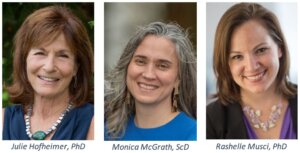
Collaborative ECHO research led by Julie Hofheimer, PhD of the University of North Carolina at Chapel Hill and Monica McGrath, ScD and Rashelle Musci, PhD, both of Johns Hopkins Bloomberg School of Public Health, investigates the link between family hardships, newborn health outcomes, and the behavior of young children. The researchers collected information on the behavior of 3,934 children between the ages of 18 and 72 months and used that data to identify early factors that increase a child’s risk for experiencing behavioral and emotional difficulties. The study found that children born preterm and those whose families had been exposed to more social, economic, or environmental hardships were more likely to experience continuous behavioral difficulties. This research, titled “Psychosocial and Neonatal Risk Factors Associated with Behavioral Dysregulation Trajectories Among Young Children from 18 through 72 Months of Age,” is published in JAMA Network Open.
Adverse conditions and family hardships have steadily increased over the past two decades, challenging the emotional and behavioral well-being of children and their families. To understand how health and environmental hardships affect a child’s risk for developing continuous behavioral problems, ECHO researchers collected early childhood behavior data from 20 ECHO cohorts from across the United States. About 20% of these children were born preterm (before 37 weeks of gestation).

The researchers collected caregiver self-reports, demographics, and medical and environmental data about the children and their mothers before and during pregnancy and from infancy through age six. Caregivers completed the Child Behavior Checklist at several study visits, and the researchers compared the children’s combined difficulty with anxiety, depression, attention, and aggression to their behavioral well-being across the first six years of life.

Some children who experienced less family adversity showed improved behavior over time. Importantly, some children were able to overcome hardships and improve their behavior. Through this study, the researchers were able identify early factors that increase a child’s risk for experiencing behavioral and emotional difficulties.

“Conditions during pregnancy and early infancy can identify toddlers who may benefit from early enriched services,” said Dr. Hofheimer. “Family support services tailored to the individual needs of children may prevent later behavioral problems and improve future outcomes for vulnerable children and their families.”

Future ECHO research may examine how childhood behavior continues to develop from six years onward, examining the link between early risk factors and behavioral patterns in middle school and adolescence.

Read the research summary.

NIH Study Examines Early Life Factors Affecting Behavior and Well-being of Young Children

FOR IMMEDIATE RELEASE


Children born preterm and those whose families experienced social, environmental, or economic hardships were more likely to have persistent behavior difficulties, according to new research funded by the Environmental influences on Child Health Outcomes Program (ECHO) at the National Institutes of Health.

ECHO researchers found that factors such as preterm birth, family hardship, and prenatal substance exposure may increase a child’s risk for persistent behavior and emotional difficulties. These difficulties in early childhood can potentially lead to later problems such as anxiety, depression, attention deficits, and aggression.

“Conditions during pregnancy and early infancy can identify toddlers who may benefit from early enriched services,” said Julie Hofheimer, PhD, of the University of North Carolina at Chapel Hill.

ECHO researchers collected early childhood behavior data on nearly 4,000 children born between 1990 and 2019 from 20 ECHO research sites from across the United States. Researchers then compared the children’s scores for emotional difficulties (anxiety, depression, attention, and aggression) to their behavioral well-being in the first six years of life.

“Family support services tailored to the individual needs of children may prevent later behavioral problems and improve future outcomes for vulnerable children and their families,” said Dr. Hofheimer.

Monica McGrath, ScD, and Rashelle Musci, PhD, both of Johns Hopkins Bloomberg School of Public Health, and Dr. Hofheimer led this collaborative research published in JAMA Network Open.

Hofheimer, J. et al. Psychosocial and Neonatal Risk Factors Associated with Behavioral Dysregulation Trajectories Among Young Children from 18 through 72 Months of Age. DOI: 10.1001/jamanetworkopen.2023.10059.

###

About ECHO: ECHO is a nationwide research program supported by the NIH. Launched in 2016, ECHO aims to enhance the health of children for generations to come. ECHO investigators study the effects of a broad range of early environmental influences on child health and development. For more information, visit echochildren.org.

About the NIH: NIH, the nation’s medical research agency, includes 27 Institutes and Centers and is a component of the U.S. Department of Health and Human Services. NIH is the primary federal agency conducting and supporting basic, clinical, and translational medical research, and is investigating the causes, treatments, and cures for both common and rare diseases. For more information, visit www.nih.gov.

Media Contacts

For information or to request an interview, contact Rebekah Yeager,  rebekah.yeager@nih.gov.

If you are not a member of the media, but have a general inquiry, please contact  NIHKidsandEnvironment@od.nih.gov.

Connect With Us

echo connectorCheck out the recent issues of our bi-monthly newsletter, the ECHO Connector, for program news and the latest research findings.

To receive the ECHO Connector through email, subscribe here.

Follow @ECHOChildHealth for the latest ECHO Program updates on Twitter.

NIH Research Suggests Few Prenatal Supplements Meet All Nutrition Recommendations for Pregnancy

FOR IMMEDIATE RELEASE

Katherine Sauder, PhD

Approximately 90 percent of pregnant women do not meet nutrition recommendations for pregnancy from diet alone and will need to supplement their diet with prenatal vitamins. At the same time, a majority of affordable prenatal supplements are missing the necessary amounts of at least one key nutrient, according to a new study funded by the Environmental influences on Child Health Outcomes Program (ECHO) at the National Institutes of Health.

Researchers analyzed the diets of 2,450 pregnant participants from six ECHO cohorts across the United States to determine the amount of key nutrients participants got from their diets and what additional amount they would need from a supplement.

After analyzing over 20,000 dietary supplements, researchers found only one that meets the nutritional recommendations for pregnancy for vitamin A, vitamin D, folic acid, calcium, iron, and omega-3 fatty acids when used to supplement the participants’ diets. The monthly cost was too high for some people and it required pregnant women to take seven pills a day. The researchers also identified other lower-cost supplements that provided the right amounts of at least five of the needed key nutrients.

“This research can inform pregnant women and their doctors about key nutrients they may be missing in their diet and help them choose prenatal vitamins that can provide the nutrients they need,” said Katherine Sauder, PhD, an ECHO Program investigator at the University of Colorado, Anschutz Medical Campus.

Dr. Sauder led this collaborative research published in The American Journal of Clinical Nutrition.

Sauder, C. et al. “Selecting a Dietary Supplement with Appropriate Dosing for Six Key Nutrients in Pregnancy.” American Journal of Clinical Nutrition. DOI: 10.1016/j.ajcnut.2022.12.018

###

About ECHO: ECHO is a nationwide research program supported by the NIH. Launched in 2016, ECHO aims to enhance the health of children for generations to come. ECHO investigators study the effects of a broad range of early environmental influences on child health and development. For more information, visit echochildren.org.

About the NIH: NIH, the nation’s medical research agency, includes 27 Institutes and Centers and is a component of the U.S. Department of Health and Human Services. NIH is the primary federal agency conducting and supporting basic, clinical, and translational medical research, and is investigating the causes, treatments, and cures for both common and rare diseases. For more information, visit www.nih.gov

Media Contacts

For information or to request an interview, contact Rebekah Yeager,  rebekah.yeager@nih.gov.

If you are not a member of the media, but have a general inquiry, please contact  NIHKidsandEnvironment@od.nih.gov.

Connect With Us

echo connectorCheck out the recent issues of our bi-monthly newsletter, the ECHO Connector, for program news and the latest research findings.

To receive the ECHO Connector through email, subscribe here.

Follow @ECHOChildHealth for the latest ECHO Program updates on Twitter.

ECHO Study Suggests Most Prenatal Vitamins May Not Provide All of the Nutrients Pregnant Women Need

<< Back to Research Summaries

ECHO Study Suggests Most Prenatal Vitamins May Not Provide All of the Nutrients Pregnant Women Need

Authors: Katherine Sauder, et al.


Who sponsored this study?

This research was supported by the Environmental influences on Child Health Outcomes (ECHO) Program, Office of The Director, National Institutes of Health.


What were the study results?

Out of all the prenatal supplements analyzed, the study found one that may potentially give pregnant patients the optimal amounts of the most important nutrients. But, the monthly cost of this supplement can be too high for some people, and it requires pregnant women to take seven pills a day. To ensure that pregnant women have accessible options for prenatal vitamins, the researchers looked for dietary supplements containing close to the needed amounts of nutrients that cost less and required only one to two pills a day.

See the full publication (Appendix A) for a list of the prenatal supplements analyzed during this study and their nutritional contents.

Footnote: Results reported here are for a single study. Other or future studies may provide new information or different results. You should not make changes to your health without first consulting your healthcare professional.


What was the study's impact?

This study can inform pregnant women and their doctors about key nutrients they may be missing in their diet and what prenatal vitamins they can take to get those nutrients. Companies that manufacture prenatal vitamins can also use the results of this study to understand how much of these nutrients should be in the products they make. Importantly, this study highlights the ongoing need for more prenatal vitamin options that are low cost and convenient, while still containing the optimal amounts of key nutrients.


Why was the study needed?

It is important that pregnant women get the right amounts of the nutrients they need for a healthy pregnancy. There are thousands of options for prenatal dietary supplements in the United States, so ECHO researchers conducted this study to help pregnant women and doctors pick the ones that contain optimal doses of key micronutrients to support a healthy pregnancy.


Who was involved?

This study included 2,450 pregnant participants from six ECHO cohorts located across the United States.


What happened during the study?

ECHO researchers first analyzed data about what the participants ate and drank during their pregnancies. Then, they calculated how much vitamin A, vitamin D, folic acid, calcium, iron, and omega-3 fatty acids the pregnant participants were getting from their diet. The researchers compared the participants’ diets to nutrition recommendations for pregnancy to determine the amount of nutrients the participants would need from a prenatal vitamin to make up what they were missing in their diet.

The researchers compared over 20,000 prenatal vitamins available in the US, focusing on the nutrients that are most important for maternal and infant health: vitamin A, vitamin D, folic acid, calcium, iron, and omega-3 fatty acids.


What happens next?

In addition to the use of prenatal dietary supplements, pregnant women can adjust their diet to include more of the nutrients they need for a healthy pregnancy. Going forward, more research is needed to identify foods that pregnant women could eat to get enough of these nutrients.


Where can I learn more?

Access the full journal article, titled “Selecting a dietary supplement with appropriate dosing for six key nutrients in pregnancy" in The American Journal of Clinical Nutrition.


Read more information about healthy eating during pregnancy on the American College of Obstetricians and Gynecologists website.

The content is the responsibility of the authors and does not necessarily represent the official views of the National Institutes of Health.

Published April 2023

Access the associated article.

Read More Research Summaries

Does a Mother’s Exposure to Childhood Maltreatment Affect their Child’s Health Outcomes?

Authors: Claudia Buss, Nora K. Moog

Studying the Effects of Preterm Birth and Environmental Exposures on Child Health Outcomes

Authors: Michael O’Shea, Monica McGrath, Judy Aschner, Barry Lester, et al.

Effects of Metal Mixture Exposure During Pregnancy on Fetal Growth

Authors: Caitlin Howe, Margaret R. Karagas, et al.

Exposures to environmental chemicals and their effect on important molecules during pregnancy

Author(s): Brett T. Doherty, et al.

How Chemical Exposures in Pregnancy Affect Gene Changes in the Placenta

Author(s): Alison Paquette, Sheela Sathyanarayana, MD, MPH, et al.

How Environmental Exposures Affect Child Health Across Multiple Generations

Author(s): Carrie Breton, et al.

Do chemicals that break down slowly in the environment affect how long it takes to become pregnant?  

Author(s): Linda Kahn, Alison Hipwell, Kim Harley, Pam Factor-Litvak, Michele Klein-Fedyshin, Christine Porucznik, Eva Siegel, Yeyi Zhu

A review of studies that look at whether exposure to common non-persistent chemicals in consumer products delays the time it takes to become pregnant

Author(s): Alison E. Hipwell, Linda G. Kahn, Pam Factor-Litvak, et al

ECHO Researchers Compare Thousands of Prenatal Vitamins to Help Pregnant Patients Get the Nutrients They Need

Collaborative ECHO research led by Katherine Sauder, PhD of the University of Colorado, Anschutz Medical Campus highlights six key nutrients essential for healthy pregnancies and identifies the best prenatal dietary supplements available in the United States to help pregnant women get the right amounts of these nutrients. Out of over 20,000 choices, the researchers found one prenatal dietary supplement that may potentially provide the right amounts of the most important nutrients needed during pregnancy: vitamin A, vitamin D, folic acid, calcium, iron, and omega-3 fatty acids. However, the supplement costs $200 per month and requires the patient to take seven pills a day, so the researchers identified other, more accessible vitamin supplement options that provide as close a match to the needed of amounts of nutrients as possible. This research, titled “Selecting a dietary supplement with appropriate dosing for six key nutrients in pregnancy," is published in The American Journal of Clinical Nutrition.

It is important for pregnant women to get optimal amounts of the right nutrients. There are thousands of options for prenatal vitamins in the United States, so ECHO researchers designed this study to help pregnant women and doctors select the ones that contain optimal doses of key micronutrients to support a healthy pregnancy.

This study included 2,450 pregnant participants from six ECHO cohorts located across the United States. ECHO researchers first analyzed data about what participants ate and drank during their pregnancies. Then, they calculated how much of the six key nutrients (vitamin A, vitamin D, folic acid, calcium, iron, and omega-3 fatty acids) mothers were getting in their regular diet. The researchers compared the participants’ diets to nutrition recommendations for pregnancy to determine the amount of nutrients the participants would need from prenatal vitamins to supplement their diet.

“This research will inform pregnant patients and their doctors about key nutrients they may be missing in their diet and help them choose prenatal vitamins that can provide the nutrients they need,” said Dr. Sauder. “Dietary supplement manufacturers can also use these results to inform better dosing in their products.”

The results of this study highlight the ongoing need for prenatal vitamin options that are low cost and convenient, while still containing the optimal amounts of key nutrients. More research on nutrients in foods will also be needed to help pregnant patients get more of these key nutrients in their daily diets.

Read the research summary.