




What is ECHO
The National Institutes of Health (NIH) created the Environmental influences on Child Health Outcomes (ECHO) Program in 2016 to support a nationwide network of child health research teams.
Currently, the NIH funds 45 ECHO Cohorts at academic medical centers nationwide whose investigators and their teams work at 77 study sites across 30 states, Puerto Rico, and the District of Columbia.
The ECHO Cohort brings together many of the nation’s top researchers to study a wide range of early environmental influences, such as socioeconomic status, family support, biological factors, nutrition, and physical and chemical exposures. Through the IDeA States Pediatric Clinical Trial Network, researchers also examine changes in participants’ lives to understand how they impact their health.
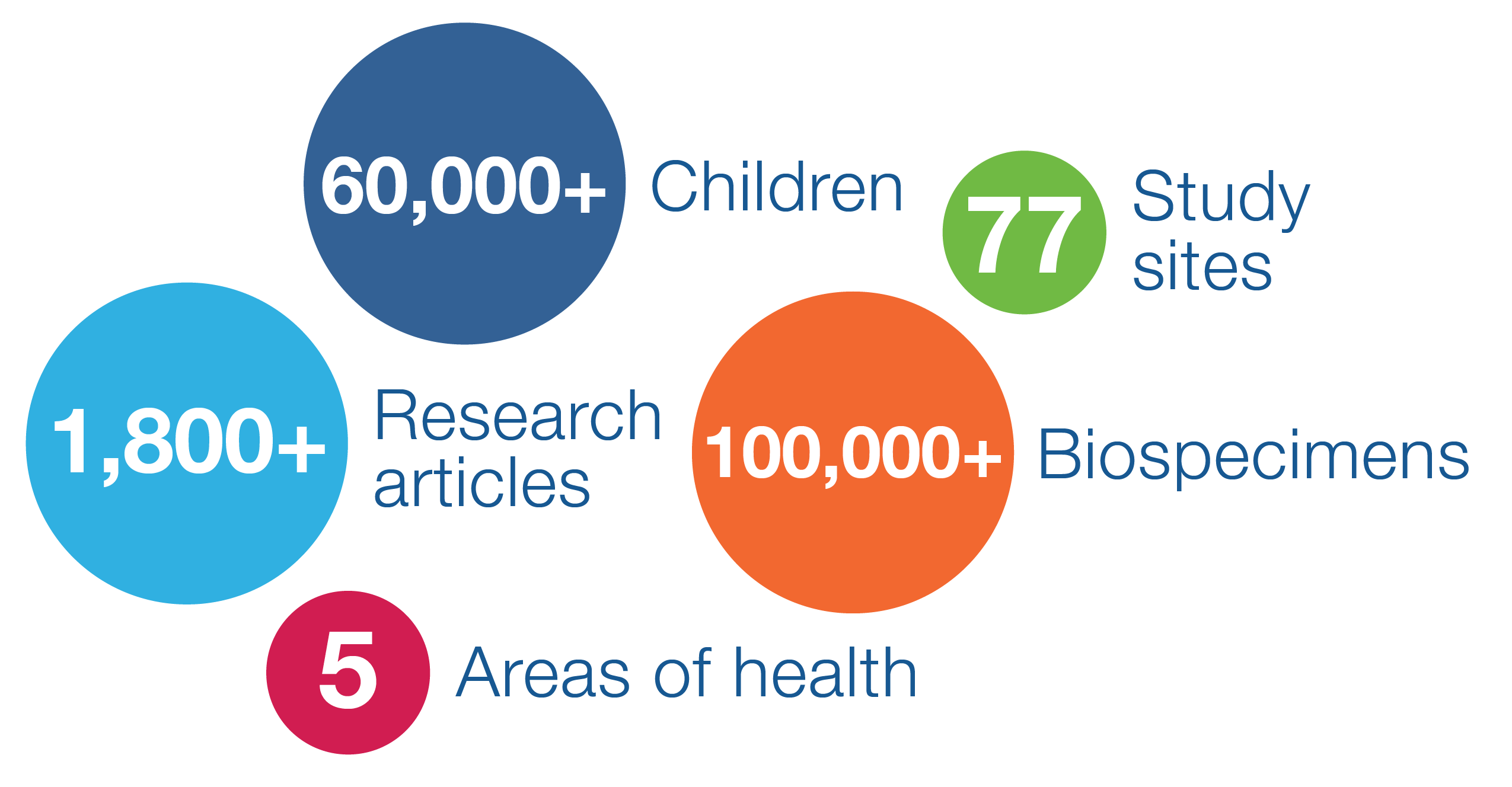
The ECHO Program’s observational research and intervention research projects explore one or more of five areas of health. These areas of pediatric health have a high public health impact:



ECHO Program Milestones
View the ECHO Program's progress on this timeline.
ECHO Cohort study participants are from diverse geographic, socioeconomic, racial, and ethnic backgrounds – including more than 11,000 participants who identify as other than non-Hispanic White. The inclusion of all ECHO Cohort participants is coordinated through the ECHO Cohort Data and Biospecimen Collection Protocol, which provides a standard way for the study sites to collect data and samples from participants.