




NIH ECHO Program Content
NIH ECHO Program Announcements
March 6, 2026
Second Annual ECHO Translating Science to Action Symposium
September 8, 2025
ECHO Awards More Than $13 Million for Intervention Research into Environmental Influences on Child Health
June 6, 2025
First Annual ECHO Science Symposium – Registration Now Open!
July 31, 2024
Health Science Policy Analyst Position
July 30, 2024
Grants Announced for Secondary Analysis of ECHO Cohort Data on DASH
May 9, 2024
Health Scientist Administrator and Supervisory Health Scientist Administrator Positions
April 5, 2024
NIH ECHO Issues Request for Information on Potential Strategic Priorities as Part of Strategic Planning Process
January 19, 2024
NIH ECHO Program Office Has Issued 2 New Funding Opportunities
December 15, 2023
NIH Environmental influences on Child Health Outcomes Program Announces Intent to Publish 2 Funding Opportunities
September 25, 2023
ECHO Awards More Than $157 Million for Observational Research Into Environmental Influences on Child Health
July 5, 2023
NIH ECHO Program Office Has Issued Notices of Funding Opportunities for Secondary Analyses of ECHO Cohort Data
April 21, 2023
NIH Obesity Research Task Force to Host Virtual Symposium: June 6, 2023
February 28, 2023
NIH ECHO Program to Host Return of Individual Research Results to Participants Virtual Workshop, March 16–17, 2023
December 2, 2022
NIH ECHO Program Releases First Public-Use Version of ECHO-Wide Cohort Data
August 31, 2022
NIH ECHO Program Office Has Issued 7 New Funding Opportunity Announcements (FOAs) to Extend and Expand the ECHO Cohort
October 14, 2021
NIH ECHO Program Celebrates Children’s Environmental Health Day
June 21, 2021
NIH ECHO Program Hosts Preconceptional Origins of Child Health Outcomes Workshop June 17–18, 2021
June 8, 2021
NIH Issues Request for Information to seek input about enhancing ECHO science

ECHO Program Publications by Program Office Staff
NIH ECHO Program Office staff also create peer-reviewed scientific articles about ECHO. To maintain the scientific independence of researchers who receive grants from NIH, Program Office staff do not collaborate with funded researchers to produce these articles.
Principles and Practices of Returning Individual Research Results to Participants in Large Studies of Pregnancy and Childhood
Mash C, McAllister KA, Wonnum S, Vargas AJ, Dowling G, Arteaga SS, Blaisdell CJ, Hardy KK, Prabhu Das I, Raju TNK, and Gillman MW. In press, American Journal of Epidemiology. doi: 10.1093/aje/kwae228. PMID: 39030726
How the Environmental influences on Child Health Outcomes (ECHO) Cohort can spur discoveries in environmental epidemiology
Park CH, Blaisdell CJ, Arteaga SS, Mash C, Laessig S, Hanspal M, Luetkemeier E, Thompson LC, Gillman MW. How the Environmental Influences on Child Health Outcome (ECHO) cohort can spur discoveries in environmental epidemiology. Am J Epidemiol. 2024 Sep 3;193(9):1219-1223. doi: 10.1093/aje/kwae073. PMID: 38760171
The NIH ECHO Program: Investigating How Early Environmental Influences Affect Child Health
Blaisdell CJ, Park C, Hanspal M, Roary M, Arteaga SS, Laessig S, Luetkemeier E, Gillman MW; program collaborators for Environmental influences on Child Health Outcomes. Pediatr Res. 2022 Nov;92(5):1215-1216. doi: 10.1038/s41390-021-01574-8. Epub 2021 Jun 15. PMID: 34131291
The NIH ECHO Program: An Impetus for the Development of Early Childhood PROMIS Tools
Park CH, Gillman MW, Blaisdell CJ. Journal of Pediatric Psychology, Volume 47(5):497-499, June 2022.
Conceptual Models for Implementing Solution-Oriented Team Science in Large Research Consortia
Thompson LC, Hall KL, Vogel AL, Park CH, Gillman MW. J Clin Transl Sci. 2021 Jun 14;5(1):e139. doi: 10.1017/cts.2021.802. eCollection 2021. PMID: 34367683
Promoting Ideal Cardiovascular Health Through the Life Span
Arteaga SS, Gillman MW. Pediatrics. 2020 Apr;145(4):e20200159. doi: 10.1542/peds.2020-0159. Epub 2020 Mar 24. PMID: 32209702
Addressing the Impact of Opioids on Women and Children
Bianchi DW, Gillman MW. Am J Obstet Gynecol. 2019 Aug;221(2):123.e1-123.e4. doi: 10.1016/j.ajog.2019.02.050. Epub 2019 May 28. PMID: 31151658
Environmental influences on Child Health Outcomes, a Research Program of the National Institutes of Health
Gillman MW, Blaisdell CJ. Curr Opin Pediatr. 2018 Apr;30(2):260-262. doi: 10.1097/MOP.0000000000000600. PMID: 29356702
November 2024
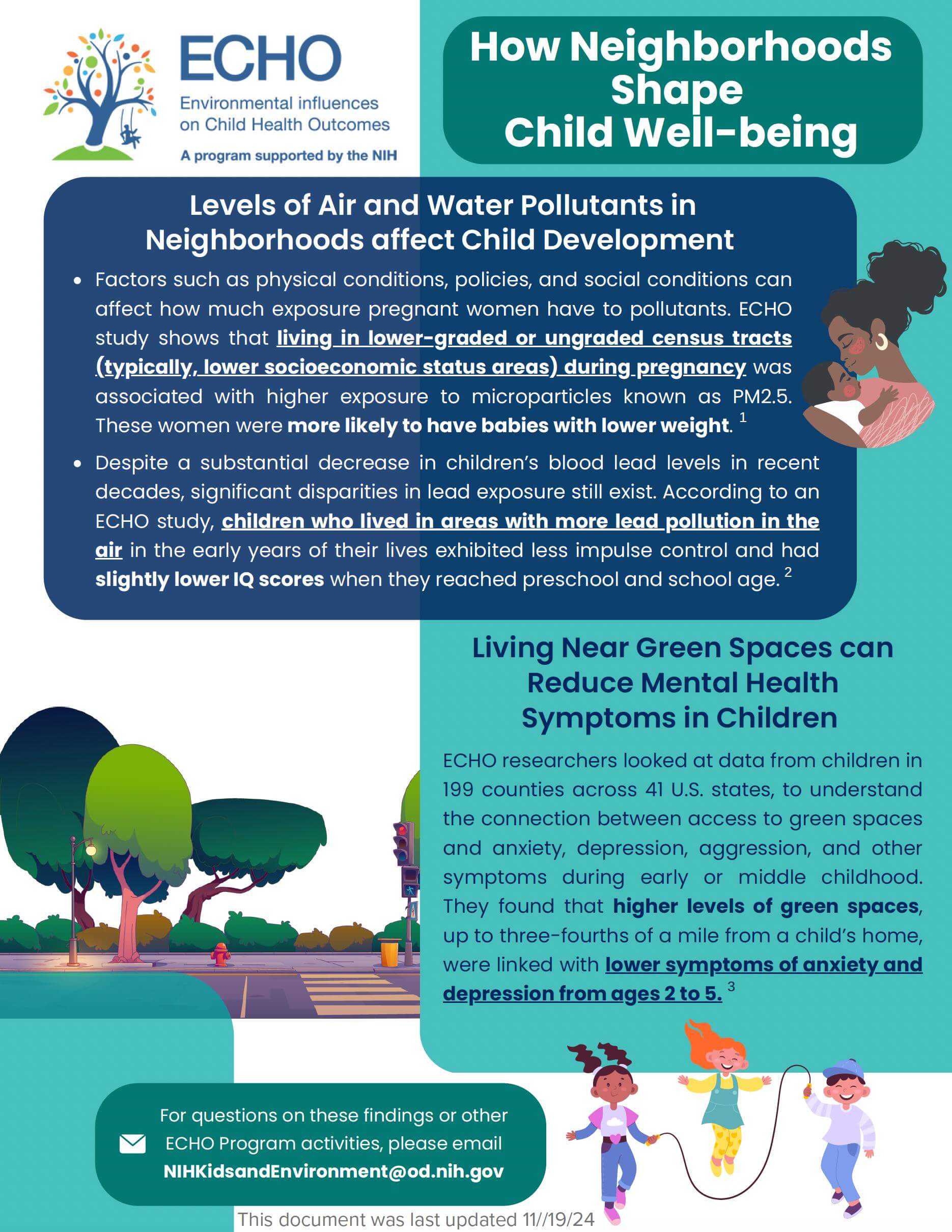
How Neighborhoods Shape Child Well-being
ECHO investigators are studying how factors such as physical environment and social conditions can affect how much exposure pregnant women and children have to pollutants. Neighborhood conditions during childhood can affect the risk of developing health issues some of which can last over a lifetime.
October 2024
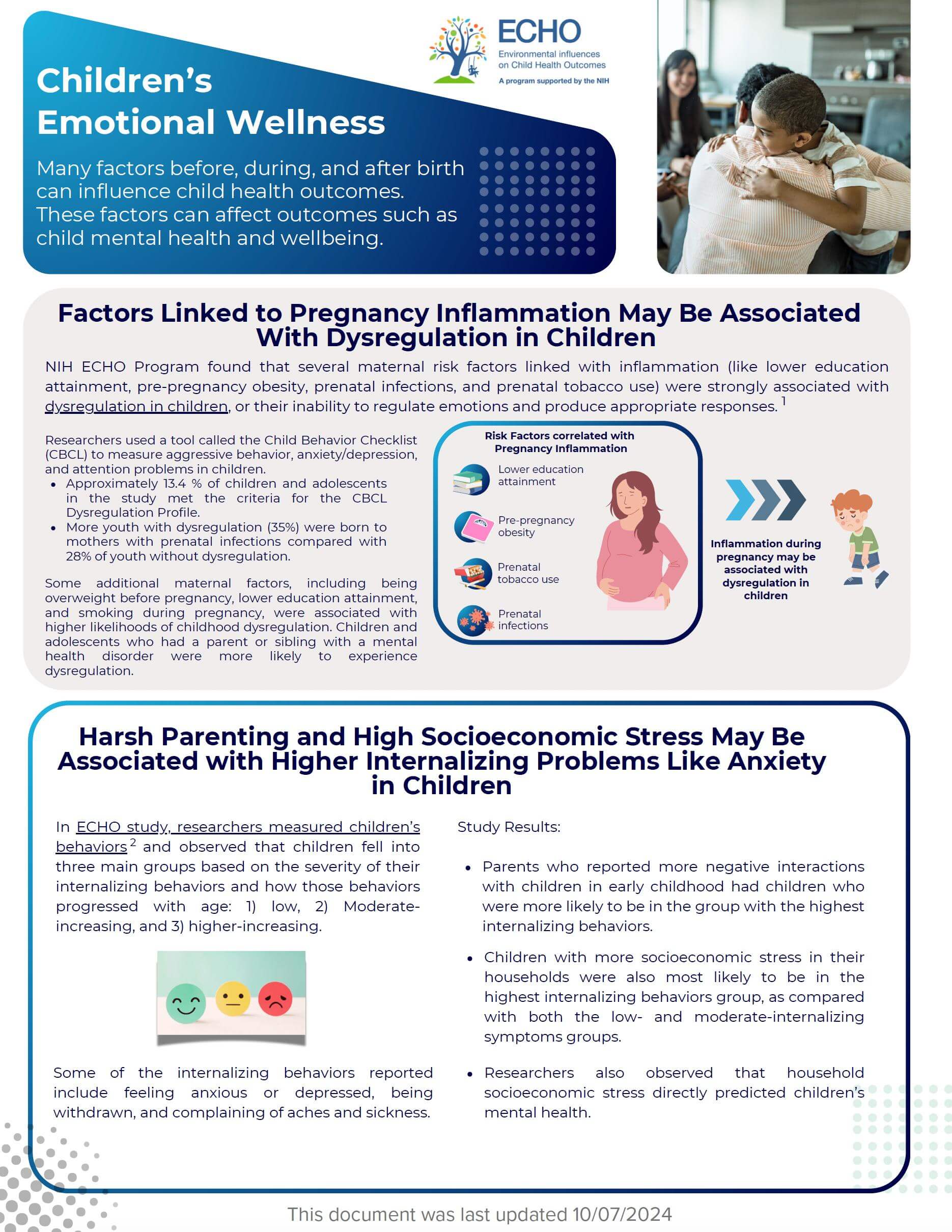
Children’s Emotional Wellness
Many factors before, during, and after birth can influence child health outcomes. These factors can affect outcomes like mental health and wellbeing. ECHO investigators are studying which of these factors can promote positive health in children. Positive health in children is more than the absence of disease, it is a sense of wellbeing that is measured by overall health, life satisfaction, and meaning and purpose.
September 2024
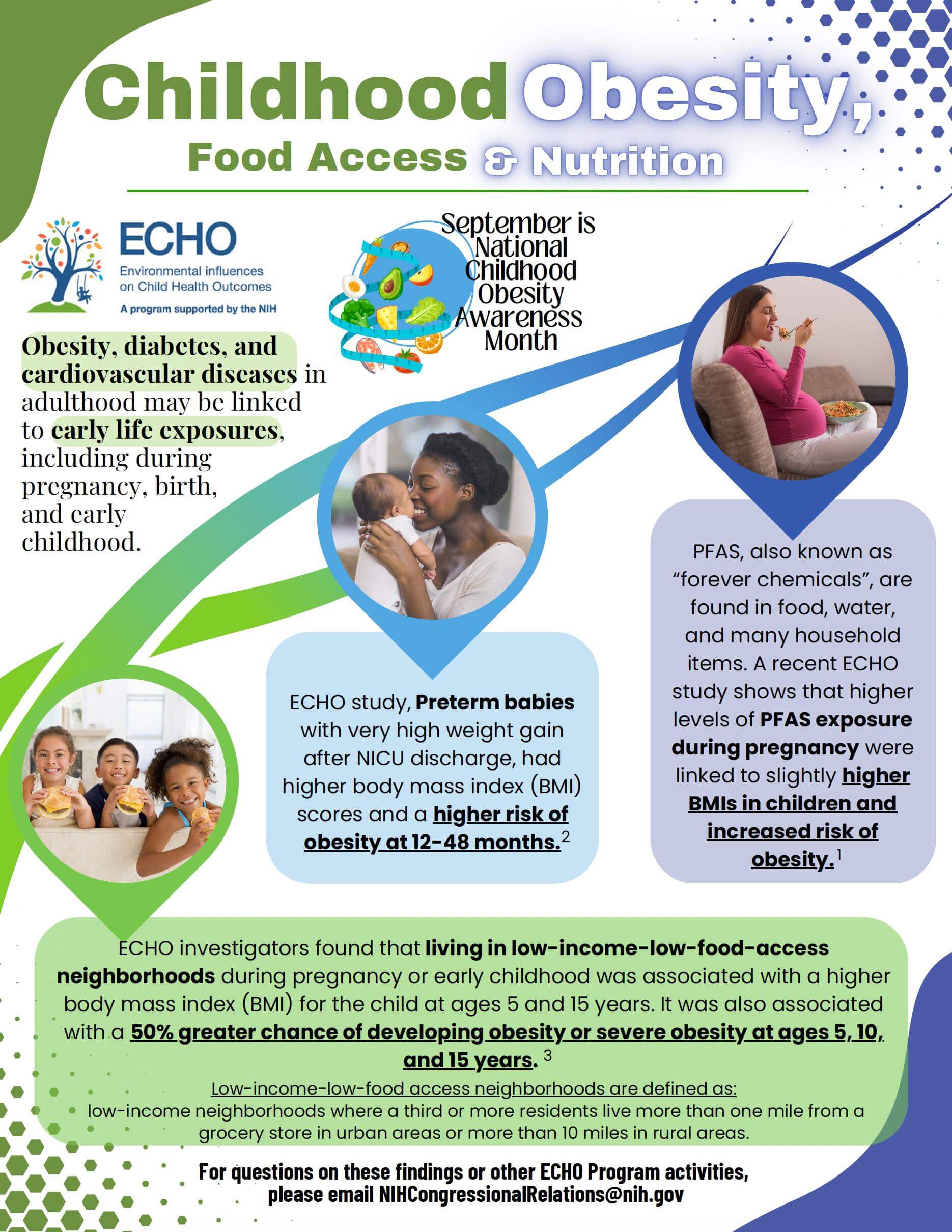
Childhood Obesity: Food Access & Nutrition
Obesity, diabetes, and cardiovascular diseases in adulthood may be linked to early life exposures, including during pregnancy, birth, and early childhood. ECHO research has shown that exposure to forever chemicals or living in low-income-low-food access neighborhoods during pregnancy is associated with higher BMIs in children and increased risk of obesity.
July 2024
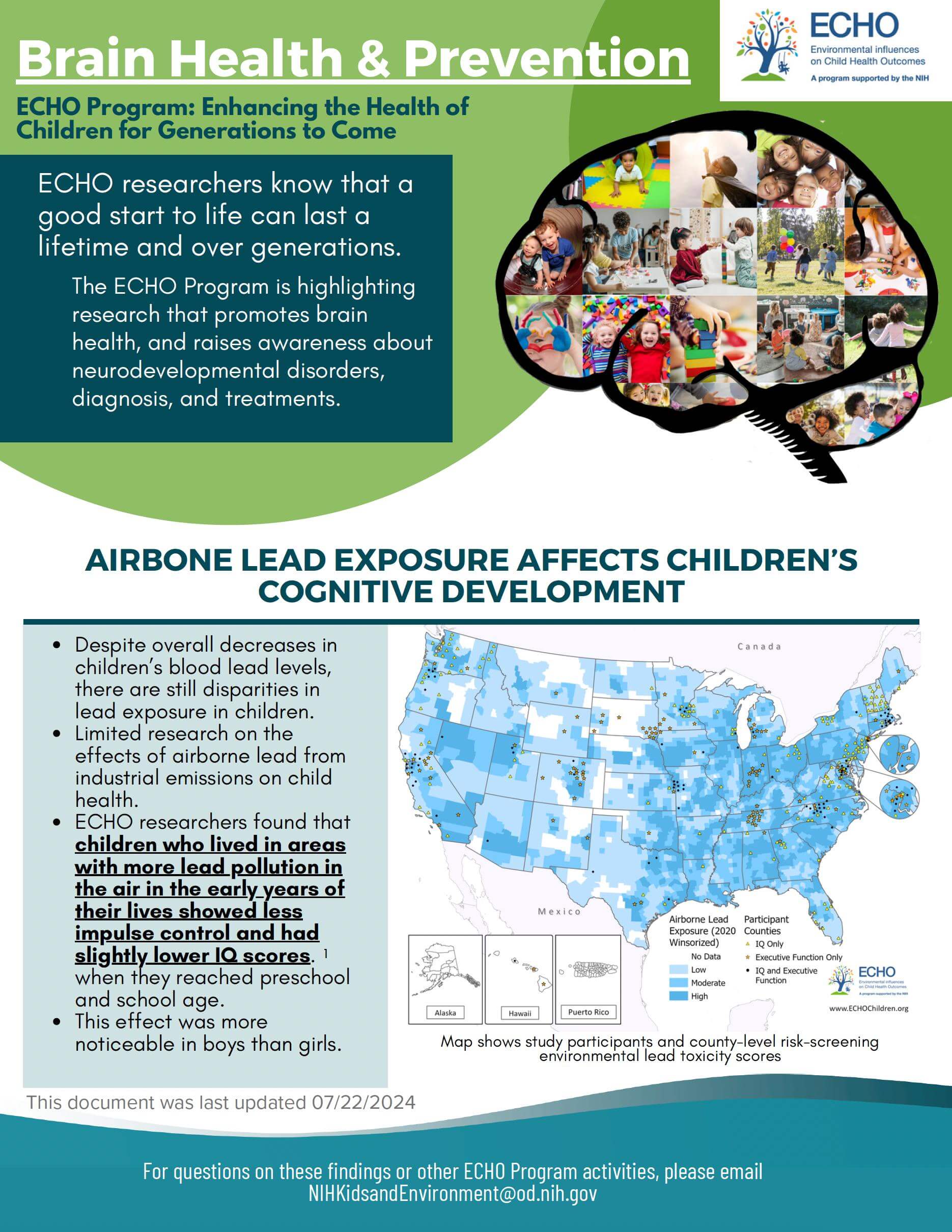
Brain Health Promotion
The ECHO Program is highlighting research that promotes brain health and raises awareness about neurodevelopmental disorders, diagnosis, and treatments. Brain development begins during pregnancy and continues during childhood. ECHO researchers study environmental factors that can influence the health of a child’s brain during these early sensitive periods of development. This research can provide valuable insights on how to reduce risks of diseases developing later in life.
May 2024
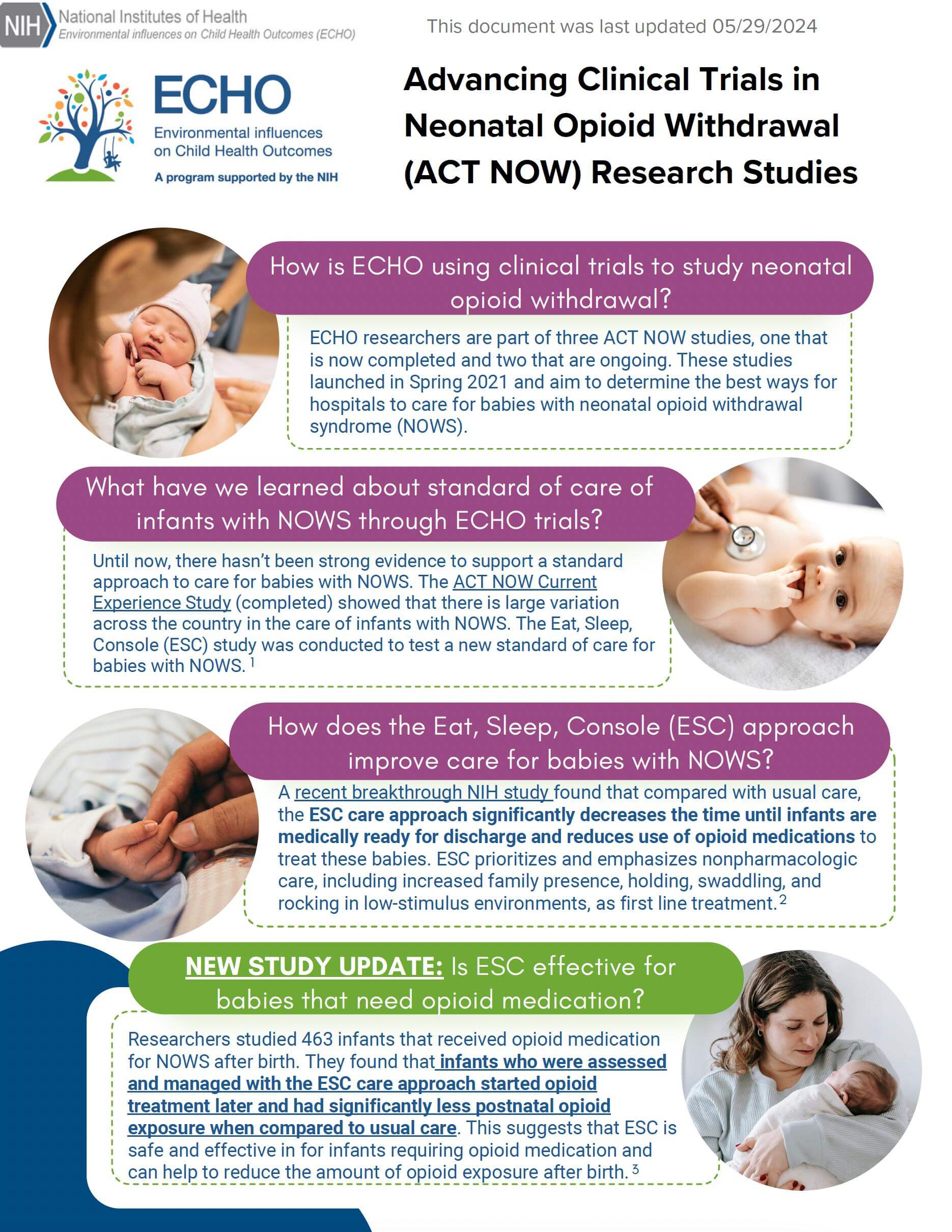
Advancing Clinical Trials in Neonatal Opioid Withdrawal (ACT NOW) Research Studies
ECHO researchers are part of three ACT NOW studies funded in part through The Helping to End Addiction Long-term Initiative (HEAL); one completed study and two that are ongoing. These studies launched in Spring 2021 and aim to determine the best ways for hospitals to care for babies with neonatal opioid withdrawal syndrome (NOWS).
April 2024
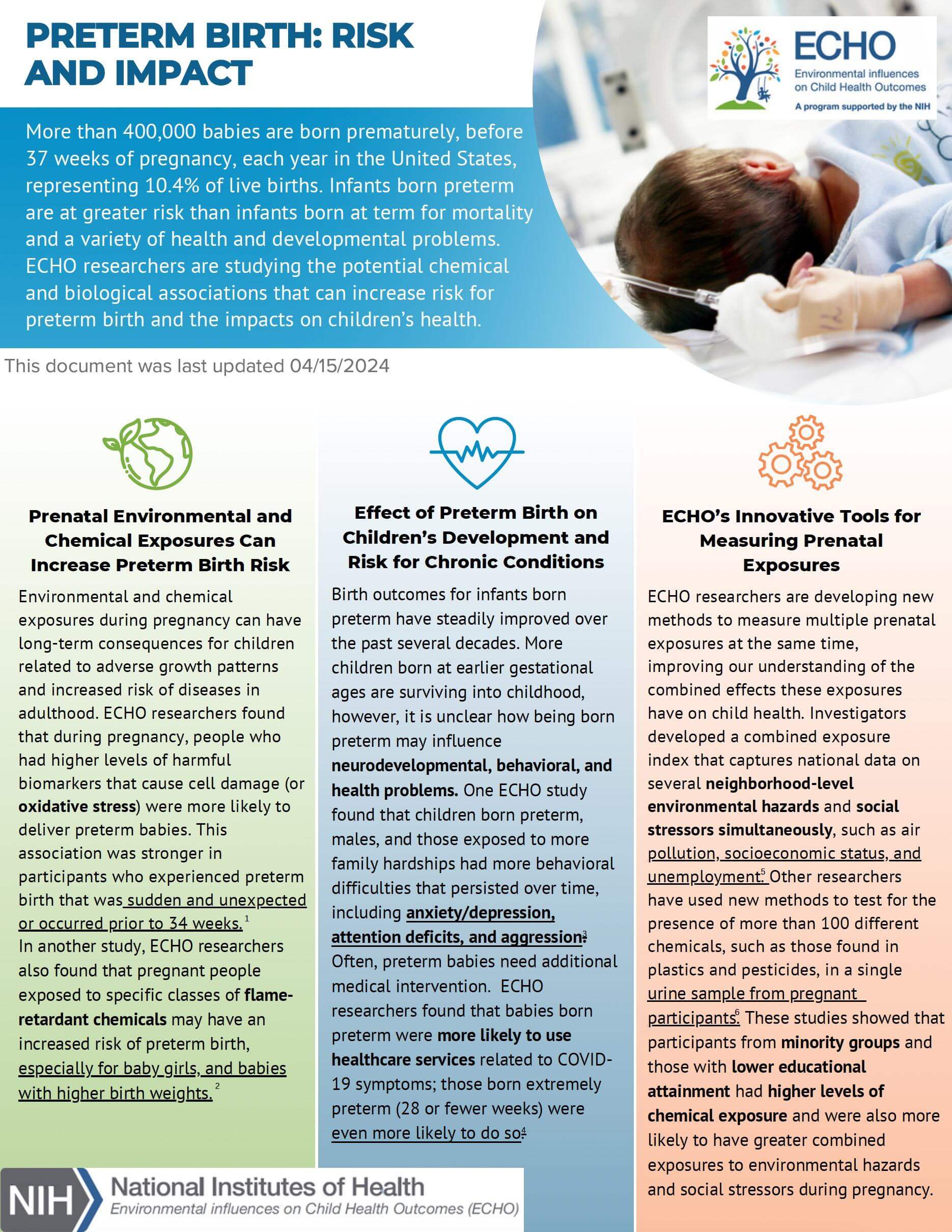
Preterm Birth: Risk and Impact
More than 400,000 babies are born prematurely, before 37 weeks of pregnancy, each year in the US, representing 10.4% of live births. Infants born preterm are at greater risk than infants born at term for mortality and for a variety of health and developmental problems. ECHO researchers are studying factors associated with preterm birth and the impacts on child health.
March 2024
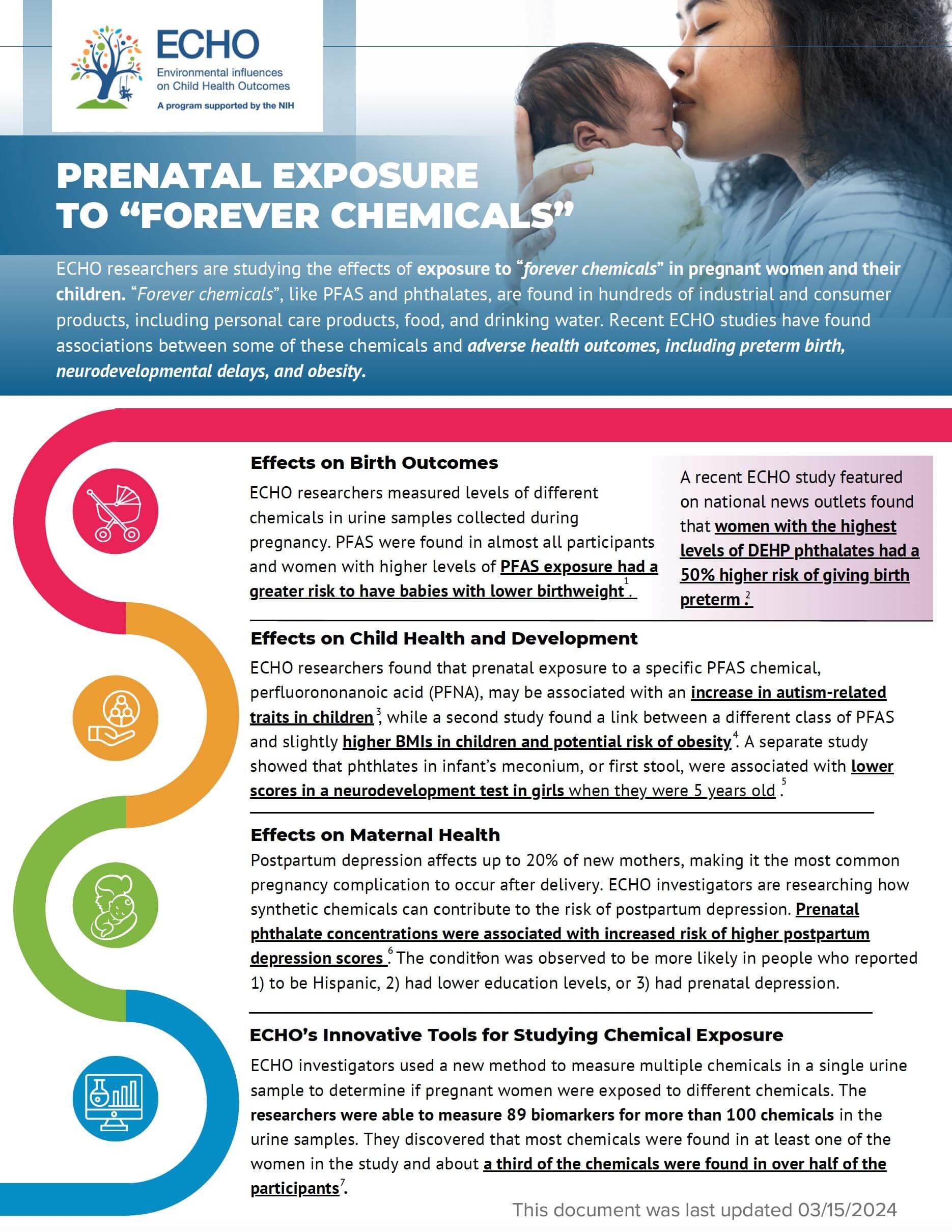
Prenatal Exposure to “Forever Chemicals”
ECHO researchers are studying the effects of exposure to per- and polyfluoroalkyl substances (PFAS), phthalates, and other “forever chemicals” in pregnant women and their children. These chemicals are found in hundreds of industrial and consumer products, including personal care products, food, and drinking water. Recent ECHO studies have found associations between some of these chemicals and adverse health outcomes, including preterm birth, neurodevelopmental delays, and obesity.
January 2024
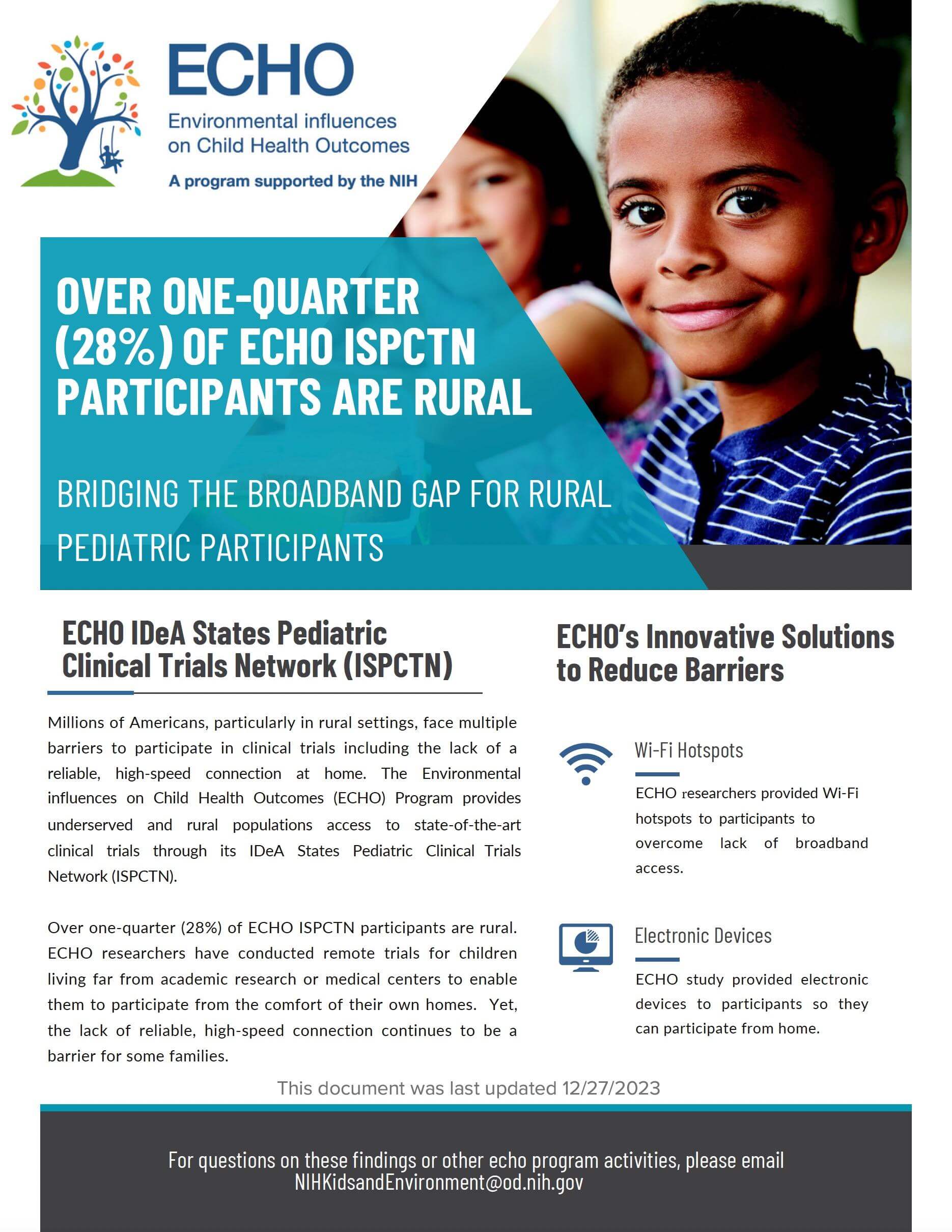
Overcoming Lack of Rural Broadband
The ECHO Program provides medically underserved and rural populations access to state-of-the-art clinical trials through its IDeA States Pediatric Clinical Trials Network (ISPCTN). More than one-quarter (28%) of ECHO ISPCTN participants live in rural communities. ECHO researchers have conducted remote trials for children living far from academic research or medical centers to enable them to participate from the comfort of their own homes. Yet, the lack of reliable, high-speed connection continues to be a barrier for some families.
December 2023
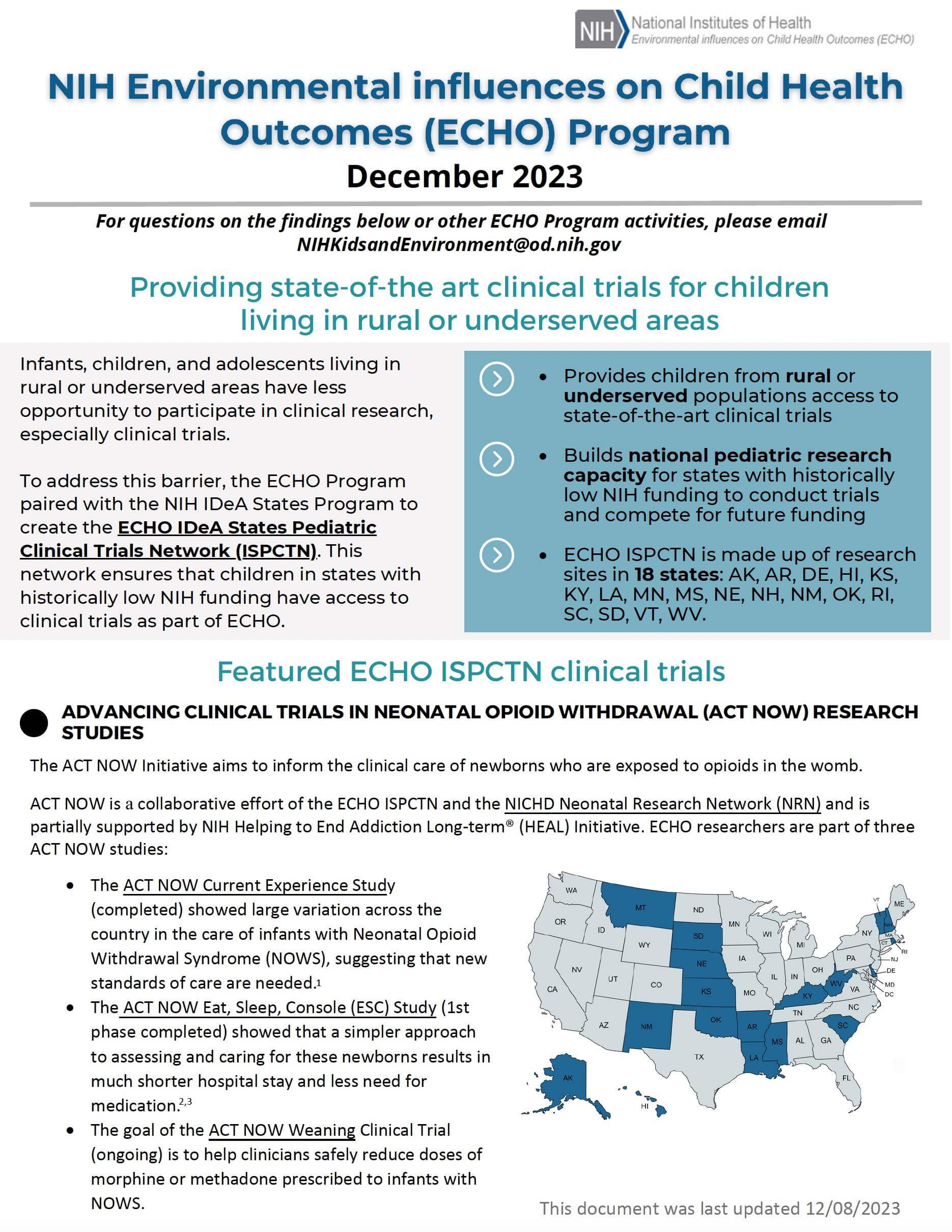
Providing State-of-the Art Clinical Trials for Children Living in Rural or Underserved Areas
Infants, children, and adolescents living in rural or underserved areas have less opportunity to participate in clinical research, especially clinical trials. To address this barrier, the ECHO Program created the ECHO IDeA States Pediatric Clinical Trials Network (ISPCTN). This network ensures that children in states with historically low NIH funding have access to clinical trials as part of ECHO. ECHO ISPCTN comprises research sites in 18 states: Alaska, Aransas, Delaware, Hawaii, Kansas, Kentucky, Louisiana, Minnesota, Mississippi, Nebraska, New Hampshire, New Mexico, Oklahoma, Rhode Island, South Carolina, South Dakota, Vermont, West Virginia.