




ECHO Cohort — Year in Review 2024
The ECHO Cohort Consortium, a key part of the ECHO Program, celebrates another year of progress in enhancing child health for generations to come.
The National Institutes of Health (NIH) created the Environmental influences on Child Health Outcomes (ECHO) Program in 2016 to support a nationwide network of child health research teams.
Through the ECHO Cohort, a collaborative approach to gathering information from study participants across dozens of research awards, many of the nation’s leading researchers are working together to examine a broad range of early environmental influences—including socioeconomic status, family support, biological factors, nutrition, and physical and chemical exposures.
The ECHO Cohort uses observational research—learning from children and their caregivers through the collection of data and biospecimens—to discover what can enhance the lives of children today and across generations.
The consortium’s work in 2024—from activating study sites to enrolling participants to publishing research analyses—represents another year of growth, collaboration, and learning.
"2024 was a productive and impactful year for both the observational work of the ECHO Cohort Consortium and the intervention research of the ECHO ISPCTN,” said Matthew W. Gillman, MD, SM, ECHO Program Director. “We celebrate their recent successes that showcase the principles that guide our ECHO Program.”
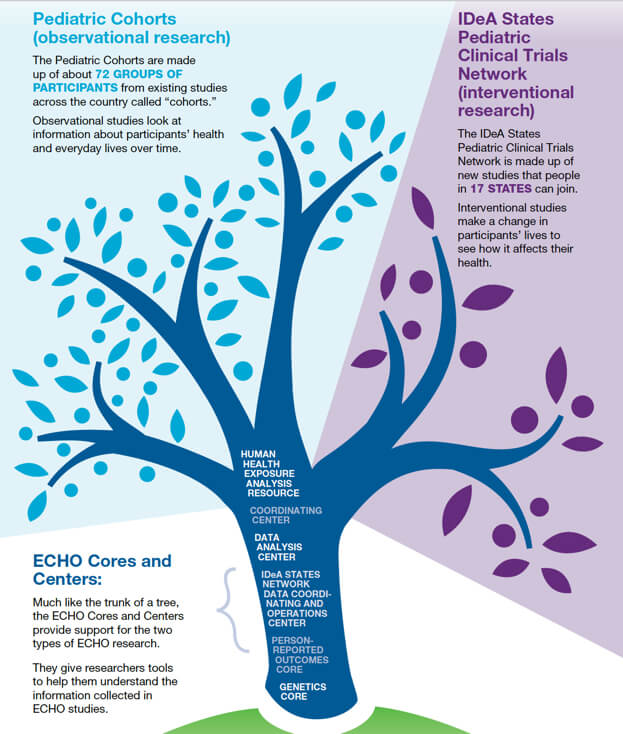

 At study sites nationwide, ECHO Cohort researchers are helping to discover what influences in early growth—and even before birth—affect us throughout our lives and across generations.
Currently, the NIH is funding 45 ECHO Cohort awards at academic medical centers across the country. These investigators and their teams completed activation of 77 study sites, where they enroll participants and collect data, in 30 states, Puerto Rico, and the District of Columbia. ECHO Cohort study sites are identified in blue on the map.
In the past year, these research teams have enrolled about 6,000 pregnancies on the way to the program’s goal of 30,000 new pregnant participants. When those babies are born, they join the 30,000 existing child participants in the ECHO Cohort.
ECHO Cohort study participants are from diverse geographic, socioeconomic, racial, and ethnic backgrounds – including more than 11,000 participants who identify as other than non-Hispanic White. The inclusion of all ECHO Cohort participants is coordinated through the ECHO Cohort Data and Biospecimen Collection Protocol, which provides a standard way for the study sites to collect data and samples from participants.
New in 2024
The ECHO Cohort protocol was updated in November 2024 to include details for the collection of preconception information—ECHO Cohort investigators will follow several thousand women and their partners to examine how environmental factors even before pregnancy begins can affect their children.
In 2024, the ECHO Program’s observational research and intervention research projects continued to explore one or more of five outcome areas. These areas of pediatric health have a high public health impact. Click on the icons to explore each area and the latest research results.
 Pre-, Peri-, and Postnatal
(pregnancy and birth)
Pre-, Peri-, and Postnatal
(pregnancy and birth) Upper and Lower Airway (breathing)
 Obesity
(body weight)
Obesity
(body weight) Neurodevelopment
(brain development)
Neurodevelopment
(brain development) Positive Health
(well-being)
Positive Health
(well-being)
In November, the ECHO Cohort Coordinating Center announced another round of research awards (the sixth since the inception of the program) through the ECHO Opportunities and Innovation Fund (OIF), which supports ECHO research by investigators early in their research careers. Funding through OIF helps them to drive the development of new research, tools, and technologies for the ECHO Cohort program.
Over the next two years, these 11 investigators will explore early origins of health disparities, health trajectories, resilience, application of modern causal inference methods, and expanding the return of research results to participants and their communities.

In 2024, ECHO research teams completed numerous analyses of the data collected in the ECHO Cohort, drawing important conclusions about how environmental influences impact child health outcomes.
Their conclusions led to 48 research articles published by peer-reviewed science and public health journals over the year. These articles are the result of collaboration among ECHO Cohort investigators and represent the program’s powerful contribution to science through scholarship.
Since the beginning of the program, ECHO Cohort and ISPCTN researchers have contributed more than 1,800 articles about ECHO data and science in peer-reviewed journals.
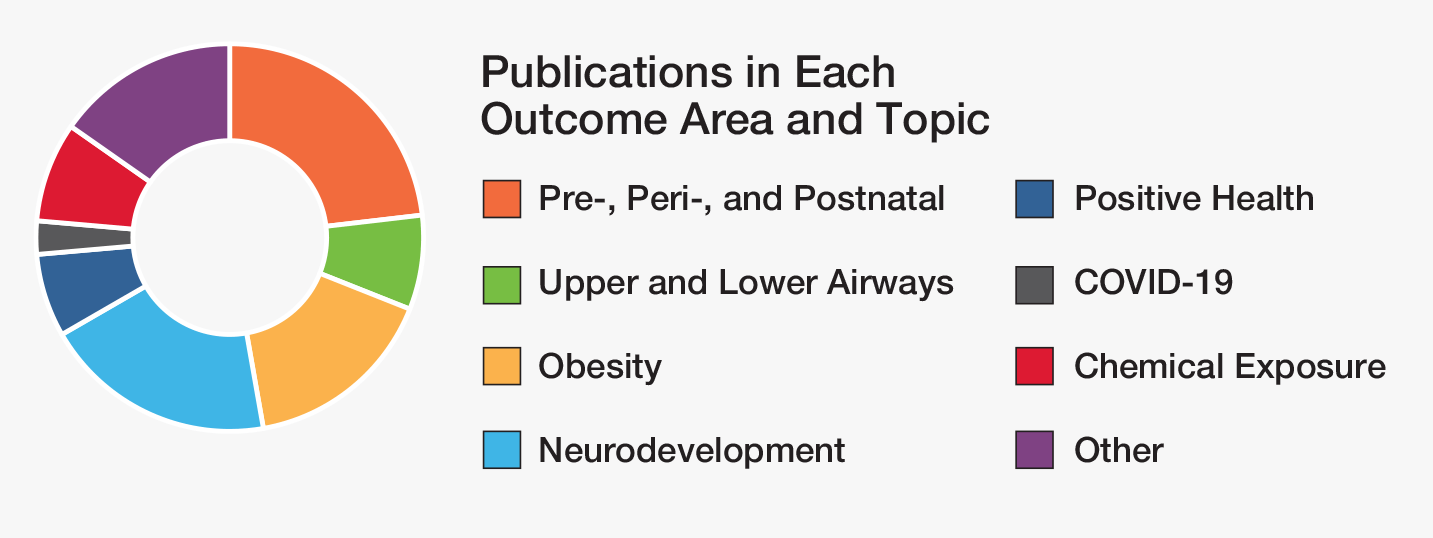
Writing teams are currently working on more than 92 additional data-analysis proposals to answer important research questions with ECHO Cohort data. These proposals will lead to future publications and expanded scholarship on environmental influences on child health.

The ECHO Cohort Coordinating Center produces summaries of recently published ECHO research articles so that ECHO families and the general public can learn about the latest results from the program. This year, we added 25 research summaries to the website.
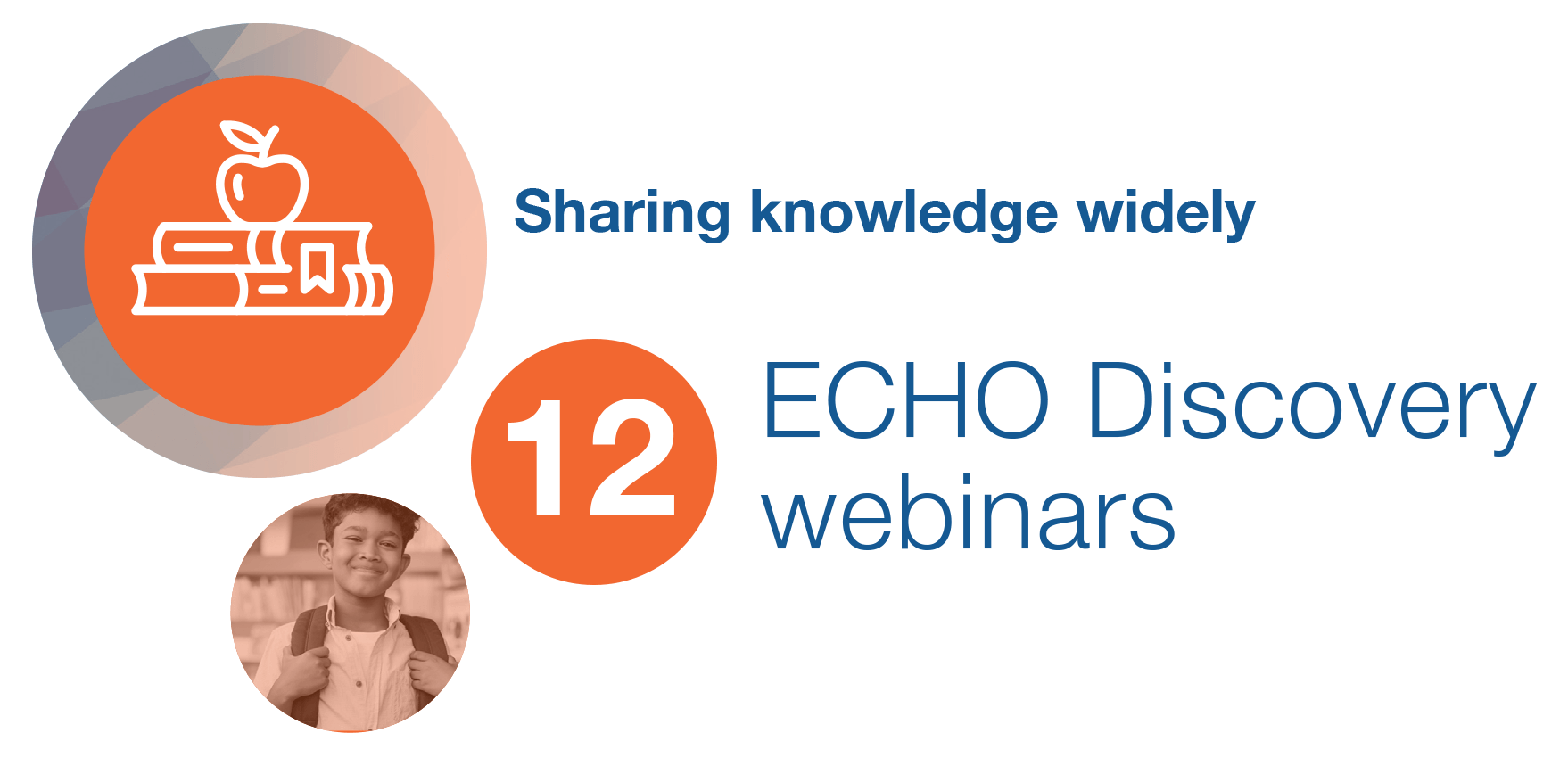
ECHO Discovery is a free monthly webinar series that often explores ECHO Cohort research on the environmental influences on child health. The webinars extend the science and expertise within ECHO to a broader community, including scientists, participants, and the public.
This year’s 12 webinars featured diverse presentation topics that ranged from the impact of fish consumption during pregnancy on child health to how knowledge-driven AI could predict environmental health outcomes, from the impact of racism on maternal health disparities to emerging trends in pediatric obesity.
Find details about upcoming presentations, along with a comprehensive listing of the presentations going back five years, on the ECHO Discovery page. Watch two of the presentations from this year below.
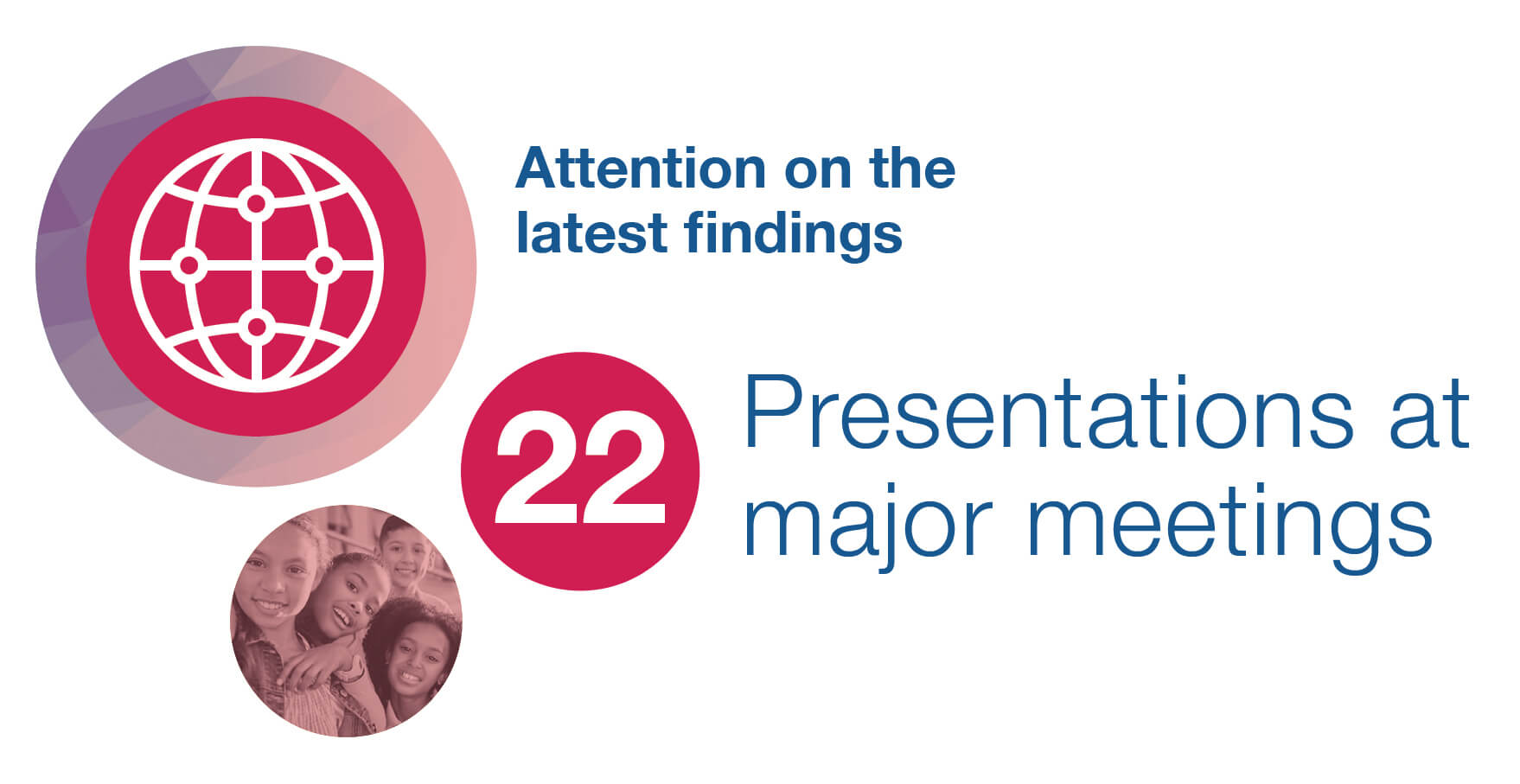
From posters and symposiums to oral presentations and flash talks, ECHO Cohort researchers shared the latest ECHO research through 22 different presentations at major society meetings in 2024.
Highlights include presentations at the International Society for Environmental Epidemiology (ISEE) Conference in Santiago, Chile; the World Congress of Epidemiology (WCE) in Cape Town, South Africa; the International Society of Exposure Science (ISES) in Montreal, Canada; and U.S. Developmental Origins of Health and Disease (DOHaD) Society in Chapel Hill, North Carolina.

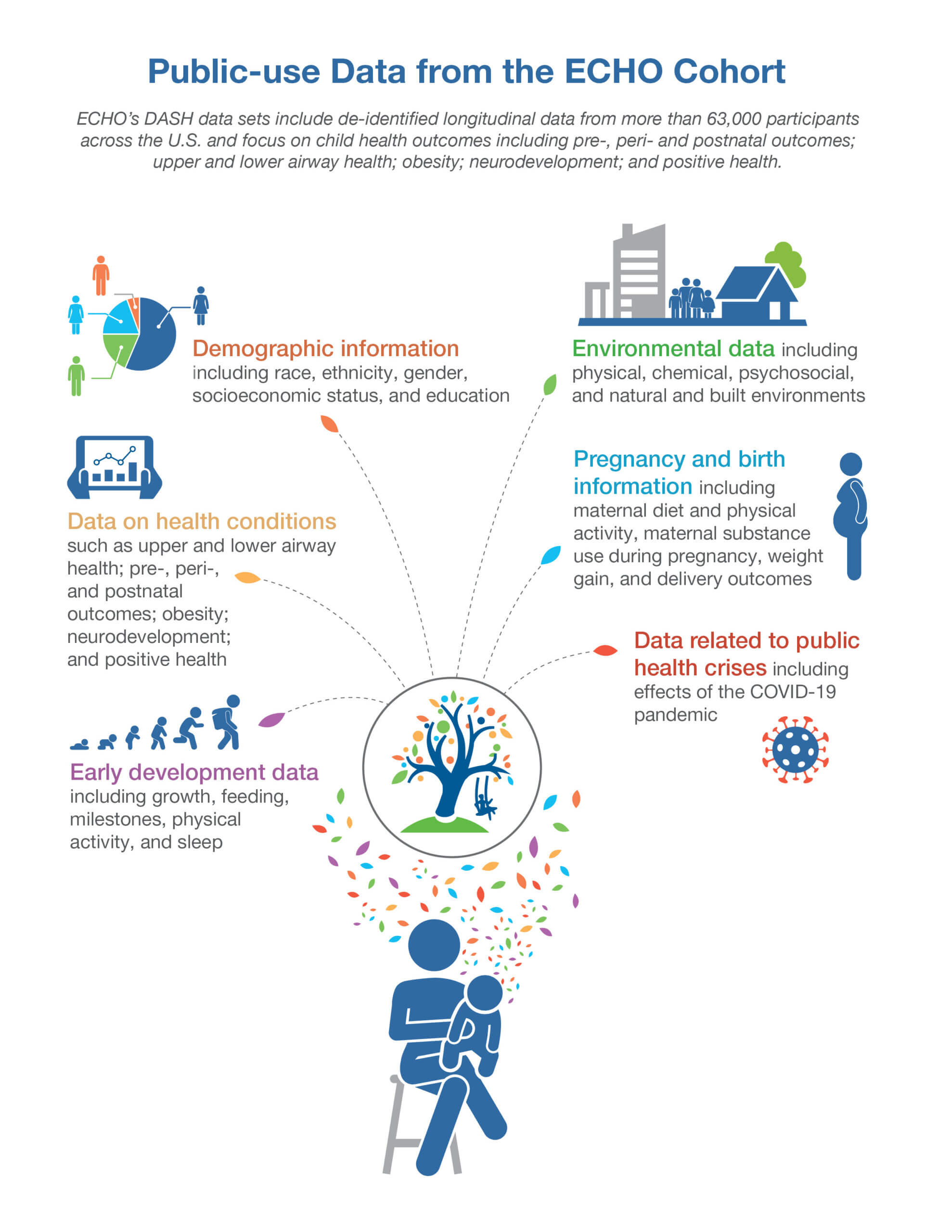
The ECHO Program offers a comprehensive array of de-identified public-use data through the Data and Specimen Hub (DASH) at the Eunice Kennedy Shriver National Institute of Child Health and Human Development (NICHD).
In January 2024, the ECHO contribution to DASH expanded to provide 385 data sets comprising the contributions of 63,215 ECHO caretaker and child participants, including demographics, environmental exposures, pregnancy, birth details, and more.
Researchers can request this de-identified public-use data for their analysis.
As of September 2024, 81 unique users across different sectors have requested access to the data, emphasizing the contribution of ECHO Cohort data to the larger scientific understanding of child health and development.

Health reporters, public health advocacy organizations, and others watch for new ECHO research and share the findings with their readers and members. This year, 14 ECHO Cohort studies received media attention from 357 news outlets.
From a feature about how prenatal fish intake is tied to a lower risk for autism in HealthDay and a USA Today story about how plastics may be linked to thousands of preterm births to other mentions in Physician's Weekly, CNN, and the Daily Mail, ECHO research received attention from news outlets nationwide (and beyond).
ECHO research on how green space may improve young children’s mental health was also featured in NIH Research Matters, the weekly update of all NIH research highlights.
This year’s media attention highlighted the NIH investment and prioritization of child health research and shared the latest ECHO Cohort findings to inform programs, policies, and practices.


In 2026, the ECHO Program will celebrate its 10-year anniversary.
In its first eight years, ECHO Cohort research teams have collaborated to build a dataset and body of knowledge that is helping the nation better understand about environmental influences on child health and development.
We celebrate the program’s growth and we thank all of the participants, researchers, and other partners who help the ECHO Program work to advance science and make the world healthier for all children.

— Matthew W. Gillman, MD, SM, ECHO Program Director