



ECHO Study Suggests Higher Risk of Obesity for Children With Asthma

<< Back to Research Summaries

ECHO Study Suggests Higher Risk of Obesity for Children With Asthma

Author(s): Nikos Stratakis and Erika Garcia


Who sponsored this study?

This research was supported by the Environmental influences on Child Health Outcomes (ECHO) program, Office of The Director, National Institutes of Health.


What were the study results?

This study found that children with asthma had a 23% higher risk of developing obesity than children without asthma. The risk of obesity was 64% lower among children with asthma who were using asthma medication at a higher proportion compared to children with asthma who were using asthma medication at a lower proportion.

Footnote: Results reported here are for a single study. Other or future studies may provide new information or different results. You should not make changes to your health without first consulting your healthcare professional.


What was the study's impact?

This study supports a link between childhood asthma and obesity later in childhood. Asthma medication may help lower obesity risk in children with asthma. The use of asthma medication for obesity prevention in children with asthma needs to be further researched. Overall, the findings from this study highlight the need for a better understanding of the factors and pathways involved in the link between asthma and obesity risk.


Why was this study needed?

Children who have asthma often have a higher body mass index (BMI) that classifies them as obese. In the last few decades, rates of both asthma and obesity have increased, leading researchers to study the link between the two diseases. The goal of this research was to see if children with asthma had a higher risk of developing obesity compared to children without asthma.


Who was involved?

This study looked at almost 9,000 children and teens across the U.S. between ages 6 to 18.5 who were not obese at the start of the study. On average, children were followed for five years to see if they developed obesity.


What happened during the study?

This study compared the obesity risk among U.S. children with and without asthma. The researchers also studied whether taking medicine for asthma affected the relationship between obesity and asthma in kids. Children with asthma were identified based on a caregiver’s report of a doctor saying the child has asthma. Obesity was defined based on whether the child’s BMI was in the top 5% for their age and sex. Researchers also collected information about whether the child used asthma medication. Over the course of the study 26% of children had an asthma diagnosis and 11% developed obesity.


What happens next?

Researchers may want to study what contributes to increased obesity risk in children with asthma. For example, the effects of asthma on physical activity level or quality of sleep. In addition, there needs to be a better understanding of how the use of asthma medication affects obesity risk among children with asthma. One possibility is that asthma medication leads to higher physical activity in children with asthma, which then lowers the risk of obesity later in childhood.


Where can I learn more?

The full journal article, titled “The Role of Childhood Asthma in Obesity Development: A Nationwide U.S. Multi-cohort Study,” is published in Epidemiology.

The content is the responsibility of the authors and does not necessarily represent the official views of the National Institutes of Health.

Published: September 20, 2021


Read the associated article.

Read More Airways Research Summaries

Which Children Develop Asthma in the US

Author(s): Christine Cole Johnson and Aruna Chandran

Location of Wheezing Gene Linked to Different Wheezing Patterns in Young Children

Author(s): Brian Hallmark, et al.

Review of Prenatal Air Pollution Exposure and Brain Development

Author(s): Heather E. Volk, Frederica Perera, Joseph M. Braun, Samantha L. Kingsley, Kim Gray, Jessie Buckley, Jane E. Clougherty, Lisa A. Croen, Brenda Eskenazi, Megan Herting, Allan C. Just, Itai Kloog, Amy Margolis, Leslie A. McClure, Rachel Miller, Sarah Levine, Rosalind Wright

Age is a factor in whether children get infected with the common cold

Author(s): Timothy Choi, James E. Gern and Yury A. Bochkov

Update on Vitamin E and Its Potential Role in Preventing or Treating Bronchopulmonary Dysplasia

Author(s): Cosby Stone, Cynthia McEvoy, Judy Aschner, et al
ECHO Study Identifies Demographics of Pregnant Women Least Likely to Get the Nutrients They Need

<< Back to Research Summaries

ECHO Study Identifies Demographics of Pregnant Women Least Likely to Get the Nutrients They Need

Author(s): Katherine Sauder, et al.


Who sponsored this study?

This research was supported by the Environmental influences on Child Health Outcomes (ECHO) program, Office of The Director, National Institutes of Health.


What were the study results?

More than one in every five pregnant women did not eat enough of the vitamins D, E, K, and choline and the minerals magnesium and potassium, even when taking dietary supplements. The women most likely to not get enough vitamins and minerals were those aged 14-18 years, those who were Hispanic or Black, those who had less than a high school education, and those with obesity. Non-Hispanic women were the most likely to eat too much folic acid.

Footnote: Results reported here are for a single study. Other or future studies may provide new information or different results. You should not make changes to your health without first consulting your healthcare professional.


What was the study's impact?

The study showed that many pregnant women are at a high risk of not getting enough nutrients from food alone, so it is important for pregnant women to improve their diet quality and take dietary supplements when needed. The risk of not getting enough vitamins or minerals for women of various ages, races/ethnicities, education levels, or weights is often a problem, even when using dietary supplements.

This study shows that the dietary supplements women use today do not help them get all the nutrients they need in the right amounts. Pregnant women need guidance specific to their bodies to manage the vitamins and supplements they need. Different combinations and formulas of dietary supplements taken before getting pregnant may also help this problem and make sure women do not receive too much folic acid, iron, and zinc.


Why was this study needed?

One in three pregnant women in the United States eats too little or too many key vitamins and minerals. Prior studies do not tell us what groups are at the most risk for poor nutrition during pregnancy. Knowing who is at risk for poor nutrition can make it easier for doctors and public health workers to help pregnant women manage their nutrition.


Who was involved?

The researchers studied 9,801 women aged 14-50 years living across the United States who were pregnant between 1999 and 2019.


What happened during the study?

Pregnant women reported their daily food and dietary supplement intake during pregnancy. Researchers compared their daily intake of 19 vitamins and minerals to the Institute of Medicine recommendations for pregnant women.


What happens next?

The researchers will study how much vitamins and minerals women are getting from foods and compare this amount to the amount pregnant women should get. They will identify dietary supplements that can give women the right amounts of the vitamins and minerals they need.


Where can I learn more?

Access the full journal article, titled “Disparities in risks of inadequate and excessive intake of micronutrients during pregnancy” in Journal of Nutrition.


The content is the responsibility of the authors and does not necessarily represent the official views of the National Institutes of Health.


Published September 7, 2021


Access the associated article.

Read More Research Summaries about Pregnancy

How Chemical Exposures in Pregnancy Affect Gene Changes in the Placenta

Author(s): Alison Paquette, Sheela Sathyanarayana, MD, MPH, et al.

Do chemicals that break down slowly in the environment affect how long it takes to become pregnant?  

Author(s): Linda Kahn, Alison Hipwell, Kim Harley, Pam Factor-Litvak, Michele Klein-Fedyshin, Christine Porucznik, Eva Siegel, Yeyi Zhu

A review of studies that look at whether exposure to common non-persistent chemicals in consumer products delays the time it takes to become pregnant

Author(s): Alison E. Hipwell, Linda G. Kahn, Pam Factor-Litvak, et al

ECHO Study Links Phthalate Exposure During Pregnancy With Genetic Changes in the Placenta

<< Back to Research Summaries

ECHO Study Links Phthalate Exposure During Pregnancy With Genetic Changes in the Placenta

Authors: Alison Paquette, Sheela Sathyanarayana, et al.


Who sponsored this study?

This research was supported by the Environmental influences on Child Health Outcomes (ECHO) program, Office of The Director, National Institutes of Health.


What were the study results?

Researchers found that several phthalates were associated with changes in the expression of 38 genes within the placenta. Some of these changes in gene expression were only significant in male or female infants. This shows that phthalates may change how the placenta works in different ways for the two sexes. The team also studied which biological pathways were connected to these changes in gene expression. They found 27 specific pathways that may have been affected by phthalate exposure. These pathways involved important building blocks for the developing infant.

Footnote: Results reported here are for a single study. Other or future studies may provide new information or different results. You should not make changes to your health without first consulting your healthcare professional.


What was the study's impact?

Exposure to phthalate chemicals is related to changes in gene expression in placentas. This is important because these changes in gene expression may affect the growing baby.


Why was this study needed?

There is a lot we still don’t know about how phthalates affect the placenta. Phthalates are a group of chemicals used in plastics and household products. The placenta is an organ in pregnant women that provides their growing baby with oxygen and nutrients. It also helps mothers and babies share information. Exposure to phthalates during pregnancy may harm the placenta and affect how the baby develops. Looking at changes in how genes are expressed when exposed to phthalates during pregnancy can help researchers measure the effect on how the placenta works. Genes are expressed when DNA is converted into proteins, which perform a variety of important functions and play critical roles in development.


Who was involved?

The study involved pregnant women from Memphis, Tennessee who enrolled in the CANDLE study during their pregnancy. Researchers collected urine and placentas from mothers just after their babies were born. These participants were between 16-40 years old, mostly Black, and had relatively healthy pregnancies.


What happened during the study?

Researchers measured the amount of 16 phthalates in urine collected from the participants during the 2nd and 3rd trimester of pregnancy.

Researchers collected the placenta from the mother after having the baby and measured the expression of each gene in the placenta. For each gene, the researchers tried to figure out if higher phthalate concentrations were related to more or less gene expression in the placenta. This information was used to understand how phthalates may have affected how the placenta worked.


What happens next?

This research team will study how changes in the placenta are related to pregnancy complications like preterm birth within this same group of pregnant women. They will also use new tools and technologies to study how phthalates may cause these changes in gene expression.

It is also important to look at the effect of phthalates on other groups of women and see how these changes in placental function impact infant and childhood health.


Where can I learn more?

Read more information about how people are exposed to phthalates and how to decrease exposures.


Access the full journal article, titled “A Comprehensive Assessment of Associations between Prenatal Phthalate Exposure and The Placental Transcriptomic Landscape” in Environmental Health Perspectives.


The content is the responsibility of the authors and does not necessarily represent the official views of the National Institutes of Health.


Published September 3, 2021


Access the associated article.

Read More Research Summaries about Chemical Exposures and Pregnancy

Exposures to environmental chemicals and their effect on important molecules during pregnancy

Author(s): Brett T. Doherty, Megan E. Romano, et al.

Do chemicals that break down slowly in the environment affect how long it takes to become pregnant?  

Author(s): Linda Kahn, Alison Hipwell, Kim Harley, Pam Factor-Litvak, Michele Klein-Fedyshin, Christine Porucznik, Eva Siegel, Yeyi Zhu

A review of studies that look at whether exposure to common non-persistent chemicals in consumer products delays the time it takes to become pregnant

Author(s): Alison E. Hipwell, Linda G. Kahn, Pam Factor-Litvak, et al

Nationwide ECHO Study Suggests Children in the Western and Southern U.S. May Have Lower Body Mass Index Than Children in the Northeast

<< Back to Research Summaries

Nationwide ECHO Study Suggests Children in the Western and Southern U.S. May Have Lower Body Mass Index Than Children in the Northeast

Author(s): Dana Dabelea, Jody Ganiban, Traci Bekelman, et al.


Who sponsored this study?

This research was supported by the Environmental influences on Child Health Outcomes (ECHO) program, Office of The Director, National Institutes of Health.


What were the study results?

BMI was lowest for children in the West and South compared to those in the Northeast. When demographic differences were accounted for, children in the Midwest had higher BMIs than those in the Northeast. Across all regions, BMI was highest in children who weighed more at birth and children with less educated mothers. In the Northeast, South, and Midwest, non-Hispanic Black children had higher BMIs on average compared to non-Hispanic white children. In the South and West, BMI was higher for Hispanic white children compared to non-Hispanic white children.


What was the study's impact?

This study revealed some of the regional and demographic factors influencing childhood obesity and overweight. The regional differences in children’s BMI suggest that their surroundings, cultures, and relationships affect the development of childhood obesity. These differences could potentially be linked to variations in food prices, fast food options, and opportunities to exercise.


Why was this study needed?

About 35% of US children are overweight or obese. Childhood obesity can have serious physical and mental health effects that can follow children into adulthood. Understanding the factors that affect children’s weight, can help us create ways to prevent obesity. This study looked at factors related to children’s weight where children live, how much they weighed at birth, and their ethnic background.


Who was involved?

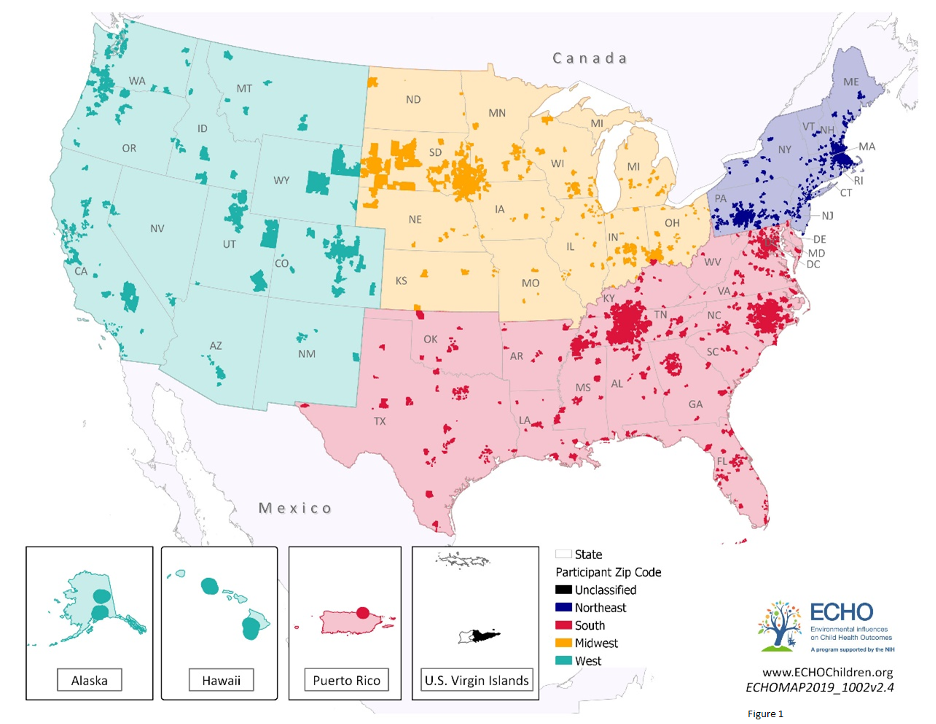
This study included more than 14,000 children and teenagers from birth to age 15. The children lived in the West, South, Northeast, and Midwest regions of the United States. The study included children from different racial and ethnic backgrounds. About half of the children were girls.


Figure 1 This image shows the different regions of the Unites States where study participants lived.


What happened during the study?

Doctors measured children’s height and weight from 2000-2018. The research team used this information to calculate each child’s body mass index (BMI), which is an approximate measure of body fat based on height and weight. The team compared differences in average BMI based on region, mother’s level of education, and demographic factors, including birth weight, race, ethnicity, and sex.


What happens next?

More research is needed to understand exactly how regional environments and policies impact children’s BMI and how local policies contribute to differences in obesity risk based on demographics. Identifying the regional and social factors that result in increased obesity risk can help policymakers and public health officials create ways to prevent obesity.


Where can I learn more?

Access the full journal article, titled “Regional and Sociodemographic Differences in Average BMI Among U.S. Children in the ECHO Program” in Obesity.

The content is the responsibility of the authors and does not necessarily represent the official views of the National Institutes of Health.


Published: August 31, 2021


Access the associated article.

read more summaries here:

Which Children Develop Asthma in the US

Author(s): Christine Cole Johnson and Aruna Chandran

How Environmental Exposures Affect Child Health Across Multiple Generations

Author(s): Carrie Breton, Rebecca Fry, Alison Hipwell, Cristiane Duarte, Linda Kahn, and Joseph Braun

ECHO Review Suggests Environmental Exposures Can Affect Health Outcomes Across Multiple Generations

<< Back to Research Summaries

ECHO Review Suggests Environmental Exposures Can Affect Health Outcomes Across Multiple Generations

Authors: Carrie Breton, Rebecca Fry, Alison Hipwell, Cristiane Duarte, Linda Kahn, and Joseph Braun


Who sponsored this study?

This research was supported by the Environmental influences on Child Health Outcomes (ECHO) program, Office of The Director, National Institutes of Health.


What were the study results?

The review found many studies in animals and humans that showed a connection between certain environments, chemicals, and behaviors and health risks across multiple generations. While epigenetics most likely plays a role in these changes, it is often difficult to separate epigenetic effects from other causes. The team also pointed out the need for more studies to tease out the complexity of these effects.

Footnote: Results reported here are for a research project. Other or future research may provide new information or different results. You should not make changes to your health without first consulting your healthcare professional.


What was the study's impact?

This review article brings together results from many studies into one paper, which is usually more powerful than results from a single study. By looking at many results together, scientists can find important patterns and gaps in epigenetics research. This paper will help scientists better understand how the environment can affect the health of a mother, child, and grandchild.


Why was this study needed?

Studies show that the environment may affect the health of many generations in one family. Some of this effect comes from epigenetics, changes in how your genes are read and understood. Your environment and actions can change your epigenetics, and those changes can be passed on to your children and grandchildren. For example, if a pregnant woman is around certain chemicals, her genes may carry a “molecular memory” of those chemicals that can be passed on through her children. The purpose of this study was to put together what is known about epigenetics to understand how environments, chemicals, and behaviors may affect the health of children for generations to come.


Who was involved?

This research looked at previous studies on humans and animals and summarized the information.


What happened during the study?

The team of experts read a lot of studies on this topic and worked together to write a summary of current knowledge.


What happens next?

The ECHO Program will keep collecting data on the health effects of environmental exposures on children. The scale of the ECHO Program makes it ideal for the study of the ongoing, generational effects of these exposures.


Where can I learn more?

Access the full journal article, titled “Exploring the evidence for epigenetic regulation of environmental influences on child health across generations” published in Communications Biology.


The content is solely the responsibility of the authors and does not necessarily represent the official views of the National Institutes of Health.


Published: June 22, 2021


Access the associated article.

More Environmental Exposures Research

Do chemicals that break down slowly in the environment affect how long it takes to become pregnant?

Author(s): Linda Kahn, Alison Hipwell, Kim Harley, Pam Factor-Litvak, Michele Klein-Fedyshin, Christine Porucznik, Eva Siegel, Yeyi Zhu

A review of studies that look at whether exposure to common non-persistent chemicals in consumer products delays the time it takes to become pregnant

Author(s): Alison E. Hipwell, Linda G. Kahn, Pam Factor-Litvak, et al

Review of Prenatal Air Pollution Exposure and Brain Development

Author(s): Heather E. Volk, Frederica Perera, Joseph M. Braun, Samantha L. Kingsley, Kim Gray, Jessie Buckley, Jane E. Clougherty, Lisa A. Croen, Brenda Eskenazi, Megan Herting, Allan C. Just, Itai Kloog, Amy Margolis, Leslie A. McClure, Rachel Miller, Sarah Levine, Rosalind Wright

ECHO Research Compares Burden of Parent-Reported Child Diet Assessments

<< Back to Research Summaries

ECHO Research Compares Burden of Parent-Reported Child Diet Assessments

A child’s diet can be an important factor in their overall health, and many ECHO studies investigate what children eat since it relates to different health outcomes. Often, caregivers describe what their child ate of the previous day or week with a questionnaire. These questionnaires rely on parents to remember and estimate when and how much their child ate, which can result in errors. Additionally, it can be hard for parents to accurately report meals and snacks their child ate during school hours because they are not there to observe. More research was needed to better understand barriers to reporting a child’s diet, difficulties with using different reporting tools, and the accuracy and effectiveness of such tools.

Below you will find information on two studies that help answer questions on this topic.

How Can Parents Accurately and Reliably Report on their Child’s Diet?

Author(s): Traci Bekelman, Dana Dabelea, et al.  


Who sponsored this study?

This research was supported by the Environmental influences on Child Health Outcomes (ECHO) program, the Office of the Director, and the National Institutes of Health.


What were the study results?

Parents reported that the strengths of the RFPM included that the RFPM was easy to use and liked that they were not responsible for determining portion sizes. Some of the barriers of RFPM were parents missing photos when they could not see their child’s meal, parents forgetting to take photos, interrupting the child’s eating time, and the child feeling embarrassed to have their meal photographed at school. Parents reported that the strengths of the ASA24 included the ability for them to enter all of the data at once in a single system. Some of the burdens of the ASA24 included the amount of time that parents had to enter information each day and some meal items missing from the website’s database.

Footnote: Results reported here are for a single study. Other or future studies may provide new information or different results. You should not make changes to your health without first consulting your healthcare professional.


What was the study's impact?

This study provided information on the how useful these parent-report tools are for easy and accurate reporting of child diet. Additionally, parents shared some of troubles that may prevent them from accurately recording their child’s meals. These results can also help researchers determine the helpful features and less helpful features of each tool, allowing them to design better child diet studies.


Why was this study needed?

The purpose of this study was to better understand what kept parents from accurately reporting their child’s diet and to identify the burdens the reporting tools put on parents and children.


Who was involved?

This study involved 40 children ages seven or eight in Colorado and Louisiana and their parents.


What happened during the study?

Parents reported on their child’s diet using the Remote Food Photography Method (RFPM) and the Automated Self-Administered 24-hour Dietary Assessment Tool (ASA24). The RFPM involves the parent taking photos of their child’s meals and snacks before and after eating using a smartphone app. The ASA24 involves the parent using a website to describe what their child ate on the previous day, including estimates of what the child ate while not present with the parent. Parents reported on their children’s diet using each of the two methods for three days apiece. Afterwards, parents were given surveys on their experience with the tools, and 32 parents participated in focus group discussions.


What happens next?

Future studies comparing the RFPM and ASA24 should look more closely at whether the burdens and barriers associated with those tools impact the quality and reliability of parent-reported child diet data. The results of this study may also help advance these parent-reported assessments, reducing participant burden and improving the quality of child diet data.


Where can I learn more?

Access the full journal article, titled “A Qualitative Analysis of the Remote Food Photography Method and the Automated Self-Administered 24-hour Dietary Assessment Tool for Assessing Children’s Food Intake Reported by Parent Proxy,” in the Journal of the Academy of Nutrition and Dietetics.

The content is the responsibility of the authors and does not necessarily represent the official views of the National Institutes of Health.

Published November 10, 2021.


A Comparison of Two Methods for Measuring What Children Eat

Author(s): Traci Bekelman, Dana Dabelea, et al.  


Who sponsored this study?

This research was supported by the Environmental influences on Child Health Outcomes (ECHO) program, the Office of the Director, and the National Institutes of Health.


What were the study results?

Caregivers were happy with both methods. Some of the caregivers had challenges with the website technology of the ASA24 and may have reported more food than their child actually ate. When using the RFPM, caregivers were able to photograph most of their child’s meals and snacks, but not all of them.

Footnote: Results reported here are for a single study. Other or future studies may provide new information or different results. You should not make changes to your health without first consulting your healthcare professional.


What was the study's impact?

The researchers intend to use these findings to improve the way child diet is measured and monitored.  Caregivers may need help using the ASA24 website technology or providing the correct details about their child’s diet. Caregivers who use the RFPM may need more reminders to ensure that they photograph their child’s meals and snacks. Caregivers liked both methods, so future improvements will focus on making them both more accurate.


Why was this study needed?

Researchers started using new technologies to measure what children eat, but there is still a lot researchers don’t know about how accurate and burdensome these technologies are for measuring child diet.


Who was involved?

In this study, researchers included parents of children ages seven or eight from cities in Colorado and Louisiana. Most of the caregivers were moms who had at least a college degree.


What happened during the study?

Caregivers tried two ways of measuring what their child ate. The first way was through RFPM, a phone app that required caregivers to photograph their child’s food at the beginning and end of each meal or snack. The second way was through ASA24, which is a website where parents manually entered what their child ate during the previous day. They were then asked to complete a survey on satisfaction, how easy the tools were to use, and what made the tools hard to use.


What happens next?

Researchers will continue to learn about and improve these methods to make them even more accurate while reducing the burden on caregivers.


Where can I learn more?

More information can be found in a webinar previously organized by the National Academies of Sciences, Engineering and Medicine, titled “Approaches to Assessing Intake of Food and Dietary Supplements in Pregnant Women and Children 2 to 11 Years of Age.”

Access the full journal article, titled “A comparison of the Remote Food Photography Method and the Automated Self-Administered 24-hour Dietary Assessment Tool for measuring full day dietary intake among school-aged children,” in the British Journal of Nutrition.

The content is the responsibility of the authors and does not necessarily represent the official views of the National Institutes of Health.

Published June 4, 2021.


Access the associated article.

Download these summaries

ECHO Research Compares Burden of Parent-Reported Child Diet Assessments :
How Can Parents Accurately and Reliably Report on their Child’s Diet? and
A Comparison of Two Methods for Measuring What Children Eat

read more summaries here:

Children’s body mass index: Does it vary by where children live and their individual characteristics?

Author(s): Dana Dabelea, et al.

Which Children Develop Asthma in the US

Author(s): Christine Cole Johnson and Aruna Chandran

How Environmental Exposures Affect Child Health Across Multiple Generations

Author(s): Carrie Breton, Rebecca Fry, Alison Hipwell, Cristiane Duarte, Linda Kahn, and Joseph Braun

ECHO Study Finds Pregnant Women Exposed to Variety of Chemicals—Some May Affect Birth Weights

<< Back to Research Summaries

ECHO Study Finds Pregnant Women Exposed to Variety of Chemicals—Some May Affect Birth Weights

Author(s): John L. Pearce, Brian Neelon, Michael S. Bloom, Jessie P. Buckley, Cande V. Ananth, Frederica Perera, John Vena, and Kelly Hunt


Who sponsored this study?

The Environmental influences on Child Health Outcomes (ECHO) program, Office of The Director, National Institutes of Health.


What were the study results?

Findings from the study revealed that moms experienced a broad range of chemical exposure profiles with marked variability in exposure magnitudes across chemical classes and exposure frequencies. Evaluation of health effects found that maternal exposure profiles dominated by higher levels of flame-retardants (i.e., polybrominated diphenyl ethers, PBDEs) were associated to lower birth weights. Exposure profiles with higher levels of polychlorinated biphenyls (PCBs) and perfluoroakyl (PFAS) substances were associated with increased birth weights. PCBs are man-made chemicals that are often found in industrial and commercial products, such as electrical and hydraulic equipment and plasticizers in paints, plastics, and rubber products. PFAS substances can often be found in food packaging, commercial household products, drinking water, and living organisms.


What was the study's impact?

ECM provides a promising framework for supporting studies of other exposure mixtures as the resulting mapping benefits visualization and assessment of relationships in complex data.


Why was this study needed?

Pregnant women often encounter numerous chemicals that may pose a risk to them and their baby.  Studies seeking to identify health effects in populations that experience such complex exposure scenarios remains difficult. With this study, the researchers tried to improve research of multiple exposures by presenting a mixtures methodology, defined as exposure continuum mapping (ECM), that allows investigators to identify complex exposure patterns (i.e., mixtures) within their study population and evaluate complex health effects.


Who was involved?

The team involved a diverse mother-child cohort over 600 women participating in ECHO that also enrolled in the Eunice Kennedy Shriver National Institute of Child Health and Human Development's (NICHD) Fetal Growth Studies from 2009-2012.


What happened during the study?

To begin, the team obtained data previously collected from the study population during their participation in the Eunice Kennedy Shriver National Institute of Child Health and Human Development's (NICHD) Fetal Growth Studies. These data included concentrations of endocrine disrupting chemicals (EDCs) measured in blood samples collected from mothers 8-12 weeks into their pregnancy and their infant’s weight at birth. Then, the team analyzed these data with ECM in order to identify the range of EDC exposure profiles experienced by moms during their pregnancy and to examine the relationship to the birth weight of their children.


What happens next?

The team will apply ECM to assist investigations of exposure mixtures and other child health outcomes, with particular interest on obesity.


Where can I learn more?

For access to software tools see: https://github.com/johnlpearce/

Access the full journal article, titled “Exploring associations between prenatal exposure to multiple endocrine disruptors and birth weight with exposure continuum mapping.”


The content is solely the responsibility of the authors and does not necessarily represent the official views of the National Institutes of Health.


Published June 2, 2021


Access the associated article.

Read More Research Summaries about Chemical Exposures and Pregnancy

Do chemicals that break down slowly in the environment affect how long it takes to become pregnant?  

Author(s): Linda Kahn, Alison Hipwell, Kim Harley, Pam Factor-Litvak, Michele Klein-Fedyshin, Christine Porucznik, Eva Siegel, Yeyi Zhu

A review of studies that look at whether exposure to common non-persistent chemicals in consumer products delays the time it takes to become pregnant

Author(s): Alison E. Hipwell, Linda G. Kahn, Pam Factor-Litvak, et al

ECHO Study Unifies Two Popular Surveys for Screening Adult Depression

<< Back to Research Summaries

ECHO Study Unifies Two Popular Surveys for Screening Adult Depression

Authors: Courtney K. Blackwell, Xiaodan Tang, Amy J. Elliott, Tracy Thomes, Hannah Louwagie, Richard Gershon, Benjamin D. Schalet, David Cella 


Who sponsored this study?

This research was supported by the Environmental influences on Child Health Outcomes (ECHO) program, Office of The Director, National Institutes of Health, with co-funding from the Office of Behavioral and Social Sciences Research (OBSSR).


What were the study results?

The EPDS and PROMIS-D both ask about increased sadness and decreased interest in daily activities. While the EPDS has additional content related to anxiety and suicidal ideation, the results of the two surveys were strongly linked. The researchers were able convert scores from the EPDS to PROMIS-D scores. The scoring conversion worked for different ages, ethnicities, races, and study sites.

Footnote: Results reported here are for a single study. Other or future studies may provide new information or different results. You should not make changes to your health without first consulting your healthcare professional.


What was the study's impact?

Adults are encouraged to get regular depression screenings. The EPDS survey is often used to detect depression in women during and after pregnancy. Doctors who want to continue long-term screening for women after pregnancy may want to convert EPDS scores into more general PROMIS-D scores for consistent tracking. Within ECHO, depression research spanning more than one cohort may need to convert between the EPDS and PROMIS-D surveys to combine data from multiple sites.


Why was this study needed?

Depression affects more than 17 million adults in the U.S. each year, and women are at higher risk for depression, particularly during and after pregnancy. Regular screening of adults for symptoms of depression is important for early intervention. Different surveys are used to track depression symptoms in adults, including ones specific to women during and after pregnancy. However, researchers need a uniform set of survey measures to track depression over a long time and to conduct nationwide research on depression. This study tried to unify two popular depression surveys: the Edinburgh Postnatal Depression Scale (EPDS), which is used during and after pregnancy; and the Patient-Reported Outcomes Measurement Information System Depression (PROMIS-D), which is used at any time in adulthood.


Who was involved?

Around 1,200 mothers from two study sites in the Northern Plains of the United States completed the EPDS and PROMIS-D surveys. Most of the participants were around 35 years old and white, but this sample also included American Indian/Alaska Natives. About half of the participants had a 4-year college degree or higher.


What happened during the study?

The participants filled out the EPDS and PROMIS-D. Researchers collected data and demographics using an online survey.


What happens next?

The survey conversion table made through this study may be useful for doctors and researchers interested in tracking depression symptoms over time. New studies may seek to confirm the link between EPDS and PROMIS-D using bigger, more diverse groups. Studies may also look at linking other depression surveys with the PROMIS-D for easier, more unified tracking of depression.


Where can I learn more?

The conversion table is available at prosettastone.org.

Access the journal abstract, titled, “Developing a common metric for depression across adulthood: Linking PROMIS Depression with the Edinburgh Postnatal Depression Scale,” in Psychological Assessment.


The content is solely the responsibility of the authors and does not necessarily represent the official views of the National Institutes of Health.


Published: May 31, 2021


Access the associated article.

Read more research by Courtney Blackwell


The influence of sleep on children’s well-being

Author(s): Courtney K. Blackwell

General health and life satisfaction in children with chronic illness

Author(s): Courtney K. Blackwell, Amy J. Elliott, Jody Ganiban, et al

ECHO Study Identifies Demographics of Children Most Likely to Develop Asthma

<< Back to Research Summaries

ECHO Study Identifies Demographics of Children Most Likely to Develop Asthma

Author(s): Christine Cole Johnson and Aruna Chandran


Who sponsored this study?

This research was supported by the Environmental influences on Child Health Outcomes (ECHO) program, Office of The Director, National Institutes of Health.


What were the study results?

The study found that children with at least one parent with a history of asthma had two to three times higher rates of asthma. This higher risk with family history of asthma mostly affected younger children, through four years old. The rates for boys went down with age, but rates for girls stayed about the same, so by the teenage years girls developed asthma more often than boys. Black children were diagnosed with asthma more than white children during preschool years, but less than white children after age 9-10 years.

Footnote: Results reported here are for a single study. Other or future studies may provide new information or different results. You should not make changes to your health without first consulting your healthcare professional.


What was the study's impact?

This study helps us understand what groups of children are more likely to get asthma. The research shows that young Black children and young children whose parents had asthma develop asthma more often than other groups. Researchers can work to develop new asthma programs to help keep children at highest risk from getting asthma.


Why was this study needed?

Childhood asthma is a major cause of suffering, missed school for children, and missed work for parents. Researchers and doctors need to understand who is more likely to get asthma, not just focus on who already has it, as other studies have done. Knowing this information is a step to finding out why certain kids get asthma and preventing it. Using information from children from diverse backgrounds in the United States, this paper describes which children developed asthma from early childhood through adolescence.


Who was involved?

Children younger than 18 years old taking part in 31 studies within the ECHO program


What happened during the study?

The research team found out the ages when children learned from a doctor they had asthma, and the children’s race, sex, and what state they lived in. It was also important to collect information on whether their parents had asthma or not.


What happens next?

Researchers should work on asthma prevention programs for very young children, especially Black children and those whose parents have had asthma.


Where can I learn more?

If you would like to learn more about asthma in children, please visit the Centers for Disease Control and Prevention or the National Heart Lung and Blood Institute (NHLBI).

Access the full journal article, titled “Childhood Asthma Incidence Rate Patterns from the ECHO Consortium: Identifying High-Risk Groups for Primary Prevention.”

The content is solely the responsibility of the authors and does not necessarily represent the official views of the National Institutes of Health.


Published: May 17, 2021

Read More Airways Research Summaries

Location of Wheezing Gene Linked to Different Wheezing Patterns in Young Children

Author(s): Brian Hallmark, et al.

Review of Prenatal Air Pollution Exposure and Brain Development

Author(s): Heather E. Volk, Frederica Perera, Joseph M. Braun, Samantha L. Kingsley, Kim Gray, Jessie Buckley, Jane E. Clougherty, Lisa A. Croen, Brenda Eskenazi, Megan Herting, Allan C. Just, Itai Kloog, Amy Margolis, Leslie A. McClure, Rachel Miller, Sarah Levine, Rosalind Wright

Age is a factor in whether children get infected with the common cold

Author(s): Timothy Choi, James E. Gern and Yury A. Bochkov

Update on Vitamin E and Its Potential Role in Preventing or Treating Bronchopulmonary Dysplasia

Author(s): Cosby Stone, Cynthia McEvoy, Judy Aschner, et al

ECHO Review Finds Air Pollution May Be Associated with Child Brain Development, Behavior

<< Back to Research Summaries

ECHO Review Finds Air Pollution May Be Associated with Child Brain Development, Behavior

Author(s): Heather E. Volk, Frederica Perera, Joseph M. Braun, Samantha L. Kingsley, Kim Gray, Jessie Buckley, Jane E. Clougherty, Lisa A. Croen, Brenda Eskenazi, Megan Herting, Allan C. Just, Itai Kloog, Amy Margolis, Leslie A. McClure, Rachel Miller, Sarah Levine, Rosalind Wright


Who sponsored this study?

This research was supported by the Environmental influences on Child Health Outcomes (ECHO) Program, Office of The Director, National Institutes of Health.


What were the study results?

ECHO provides a unique opportunity to study how air pollution can affect children’s brain development and behavior in a large, diverse study population. It also has the ability to study pollutant exposures by geographic area, which has been a limitation in previous research.


What was the study's impact?

This study sets up the possibility of future work in ECHO on the effect of prenatal air pollution exposure on brain development in children.


Why was this study needed?

This study summarized information on different ways to measure prenatal air pollution exposure and what we know about how air pollution affects children’s behavior and brain development. It also helps create a plan for ECHO to study how being exposed to air pollution in the womb may affect children’s behavior.


Who was involved?

This paper uses summary data from ECHO to learn if there may be enough participants in the future to study how air pollution can affect children’s brain development and behavior.


What happened during the study?

Researchers reviewed earlier papers on air pollution and child development to summarize what those studies found. Then, they used that information to develop a plan that ECHO might use to fill gaps in that earlier work to advance children’s health.


What happens next?

Future studies will do the work described here – to examine air pollution exposure in ECHO participants by geographic area to determine how air pollution can affect the brain.


Where can I learn more?

Access the full journal article, titled “Prenatal air pollution exposure and neurodevelopment: A review and blueprint for a harmonized approach within ECHO.”

The content is solely the responsibility of the authors and does not necessarily represent the official views of the National Institutes of Health.


Published: May 2021

Read More Airways Research Summaries

Location of Wheezing Gene Linked to Different Wheezing Patterns in Young Children

Author(s): Brian Hallmark, et al.

Which Children Develop Asthma in the US

Author(s): Christine Cole Johnson and Aruna Chandran

Age is a factor in whether children get infected with the common cold

Author(s): Timothy Choi, James E. Gern and Yury A. Bochkov

Update on Vitamin E and Its Potential Role in Preventing or Treating Bronchopulmonary Dysplasia

Author(s): Cosby Stone, Cynthia McEvoy, Judy Aschner, et al