Chemical Exposures’ Influence on Maternal, Infant, and Childhood Health Outcomes

Chemical exposures can have a substantial influence on maternal, infant, and childhood health outcomes. ECHO Program investigators have recently released several publications detailing research on how exposures to certain chemicals can influence the health of mothers and children.

For example, a recent ECHO study of more than 100 chemicals in a diverse population of pregnant women in the United States found that they have been exposed to a wide range of chemicals, including replacement chemicals.  Replacement chemicals are those that industries use in place of others they have phased out.  While we have some evidence on the health effects of older chemicals, we know much less about these replacements. ECHO investigators are looking at effects of both traditional and replacement chemicals.

You can read more about this and other ECHO research in July’s issue of the Connector.

I am also pleased to share that ECHO recently released Notices of Intent to Publish Funding Opportunity Announcements (FOAs). These FOAs will invite applications to extend and expand the capacity of the ECHO Cohort to further investigate the roles of a broad range of early exposures from society to biology, including the preconception period, across ECHO’s five key child health outcome areas among diverse populations. I encourage you to share these Notices of Intent to Publish with your networks. When the NIH publishes the actual funding announcements, the ECHO Program Office will post that information on the NIH ECHO website, so please check back for links to the FOAs and resources for potential applicants.

May is National Mental Health Awareness Month

May is National Mental Health Awareness Month. During this month, my ECHO colleagues and I join the national conversation to raise awareness about mental health, and I’m pleased to highlight two recent examples of our research in this area.

Positive health, or a child’s sense of well-being, is one of ECHO’s five health outcome focus areas. For ECHO, this means that in addition to looking at what diseases or conditions kids get, like asthma, obesity, and autism spectrum disorders, we also look at the positive side of the ledger. In fact, ECHO research shows that kids can feel quite satisfied with their lives even if they have one or more of those conditions. In a recent collaborative publication, ECHO researchers showed that life satisfaction was about the same among kids with and without most childhood chronic diseases. The main exceptions were depression and conditions with chronic pain. These findings raise the possibility that efforts to support mental health treatment could also improve children’s sense of well-being.

In another collaborative effort, ECHO Program investigators came together to study how the COVID-19 pandemic has influenced the well-being of children. As detailed below, they found that stresses of the pandemic were related to lower life satisfaction, but that family and social supports have the potential to moderate this effect of stress. Thus, these results point to potential interventions to enhance children’s mental health and well-being as we emerge from the worst of the pandemic.

You can read more about both of these publications in May’s ECHO Connector.

March is National Nutrition Month

March is National Nutrition Month. With information from a diverse population of more than 50,000 children followed from birth through adolescence, ECHO researchers are well positioned to investigate how nutrition influences child health across our five outcome areas, including obesity.

This month’s Connector features ECHO research that explores the extent to which treating pregnant women, who cannot quit smoking, with vitamin C can protect lung function for their children. In addition, this issue of the Connector includes ECHO research on the relationship between growth in early childhood and the onset of puberty, as well as facilitators and barriers to clinical trial recruitment in rural settings.

As a reminder, the ECHO Program is back on Twitter. We encourage you to follow the ECHO Twitter account (@ECHOChildHealth) to stay up-to-date on ECHO news and events, including information on recent publications and research.

A New Year, Deeper Understanding of Prenatal, Infant, and Maternal Health Outcomes

I would like to take time to wish all ECHO Connector readers a Happy New Year. Throughout 2021, the ECHO Program continued to make significant strides in child health. On behalf of the ECHO Program, and myself, we thank all participants and researchers involved with ECHO and look forward to continued success in 2022.

In late 2021, the ECHO Program relaunched its social media presence on Twitter. We are excited to leverage this platform to keep our followers up to date on the latest ECHO news, upcoming events, and information. I encourage you to follow us at @ECHOChildHealth.

January is National Birth Defects Awareness Month. The ECHO Program and its investigators continue to make research efforts in prenatal and maternal health, further developing our understanding of birth defects. January’s ECHO Connector includes information on two recent collaborative ECHO publications that explore how certain prenatal chemical exposures can influence infant health outcomes.

Important Research on Facilitating COVID-19 Vaccine Uptake

As of this month, all children ages 5 and older can get a COVID-19 vaccine in the United States. It’s a major turning point in the fight against the virus that causes COVID-19, and it’s the best way to protect our children, families, and communities.

I encourage you to visit WeCanDoThis.hhs.gov for information, sharable resources, and outreach tools from the HHS COVID-19 public education campaign, a national initiative to increase public confidence in and uptake of COVID-19 vaccines.

How to facilitate uptake of COVID-19 vaccines among children is an urgent research issue. In this issue of the Connector, we highlight a new study from ECHO’s Institutional Development Award States Pediatric Clinical Trials Network (ISPCTN), which is currently gathering information about parental attitudes around the COVID-19 vaccine. Our investigators will use the insights from this phase of the study to develop and test the effectiveness of a mobile app to aid in COVID-19 vaccine decision making.

This month’s Connector also provides summaries of recent collaborative ECHO research led by Drs. Nikos Stratakis and Erika Garcia of the University of Southern California on how children with asthma can lower their risk of developing obesity; on research led by Dr. Alison Paquette of Seattle Children’s Research Institute on plasticizer chemicals to which pregnant women are exposed; and by Dr. Katherine Sauder of the University of Colorado Anschutz on inadequate and excessive dietary intakes during pregnancy.

National Childhood Obesity Awareness Month

September is National Childhood Obesity Awareness Month. Childhood obesity or overweight affects around 35% of children in the U.S., increasing their risk for adverse mental and physical health outcomes that can follow them into adulthood. Obesity is one of ECHO’s five pediatric health outcomes, and advancing research in the early developmental causes of obesity and its consequences is an important part of our mission to enhance the health of children for generations to come.

In the September issue of the ECHO Connector, we highlight the work of ECHO investigators including Drs. Traci Bekelman and Dana Dabelea, who have led a team of ECHO researchers in studying the regional and socioeconomic differences in childhood obesity. This team is also leading ECHO collaborative research on how obesity-related behaviors have changed with the COVID-19 pandemic, during which the already high rates of childhood obesity have risen even more. See more detail on their research.


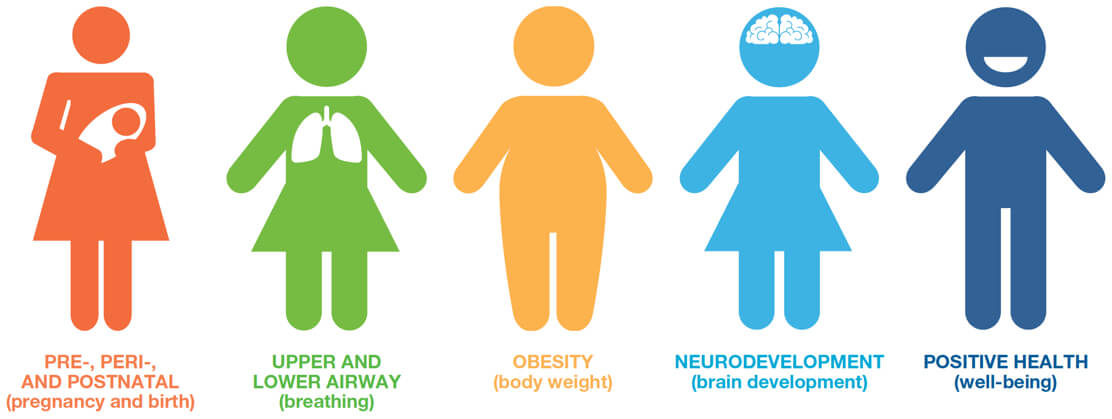
ECHO’s five pediatric health outcome areas


You can find more papers from ECHO researchers on obesity and other outcome areas on our publications page, which is searchable by topic.

I would also like to thank the ECHO Connector readers and ECHO participants for the feedback we have received thus far on the ECHO Connector and ECHOchildren.org website survey. We appreciate your participation and feedback and encourage you to complete the survey to help enhance ECHO’s communications and resources.

The Role Epigenetics May Play in the Inheritance of Health Risks

In May, the NIH ECHO Program Office released a Request for Information (RFI) to seek input from the scientific community and the general public about enhancing ECHO science. We are currently reviewing the valuable feedback you provided, and we will share a summary of the comments in the coming weeks.

Additionally, last month, ECHO hosted a two-day workshop on the preconceptional origins of child health. The workshop featured a welcome by NIH Director Dr. Francis Collins and presentations by experts who discussed the state of the science, research gaps, and opportunities related to how preconception exposures may influence child health outcomes.

Thank you to those who participated in these opportunities to enhance ECHO Program science and future pediatric research.

In July’s issue of the ECHO Connector, we are pleased to share our latest news and findings on topics including the role epigenetics may play in the inheritance of health risks, clinical trials recruitment, and the progress of the ECHO Program. In addition, this month’s Connector highlights insights about diversity, disparity, and resilience from the Principal Investigator of our Navajo Birth Cohort, which shares data with ECHO grantees as part of the first Tribal data-sharing agreement for a nationwide research consortium.

I would also like to thank ECHO Connector readers and ECHO participants for their continued support. July’s ECHO Connector includes information regarding a survey on the current state of the ECHO Connector, with opportunities to provide feedback on the ECHO Program’s website materials and resources. The survey should take no longer than 5 minutes to complete. With your participation and feedback, we hope to enhance ECHO’s communications and resources.

National Asthma and Allergy Awareness Month

May is National Asthma and Allergy Awareness Month.

Nearly 5.5 million children in the U.S. are living with asthma, a respiratory disease that causes much suffering and loss of days at school and work.

ECHO investigators aim to fill gaps in research on conditions that affect kids’ airways by studying data from our pediatric cohorts and by testing interventions in our IDeA States Pediatric Clinical Trials Network. With its large sample size, diverse populations, and ongoing studies, the ECHO Program is well positioned to conduct studies that can help researchers and doctors better understand, prevent, and treat asthma in children.

I’m pleased that this month’s ECHO Connector includes some of ECHO’s latest research in our upper and lower airways outcome area. While many studies have focused on children who already have asthma, it’s also important to know who is at highest risk of getting asthma, so that researchers and doctors can better understand how to prevent it. In a paper by ECHO researchers published in JAMA Pediatrics this month, ECHO researchers share new findings about which groups of children are most likely to get an asthma diagnosis as they grow up.

In other news, the NIH ECHO Program Office recently released a Request for Information (RFI) to solicit input from the scientific community and the general public about enhancing ECHO science. I encourage you to provide input to this RFI, due to NIHKidsandEnironment@od.nih.gov  and sonia.arteaga@nih.gov by Tuesday, June 8, and share it with your networks and colleagues. Your input will be critical to enhancing ECHO research.

In addition, the ECHO Program is sponsoring a free workshop on preconception research this June 17-18, and I encourage you to register. This virtual workshop will feature presentations by NIH Director Dr. Francis Collins and other experts who will discuss the state of the science, research gaps, and opportunities related to how preconception exposures may influence child health outcomes.

Happy New Year

Happy New Year! With a new year often comes a renewed sense of energy and focus. The ECHO Program is excited to start 2021 with the hope that the COVID-19 vaccine rollout will soon bring relief to our country after nearly a year in the pandemic. During this past year, our research staff and participants have shown patience, flexibility, and innovation, and they enter 2021 with enthusiasm for meeting the mission of ECHO.

On the cohorts side of ECHO, our researchers contribute data to the ECHO-wide Cohort data platform guided by the Year 5 goals we mentioned in the last ECHO Connector. These data will allow us to publish important information about the origins of child health outcomes that will ultimately help inform programs, policies, and practices.

On the IDeA States Pediatric Clinical Trials Network (ISPCTN) side, the network recently published its first ACT NOW Current Experience manuscript, “Site-Level Variation in the Characteristics and Care of Infants with Neonatal Opioid Withdrawal,” in Pediatrics. Additionally, the iAmHealthy trial continues to progress with families now in the final month of the 6-month intervention period. A full update on this study is included in this edition of the Connector.

Thank you for your continued support of ECHO’s mission to enhance the health of children for generations to come. We look forward to engaging more with you in 2021!

Year-end Reflections

Around this time each year, I find myself reflecting on where the ECHO Program was a year ago, where we have gone, and where we are heading. For all of us, 2020 has looked wildly different from all previous years of our lives, and it has come with many challenges. I feel a sense of pride, however, for the way our ECHO teams have stepped up, adapted, and overcome COVID-19-related barriers to continue our important work to enhance the health of children for generations to come.

During this past year, the ECHO Program team publicly launched our ECHO Discovery Series and the ECHO Connector and mapped out a plan for this 5th year of the program to ensure we continue down a successful road toward meeting our mission.  Our investigators continue their research, both on the observational and intervention fronts, and there are many research results in the pipeline for publication during this coming year.

As we enter Year 5 of ECHO, our plan outlines goals and objectives to foster a collaborative environment so that our investigators can publish important research that will inform healthcare practices, new health programs in our communities, and health policies. In addition to the goals set forth by the ECHO Components, the NIH ECHO Program Office has created a strategic plan that will help steer the program in the right direction. You may read more about this plan below.

2020 has also seen increased engagement with our stakeholder organizations.  I hope that you are enjoying receiving these updates on the ECHO Program, and we look forward to sharing many more in the New Year. We hope you have a wonderful and safe end of the year, and we will be back with the first ECHO Connector of 2021 in January.